
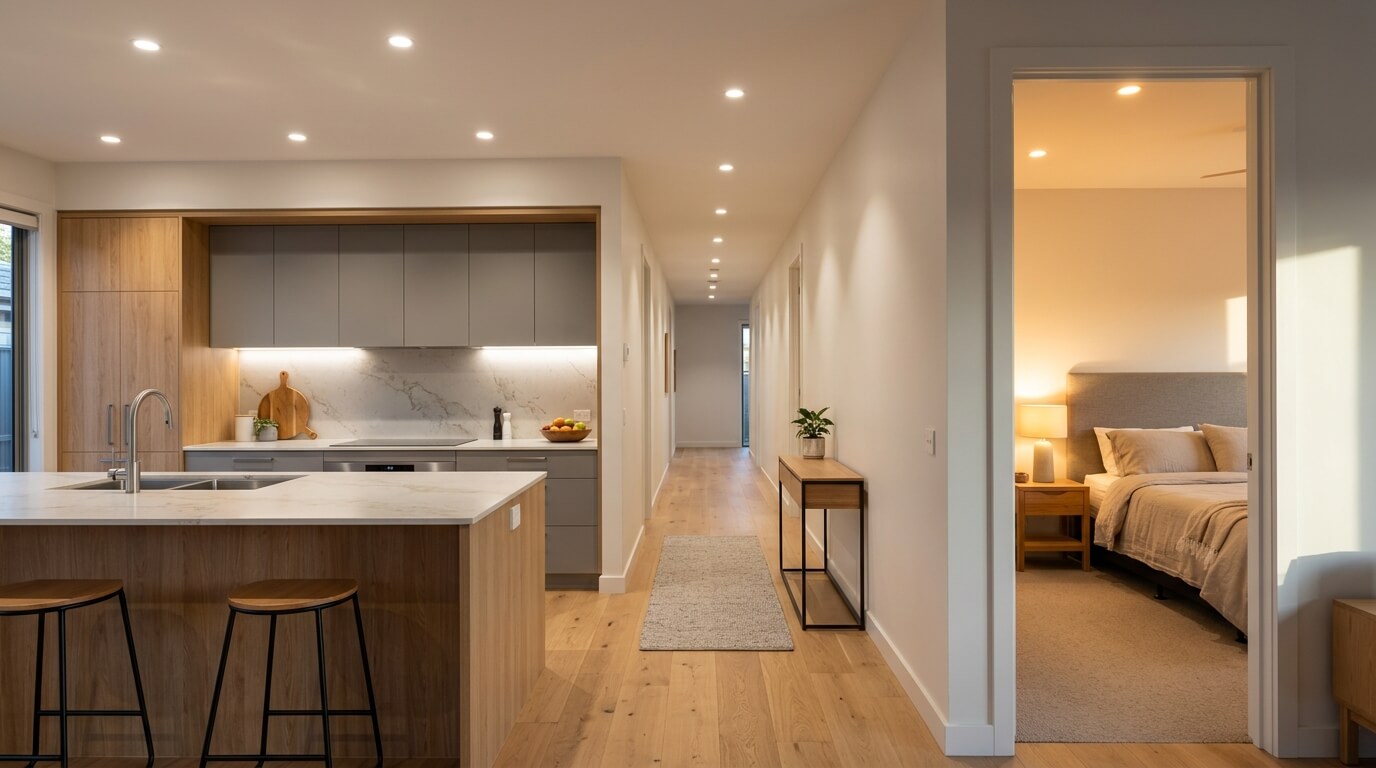
Choosing ceiling lighting is easier when the room comes first and the fixture comes second. A light that works well in a bedroom may feel too dim in a kitchen, while a bright garage fixture could look harsh in a living space.
Modern LED ceiling lights are available in many formats, including recessed, flush-mount, flat-panel, drop-ceiling, and weather-resistant designs. The best choice depends on how the room is used, how much light is required, and whether features such as dimming or moisture resistance are important.
Understanding those differences can help homeowners avoid buying one type of ceiling light and trying to make it work everywhere.
Start With the Purpose of the Room
Before comparing styles, define what the lighting needs to accomplish.
Most rooms require some combination of:
- General illumination
- Task lighting
- Accent lighting
- Comfortable evening light
- Safety and visibility
A kitchen usually needs stronger, more functional illumination than a bedroom. A garage prioritizes coverage and visibility, while an outdoor ceiling fixture must also cope with environmental exposure.
Browsing different LED ceiling lights can help homeowners compare fixture styles, output levels, and mounting formats according to the needs of each room rather than selecting purely by appearance.
Kitchen Ceiling Lights: Prioritize Visibility and Coverage

Kitchens are one of the most demanding areas to light because people need to clearly see work surfaces, appliances, and storage areas.
General ceiling lighting should distribute light evenly rather than concentrating it only in the center of the room. Dark areas around counters and cabinets can still occur, so ceiling lights are often combined with under-cabinet or task lighting.
When comparing LED kitchen ceiling lights, consider several factors.
Brightness
Use lumen output rather than wattage alone when comparing fixtures. Larger kitchens or rooms with darker finishes may require more total light.
The goal is to provide sufficient illumination throughout the working areas rather than simply choosing the fixture with the highest output.
Color Temperature
Neutral white lighting often works well in kitchens because it provides good visibility without feeling excessively cool. The exact preference will depend on the surrounding finishes and other lighting in the room.
Glare
More brightness is not always better. Fixtures with good diffusion can produce comfortable illumination without creating harsh points of light or distracting reflections.
Dimming
Dimming is useful in kitchens that also function as dining or social spaces. Bright task lighting can be reduced when full output is no longer needed.
Bedroom Ceiling Lights: Comfort Matters More Than Maximum Output
Bedroom lighting usually has a different purpose.
Instead of maximizing brightness, the goal is often to create comfortable general illumination that can be softened in the evening.
Warm LED lighting tends to suit bedrooms well because it creates a more relaxed atmosphere, while layered bedroom lighting can provide separate levels of ambient and task illumination.
Dimmable fixtures provide additional flexibility, particularly when the ceiling light is the main source of illumination.
Low-profile and flush-mount fixtures can also work well in bedrooms with standard or lower ceilings because they take up less vertical space.
If the room also functions as a home office or reading area, use separate task lighting rather than making the main ceiling fixture unnecessarily bright.
Garage Ceiling Lights: Focus on Usable Light
Garages and utility spaces tend to prioritize function over decorative appearance.
Good LED garage ceiling lights should provide broad, consistent coverage so that tools, storage areas, vehicles, and work surfaces remain visible, similar to the layered approach discussed in garage lighting.
Important factors include:
- Total lumen output
- Light distribution
- Fixture placement
- Color temperature
- Durability
- Energy efficiency
Cooler or neutral light is often preferred in garages because it can improve visibility for practical tasks.
One common mistake is installing a single very bright fixture in the center of a large garage. Multiple properly positioned lights can often create better coverage by reducing shadows.
Task lighting can also be useful above workbenches or other areas where detailed work is performed.
Outdoor Ceiling Lighting Needs the Right Protection
Outdoor or semi-outdoor ceiling lights should not be selected using indoor specifications alone, particularly when considering outdoor LED lighting and its environmental requirements.
Covered patios, porches, entryways, and similar areas may still be exposed to humidity, condensation, dust, or wind-driven moisture.
Check the fixture’s stated environmental rating before installation. Depending on the location, this may include damp-location, wet-location, or specific IP ratings.
Weather resistance is especially important for fixtures that will remain installed outdoors year-round.
For exterior areas, practical considerations include:
- Suitable environmental rating
- Sealed electrical connections
- Corrosion-resistant materials
- Appropriate brightness
- Compatibility with timers, sensors, or other controls
A fixture that looks suitable for outdoor use is not necessarily rated for exposure, so specifications should always take priority over appearance.
Flush-Mount, Recessed or Flat LED Ceiling Lights?
Fixture format also affects how a room looks and functions.
Flush-Mount Lights
Flush-mount fixtures sit close to the ceiling and are useful where vertical clearance is limited. They work particularly well in bedrooms, hallways, kitchens, and compact rooms.
Recessed LED Ceiling Lights
Recessed fixtures create a cleaner ceiling appearance and allow multiple light sources to be distributed around a room. They are commonly used in kitchens, living spaces, and modern interiors.
Installation requirements matter because the ceiling must accommodate the fixture and associated components.
Flat LED Ceiling Lights
Flat fixtures can provide wide, even illumination while maintaining a very low profile. They are often suitable for practical spaces where consistent light distribution is more important than creating a decorative focal point.
How Important Is Consistent Color Temperature?
One of the easiest ways to make a home feel visually disconnected is to mix dramatically different light colors in adjoining spaces.
Warm white may work well in bedrooms and living rooms, while neutral or cooler lighting can suit kitchens, garages, and utility areas.
There is no need for every room to use exactly the same color temperature, but connected spaces generally look more intentional when the transition is gradual rather than abrupt.
When comparing modern overhead lighting options, look at color temperature alongside brightness, fixture dimensions, dimming capability, and light distribution rather than treating each specification separately.
When Should You Choose Lighting Controls?
Lighting controls are easier to plan before fixtures are installed.
If dimming is important, confirm that both the LED fixture and the intended dimmer are compatible. Incompatible drivers and controls can cause flickering, poor low-level dimming, or inconsistent performance.
Smart controls may also be useful in frequently used spaces, particularly where smart lighting controls can simplify scheduling, switching, or motion-based operation.
Basic usability should remain the priority. A bedroom might benefit most from simple dimming, while outdoor lights may gain more from timers or motion controls.
How Can You Avoid Uneven Ceiling Lighting?
Uneven lighting often happens when fixture placement is based only on the center of the room.
Think about where people actually work, walk, read, cook, store items, or perform detailed tasks. A large kitchen may need several ceiling fixtures instead of one central light. Similarly, a garage may need multiple fixtures positioned across its length.
Furniture and built-in features should also be considered. Tall cabinets, shelves, beams, and other obstructions can affect how light reaches different parts of a room.
A balanced layout usually provides better results than simply increasing the brightness of one fixture.
How Can You Match the Light to the Room?
The best ceiling light is rarely the fixture with the highest output or the most features. It is the one that matches the room’s actual requirements.
Kitchens benefit from clear, well-distributed illumination. Bedrooms usually need warmer, more flexible light. Garages prioritize visibility and coverage, while outdoor spaces require appropriate environmental protection.
Rather than choosing a fixture based only on its appearance, compare its brightness, dimensions, light distribution, color temperature, mounting style, controls, and environmental rating.
What Should You Check Before Installing Ceiling Lighting?
Before installation, review the fixture specifications and consider how the room will actually be used.
Check:
- Fixture dimensions
- Ceiling height
- Required lumen output
- Color temperature
- Dimming compatibility
- Light distribution
- Environmental rating where applicable
- Electrical requirements
- Switch and control placement
- Spacing between multiple fixtures
For electrical work that requires new wiring, circuit changes, or other modifications, appropriate professional guidance may be necessary. Planning these requirements before installation can help prevent compatibility problems and unnecessary changes later.
Conclusion
Choosing ceiling lighting becomes much simpler when the room’s purpose is considered first. Kitchens generally need clear and evenly distributed illumination, bedrooms benefit from comfortable and flexible lighting, garages need broad visibility, and outdoor areas require fixtures with appropriate environmental protection.
Fixture type also matters. Flush-mount, recessed, and flat LED lights can each work well in different situations, while brightness, color temperature, spacing, and controls determine how effectively the lighting performs.
Instead of looking for one fixture that works everywhere, choose ceiling lighting according to the needs of each space. A room-by-room approach can provide better visibility, greater comfort, and a more consistent lighting experience throughout the home.

