
What to check for polybutylene pipes before renovation starts is an important question for homeowners updating an older property. New flooring, kitchen cabinets, and bathroom tile can improve a home’s appearance, but plumbing problems discovered after installation may require finished surfaces to be opened again.
Polybutylene piping is one material worth identifying before renovation work begins. Finding it does not automatically mean a leak is imminent, but its history of premature failures makes professional evaluation an important part of planning. The goal is to understand which pipes are present, assess their condition, and determine whether replacement should be included in the project.
What Is Polybutylene Plumbing?
Polybutylene, commonly abbreviated as PB, was used in residential water supply systems in the United States from the late 1970s into the mid-1990s. It carries water to household fixtures rather than serving as drain or sewer piping.
The material developed a history of premature failures, and deterioration may occur internally. As a result, a clean exterior does not prove that a pipe is in good condition. A visual inspection also cannot reliably predict when an individual section might leak.
This is particularly relevant when evaluating an older plumbing system. Homeowners considering broader plumbing work can learn more about when to repipe an older home before deciding whether isolated repairs or a larger replacement project deserves further investigation.
How to Check What Type of Pipes You Have

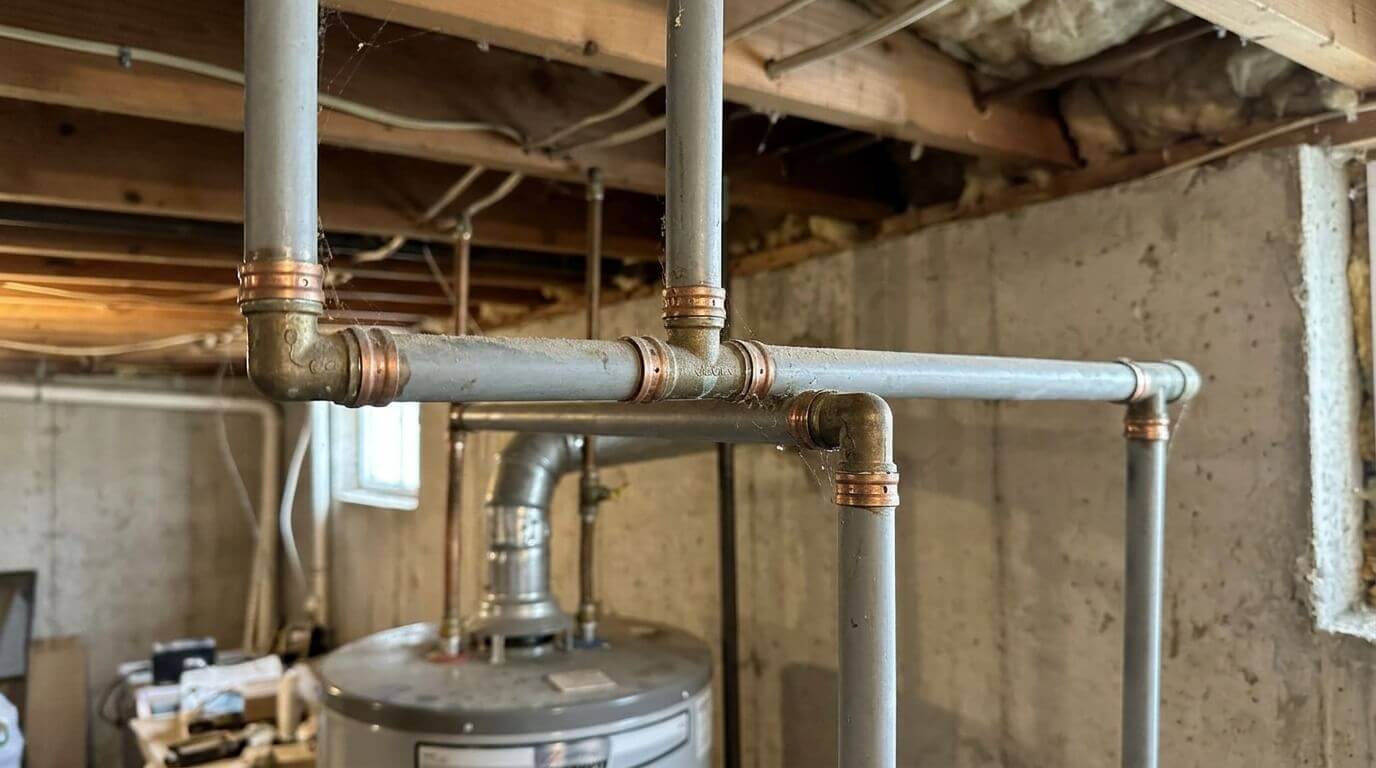
Start by inspecting accessible water supply lines near the water heater, beneath sinks, or in an unfinished basement. Polybutylene pipes are often gray, although blue, black, and other colors may also occur. Markings such as “PB2110” can provide a more useful identification clue than color alone.
Do not confuse polybutylene with PEX simply because both are plastic piping. Copper connections near a sink or water heater also do not establish that the entire house has copper supply lines. Older properties may contain a mixture of materials due to previous repairs.
A qualified plumber can confirm the pipe material and trace accessible sections of the system. Take photographs of visible markings and pipe locations if helpful, but avoid bending, scratching, cutting, or dismantling the piping yourself.
The assessment should establish which sections are confirmed, which areas remain inaccessible, and whether earlier repairs have changed the original layout.
Separate an Immediate Leak From a Long-Term Plumbing Concern
An active leak requires a different response from a dry, functioning system. If water is escaping, arrange prompt assistance and use an accessible shutoff valve only if you can operate it safely. Keep away from standing water near electrical equipment.
For a system without an active leak, a planned inspection can help establish the next steps. Ask the plumber to determine:
- Which accessible pipes are made from polybutylene?
- Have previous repairs replaced individual sections or entire branches?
- Is there evidence of water damage that requires separate investigation?
- Does the proposed work include the incoming water service line, interior supply pipes, or both?
- Which concealed areas remain unverified?
- Is there any reason to prioritize particular sections before other renovation work begins?
Request a written assessment that distinguishes confirmed conditions from assumptions. A vague recommendation to replace old plumbing is less useful than a scope that identifies the affected sections and explains the proposed work.
If a leak has already caused damage, a separate water damage emergency response plan can help you understand the importance of safety, documentation, and appropriate drying before cosmetic repairs begin.
Understand What a Repipe Includes
Repiping generally refers to replacing water supply lines. It does not automatically include drain replacement, new fixtures, a new water heater, or repairs to existing moisture damage.
When comparing polybutylene pipe replacement proposals, ask where the new piping begins and ends, which fixture connections are included, and whether any existing sections will remain in service. This is especially important in homes that have undergone partial plumbing repairs.
The proposal should also explain how the contractor will access the pipes. Some sections may be reachable through an unfinished basement or other accessible areas, while others may require openings in walls or ceilings.
Ask which openings are anticipated, how unexpected access requirements will be handled, and whether patching and restoration are included in the price. These details make it easier to compare estimates on an equivalent basis.
Choose Replacement Materials for the Property
Ask the plumber to explain the proposed pipe material, connection system, and reasons it is appropriate for the property. PEX and copper are common options to discuss, although other approved materials may be suitable depending on the installation.
The decision should account for pipe routing, water conditions, installation requirements, and applicable plumbing codes. Neither material should be treated as the universal best choice for every home.
Request the product specifications in writing, along with information about workmanship coverage and manufacturer warranties. Clarify who will handle installation-related problems and what documentation should be retained after the work is completed.
The contractor should also explain whether the proposed material is compatible with existing connections and which components will need to be replaced rather than reused.
Coordinate Plumbing With Finish Work
If a kitchen or bathroom renovation is already planned, discuss the plumbing work before finalizing cabinets, tile, and wall finishes. Share the intended fixture locations so the replacement layout can accommodate the finished design.
Agree on the work sequence with the contractors involved. Establish when the new piping will be installed and tested, when any required inspection will take place, and when walls or ceilings can be closed.
It is also important to identify who is responsible for drywall, texture matching, painting, trim, and cleanup. Plumbing estimates do not always include these tasks.
A clear schedule helps prevent finish work from being completed before plumbing access, testing, and necessary inspections are finished. General home renovation planning can also help organize project scope, property conditions, schedules, and contractor responsibilities.
Compare Complete Quotes and Prepare the House
Compare written proposals against the same scope of work. A lower estimate may exclude certain fixture connections, wall restoration, or replacement of the incoming service line. Ask each contractor to explain exclusions instead of assuming all quotes cover identical work.
Before installation begins, confirm the expected water shutdown periods, access requirements, and process for approving changes. Clear affected cabinets and work areas, and arrange a safe space for children and pets away from construction activity.
At completion, retain photographs of accessible new piping, product information, invoices, and applicable inspection records. Ask the contractor to identify the shutoff valves and explain any maintenance requirements.
If a problem occurs during the work, follow appropriate plumbing emergency guidance rather than attempting repairs that could create additional risks.
Conclusion
Identifying polybutylene pipes before a renovation helps homeowners make informed decisions about plumbing work before new finishes conceal access points. Confirming the material, documenting known conditions, and obtaining a clearly defined replacement scope can reduce uncertainty during the project.
A professional assessment should establish which sections may need replacement, which areas remain unverified, and how the work will fit into the wider renovation schedule. Comparing complete quotes and clarifying restoration responsibilities also helps keep the project organized.
The most useful approach is to address plumbing questions before final finishes are installed, rather than relying on appearance alone to judge the condition of an older water supply system.

