
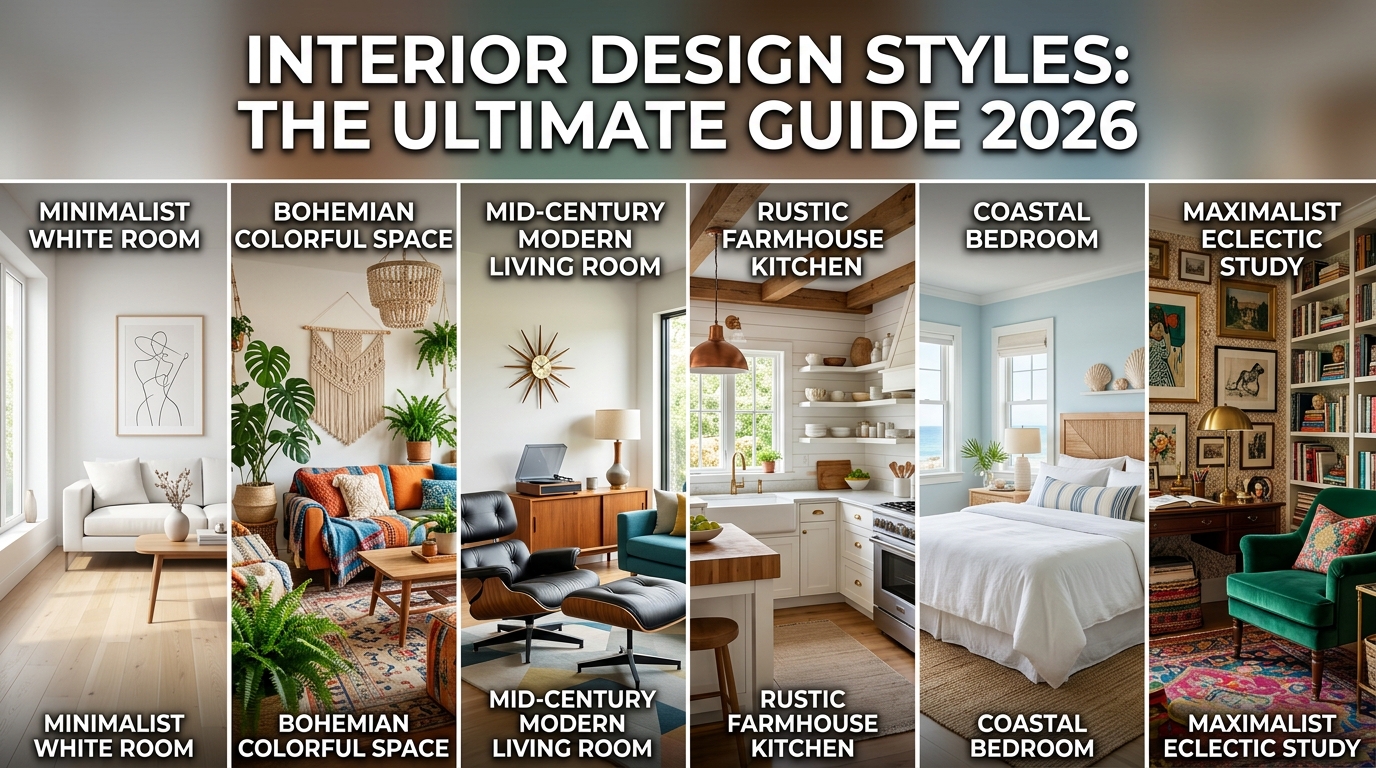
Have you ever walked into a room and felt immediately at ease — or instantly inspired — without knowing exactly why? That’s the quiet power of interior design. The colors, textures, furniture shapes, and spatial arrangements all work together to communicate a feeling. And behind every well-designed room is a recognizable style doing the heavy lifting.
Whether you’re decorating your first apartment, refreshing a tired living room, or just trying to figure out why your home never quite feels finished, understanding interior design styles is the first step. This guide walks you through every major style — old and new — in plain language, with practical tips you can actually use.
No jargon. No gatekeeping. Just a clear roadmap to the look you love.
What Are Interior Design Styles?
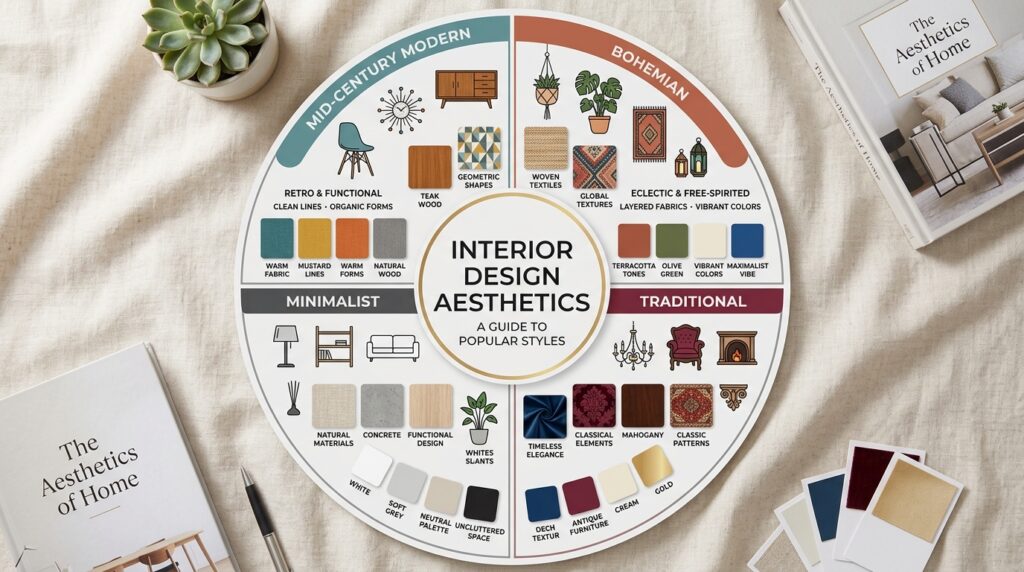
Interior design styles are essentially visual languages. Each one has its own vocabulary — a specific set of colors, materials, furniture silhouettes, patterns, and moods that make it instantly identifiable.
Think of it like fashion. Just as you can tell the difference between streetwear and formal couture, you can learn to spot the difference between mid-century modern and coastal design once you know what to look for.
Styles aren’t rigid boxes you’re locked into. Most real homes blend two or three styles together. But understanding the core DNA of each one helps you make smarter decisions — whether you’re shopping for a sofa, choosing a paint color, or hiring a designer.
How Many Interior Design Styles Are There?
There’s no official number, but most design experts and platforms like Houzz and Elle Decor recognize somewhere between 15 and 30 distinct styles. In this guide, we cover the most popular and culturally significant ones — from timeless classics to rising trends in 2026.
The Most Popular Interior Design Styles Explained
1. Minimalist Interior Design
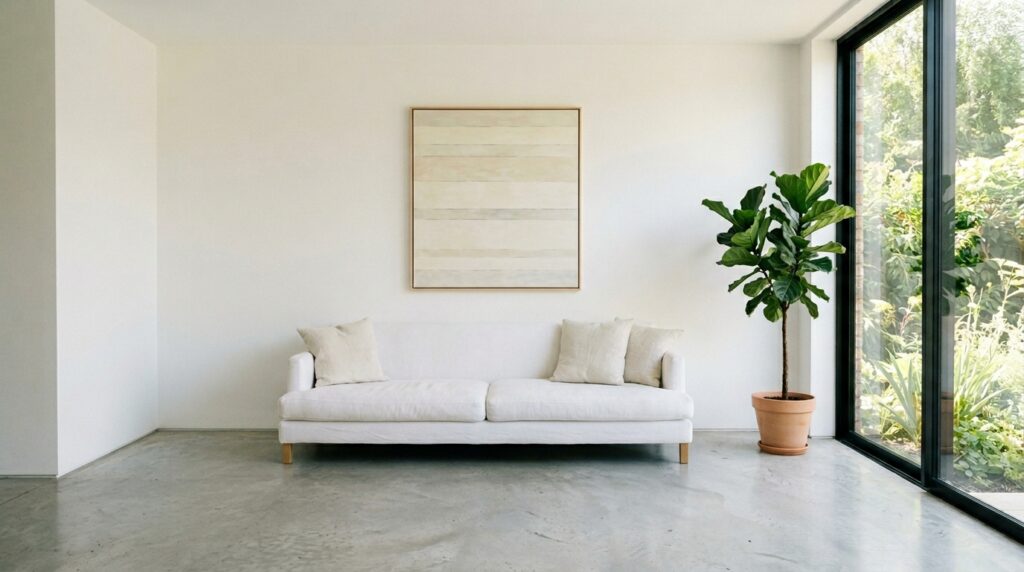
Less is more — and in minimalist design, that phrase is a philosophy, not just a slogan.
Minimalism strips a space down to its essentials. No clutter, no unnecessary decoration, no competing visual elements. What’s left is intentional, functional, and often beautiful in its simplicity.
Key characteristics:
- Neutral color palettes (white, cream, grey, beige)
- Clean lines and uncluttered surfaces
- Hidden storage solutions
- High-quality materials over quantity
- Strategic use of negative space
Minimalism has roots in Japanese design philosophy and gained massive popularity in the West through architects like Ludwig Mies van der Rohe, whose famous phrase “less is more” is still the movement’s unofficial motto.
Who it’s best for: People who feel overwhelmed by visual noise, those in smaller apartments, or anyone who wants a calm, spa-like home environment.
Expert Tip: Minimalism isn’t about owning nothing — it’s about owning the right things. Invest in one statement piece of furniture rather than filling a room with mediocre items.
2. Maximalist Interior Design
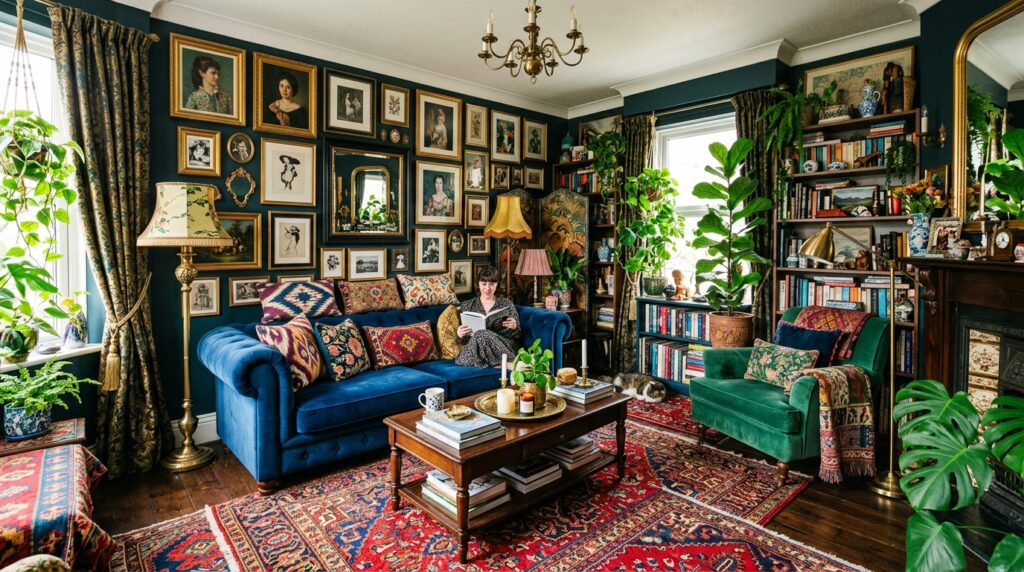
If minimalism is a deep breath, maximalism is a full exhale — loud, joyful, and unapologetically abundant.
Maximalism is the philosophy that more is more. It embraces bold color, pattern mixing, layered textures, and an abundance of meaningful objects. Far from being messy, the best maximalist rooms are actually deeply considered — they just happen to include everything you love.
Key characteristics:
- Saturated, rich color palettes
- Pattern-on-pattern mixing
- Gallery walls and layered art
- Collections and curated objects on display
- Velvet, silk, and luxurious textiles
According to Architectural Digest, maximalism has been one of the most Googled design terms over the last three years, as homeowners push back against sterile, all-white interiors.
Who it’s best for: Collectors, creative personalities, and anyone who finds sparse rooms cold or unwelcoming.
3. Contemporary Interior Design
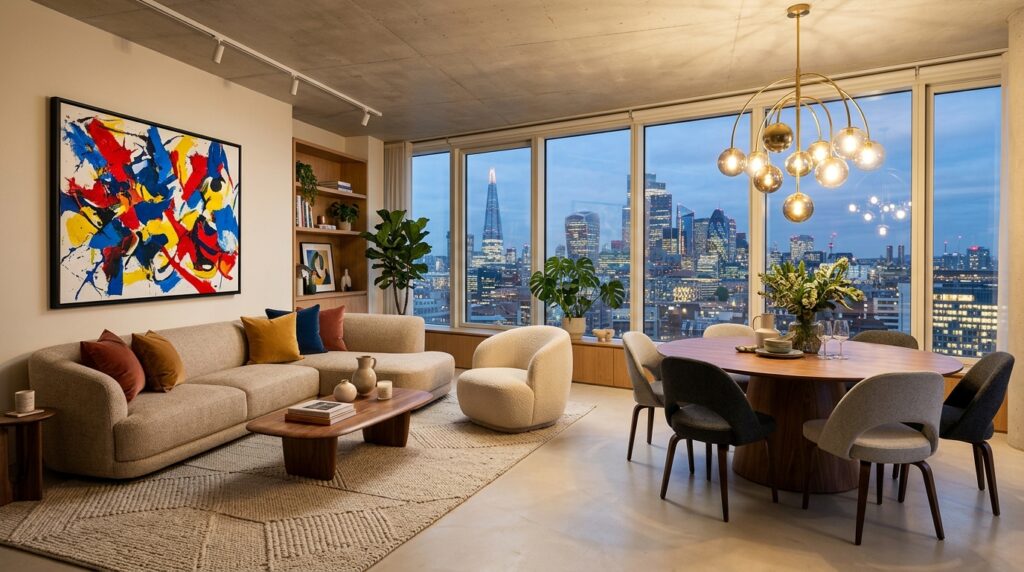
Contemporary design is often confused with modern design — but they’re not the same thing.
Modern refers to a specific era (roughly 1920s–1970s). Contemporary means right now — whatever is current and evolving. It’s the most fluid of all the styles because it literally changes with the times.
Key characteristics:
- Neutral base with bold accents
- Curved and organic furniture shapes (very current in 2026)
- Mix of materials: glass, steel, concrete, natural wood
- Emphasis on technology integration (smart home features)
- Art as a focal point
Contemporary design tends to be sleek without being cold, and stylish without being trend-chasing. It’s a solid choice for anyone who wants a home that feels polished and current.
4. Modern Farmhouse Interior Design
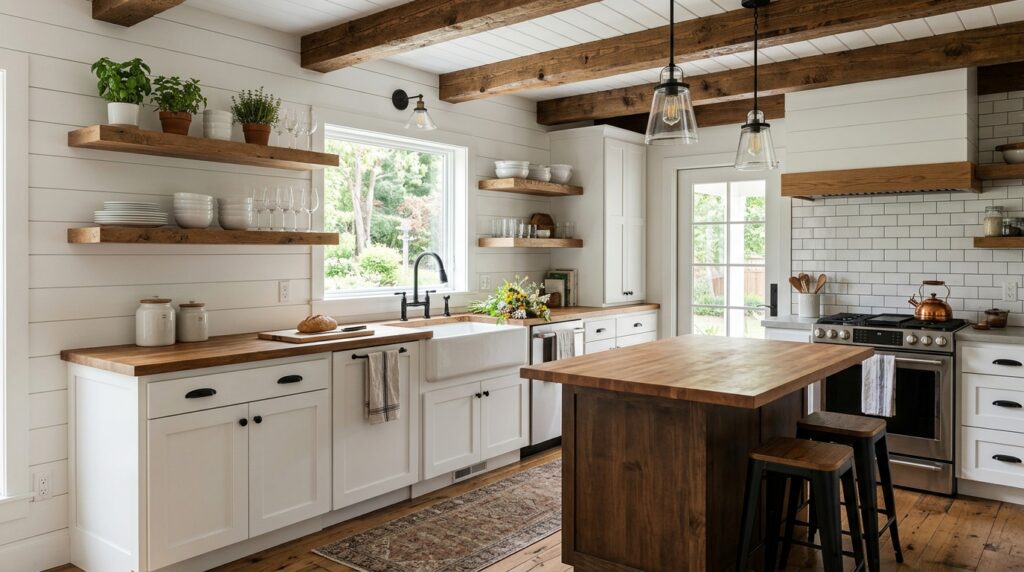
Few interior design styles have had a cultural moment quite like modern farmhouse. Thanks in large part to Chip and Joanna Gaines and their TV show Fixer Upper, this style exploded from a regional aesthetic into a national phenomenon.
Modern farmhouse blends the cozy, lived-in feeling of a traditional farmhouse with cleaner, more contemporary sensibilities.
Key characteristics:
- Shiplap walls and exposed wood beams
- Farmhouse sinks and black iron hardware
- Neutral palette: white, cream, grey, warm wood tones
- Distressed or reclaimed wood furniture
- Galvanized metal accents and woven textiles
It’s comfortable without being precious, which is part of why it works so well for families with kids and pets.
Who it’s best for: Anyone who wants a home that feels warm, casual, and lived-in without being shabby.
5. Mid-Century Modern Interior Design
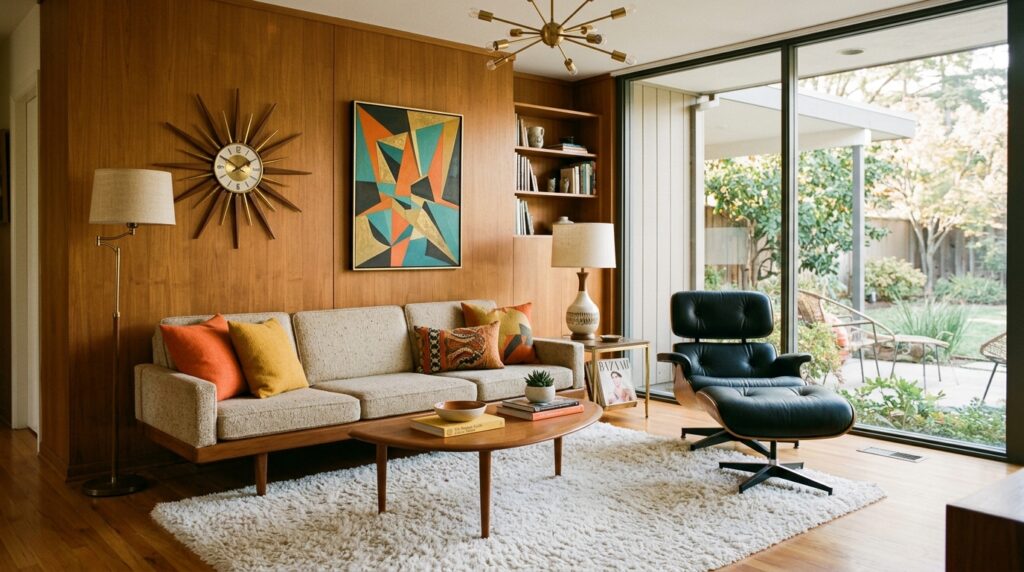
Born in the post-WWII era (roughly 1940s to 1960s), mid-century modern design is characterized by its optimistic, functional aesthetic. It was the era of the Eames Chair, the Tulip Table, and the belief that good design could improve everyday life.
Key characteristics:
- Organic shapes and tapered legs on furniture
- Teak, walnut, and warm wood tones
- Mustard, olive, burnt orange, and avocado color palettes
- Large windows and integration with nature
- Graphic, geometric patterns
Mid-century modern has never really gone out of style — and its strong lines and functional philosophy make it incredibly versatile.
Who it’s best for: Design enthusiasts who love a vintage sensibility with a modern edge.
6. Traditional Interior Design
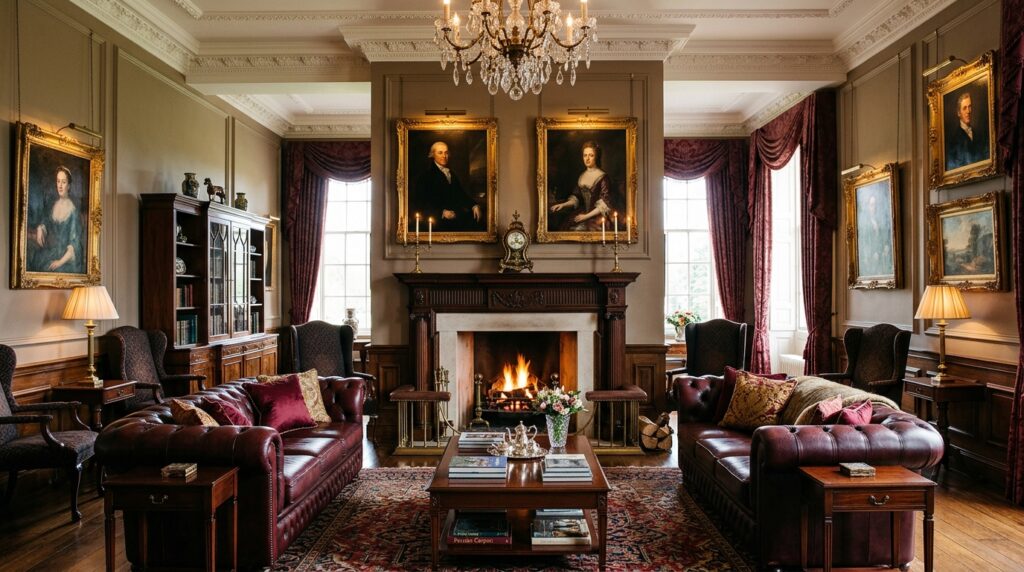
Traditional interior design is rooted in European — particularly English and French — design history. It’s formal, symmetrical, and rich with detail. Think of it as the design equivalent of a tailored suit: structured, elegant, and built to last.
Key characteristics:
- Symmetrical room arrangements
- Dark wood furniture with ornate carved details
- Rich fabrics: velvet, damask, silk, brocade
- Detailed architectural elements: crown molding, wainscoting, coffered ceilings
- Persian and Oriental rugs
- Warm, deep color palettes
Traditional design emphasizes craftsmanship and permanence. According to the American Society of Interior Designers (ASID), traditional style remains one of the most requested aesthetics for formal living and dining spaces.
7. Transitional Interior Design
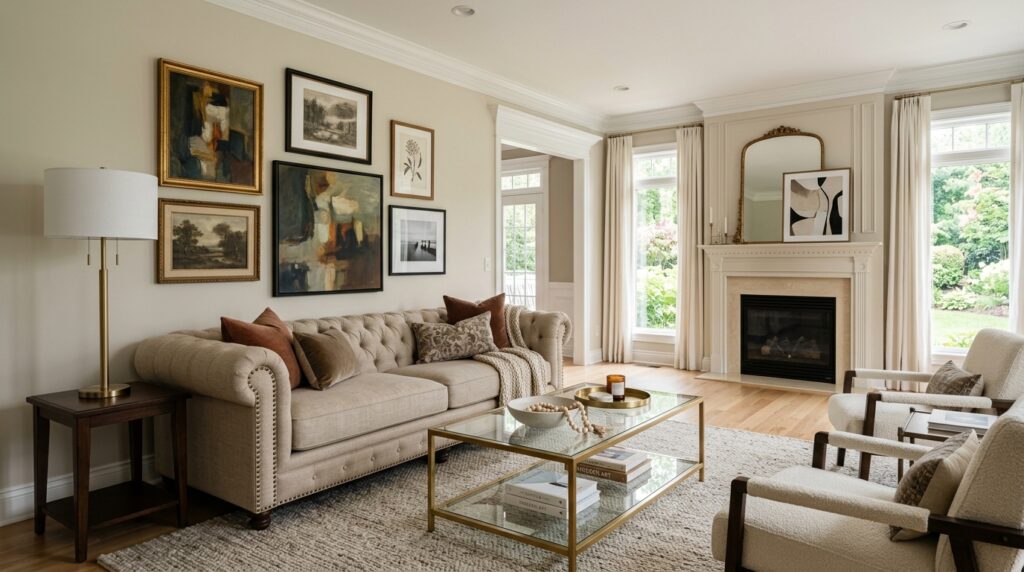
Transitional design is the great compromise — the beautiful middle ground between traditional and contemporary styles. It’s arguably the most popular style in American homes today because it’s warm and welcoming without feeling stuffy or cold.
Key characteristics:
- Neutral palette (taupes, greys, warm whites)
- Mix of curved and straight lines in furniture
- Clean but comfortable upholstery
- Minimal ornamentation but not spartan
- Both antique and modern accents welcome
If you love the comfort of traditional design but find it too formal, and love the sleekness of contemporary but find it too cold — transitional is your answer.
8. Bohemian Interior Design
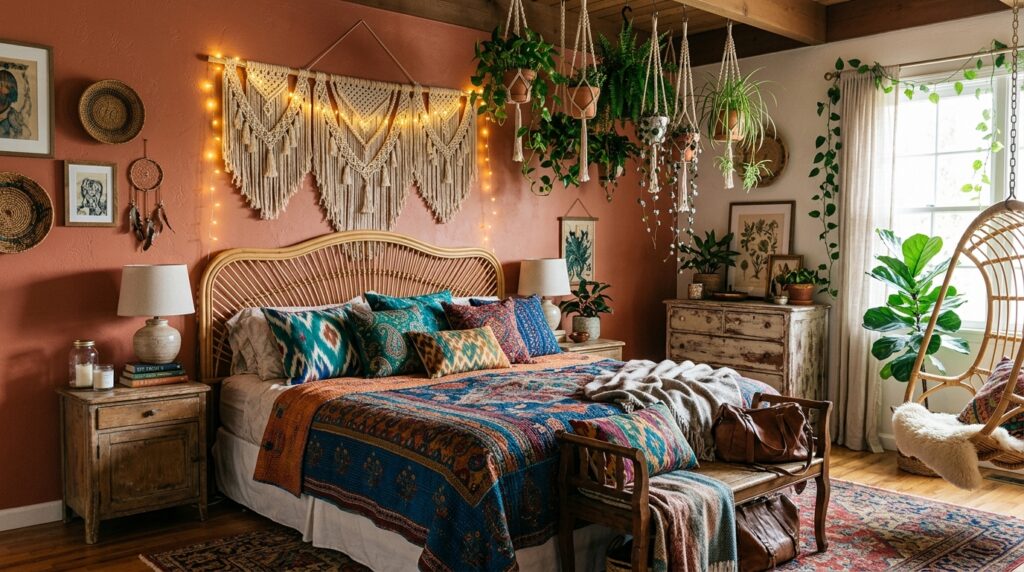
Boho (short for bohemian) is the style of the free spirit. Inspired by the artistic, nomadic lifestyle of 19th-century bohemian communities, this design aesthetic is all about mixing cultures, textures, patterns, and eras into a space that feels deeply personal.
Key characteristics:
- Global patterns: Moroccan, Indian, Turkish, South American
- Natural materials: rattan, jute, macramé, linen
- Layered textiles and mismatched patterns
- Plants — lots of them
- Vintage and thrifted furniture
- Warm, earthy tones with jewel color pops
Unlike maximalism, which can be deliberately curated and controlled, bohemian design thrives on organic accumulation. It should look like you’ve collected these pieces from a lifetime of travels and adventures.
Who it’s best for: Creative, expressive personalities who love layering, color, and natural elements.
9. Rustic Interior Design
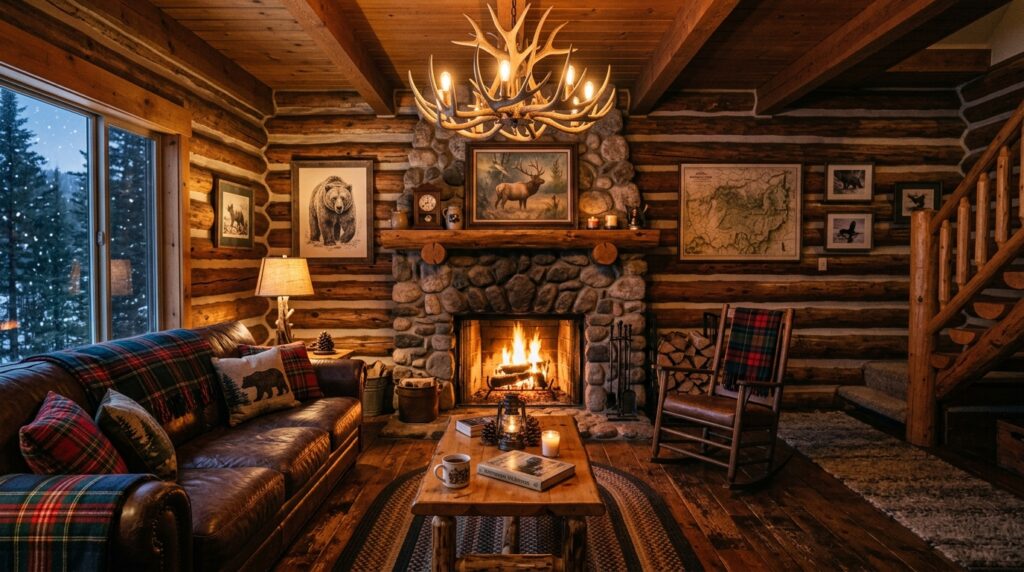
Rustic design draws inspiration from the natural world — mountains, forests, cabins, and countryside living. It’s raw, textured, and intentionally imperfect.
Key characteristics:
- Exposed natural wood (unfinished, rough, or reclaimed)
- Stone walls, stone fireplaces
- Earthy color palette: brown, tan, hunter green, rust
- Leather and cowhide upholstery
- Forged iron light fixtures and hardware
- Vintage and antique accessories
Rustic design overlaps with farmhouse in many ways, but where farmhouse tends to feel updated and light, rustic leans into darkness, heaviness, and raw nature.
10. Coastal Interior Design
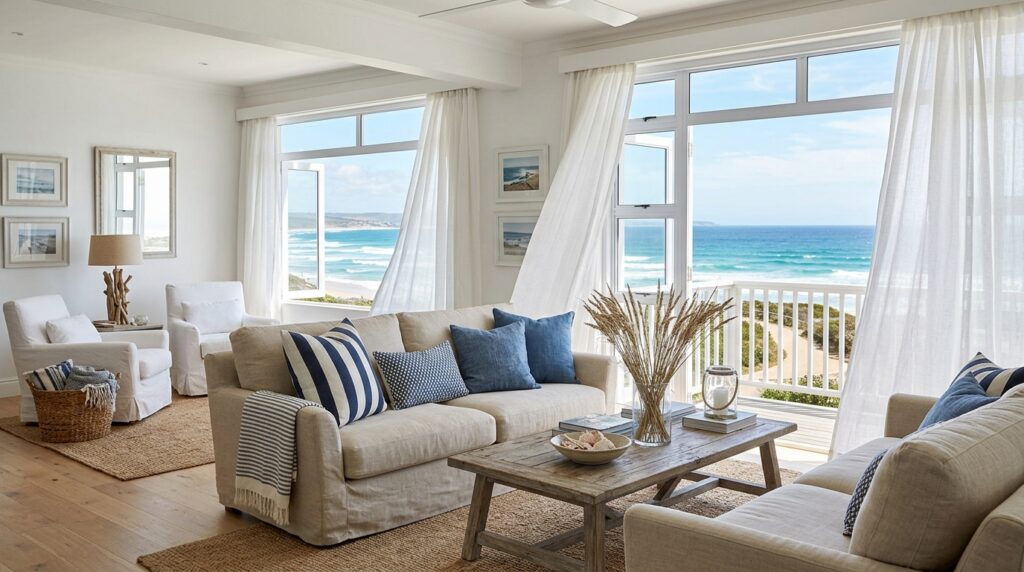
Coastal design captures the easy, breezy feeling of life by the sea — and you don’t have to actually live on the coast to pull it off beautifully.
Key characteristics:
- Whites, creams, sandy beiges, and ocean blues
- Natural textures: jute, linen, sea grass, rope, driftwood
- Nautical accents (anchors, rope knots, starfish — used sparingly)
- Light and airy spaces with lots of natural light
- Weathered or whitewashed wood furniture
Who it’s best for: Anyone who wants a relaxed, vacation-ready home atmosphere year-round.
11. Mediterranean Interior Design
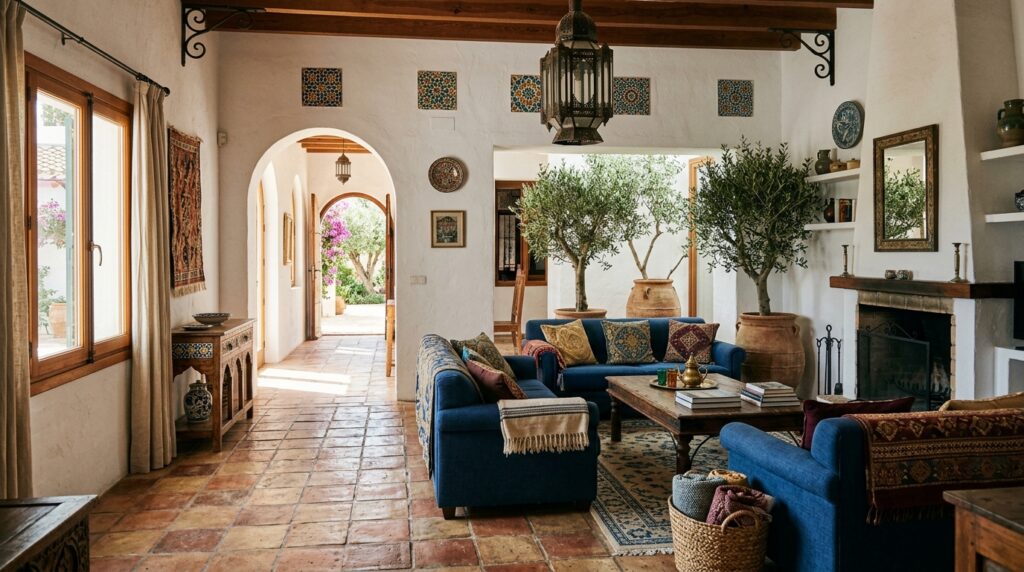
Mediterranean design pulls from the sun-drenched coasts of Southern Europe — Spain, Italy, Greece, and Morocco. It’s warm, textural, and deeply connected to outdoor living.
Key characteristics:
- Terracotta tile floors and clay pottery
- Arched doorways and windows
- White stucco or plaster walls
- Wrought iron accents: railings, light fixtures, furniture legs
- Deep blues, burnt oranges, and earthy reds
- Mosaic tiles as decorative accents
Mediterranean interiors feel ancient and timeless in the best possible way — like a villa you could happily live in for a century.
12. Eclectic Interior Design
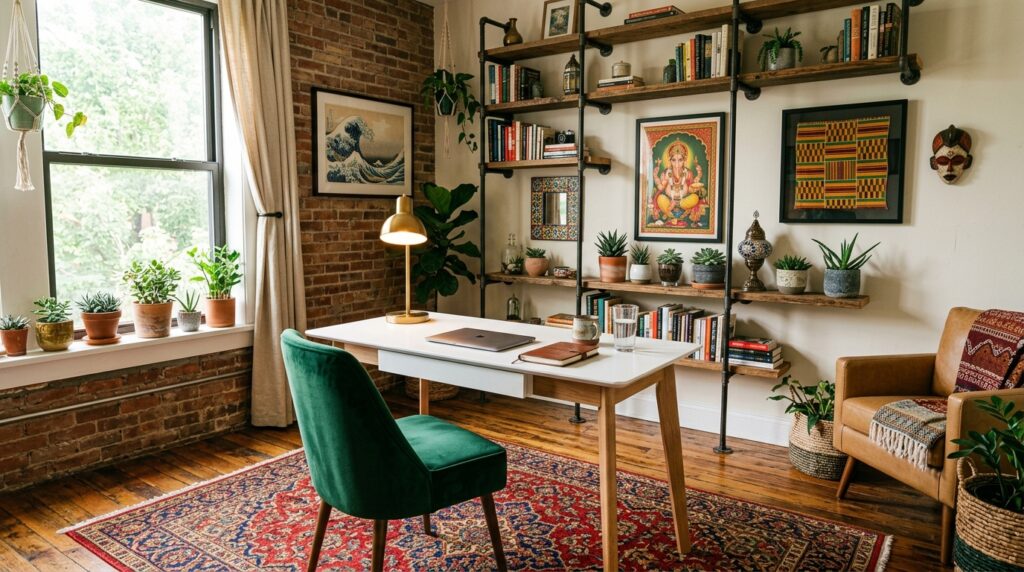
Eclectic design is not the same as “I couldn’t pick a style.” Done well, it’s the most sophisticated approach to decorating — the ability to curate pieces from multiple eras and cultures into a space that feels uniquely personal.
The key to eclectic design is cohesion through restraint. You mix boldly, but you anchor everything with a consistent color palette, repeated materials, or a unified scale.
Key characteristics:
- Intentional mixing of styles, eras, and cultures
- A unifying color story or material thread
- One-of-a-kind, personally meaningful pieces
- Contrast: old vs. new, rough vs. smooth, formal vs. casual
- Requires a confident editorial eye
Expert Tip: In eclectic design, stick to a maximum of three dominant colors throughout the space. This invisible thread holds wildly different pieces together.
13. Victorian Interior Design
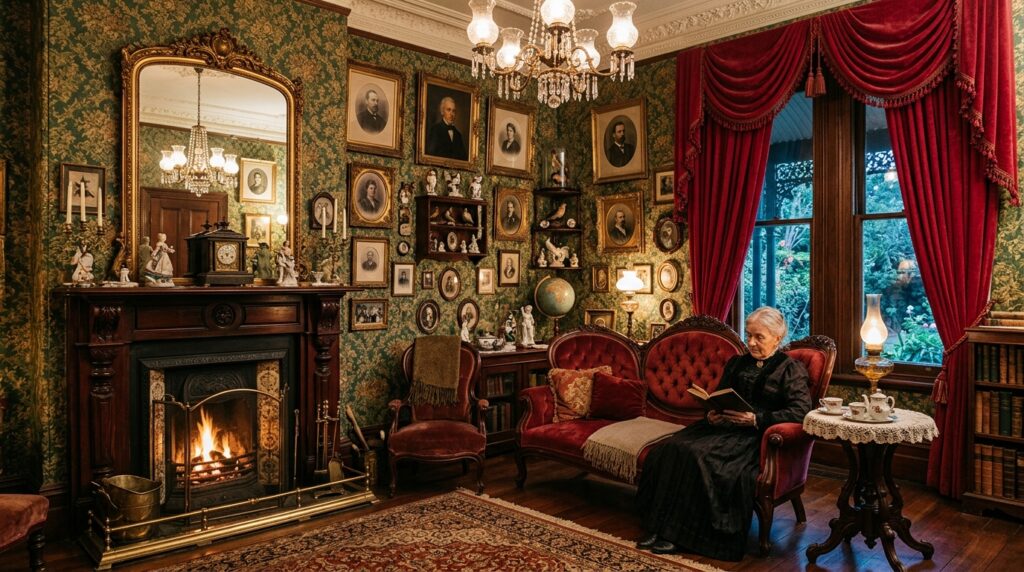
Victorian design — named for the reign of Queen Victoria (1837–1901) — is one of the most maximalist, ornate, and dramatic styles in the history of Western design.
Key characteristics:
- Dark, jewel-toned color palettes
- Heavily patterned wallpaper (florals, damask, botanical prints)
- Ornate woodwork, carved furniture, and gilded accents
- Velvet, silk, and tapestry upholstery
- Crowded arrangements of art and objects
- Tassels, fringe, and elaborate window treatments
Victorian is experiencing a surprising modern revival, with designers incorporating “neo-Victorian” elements like maximalist wallpapers and ornate lighting into contemporary spaces.
14. Bauhaus Interior Design
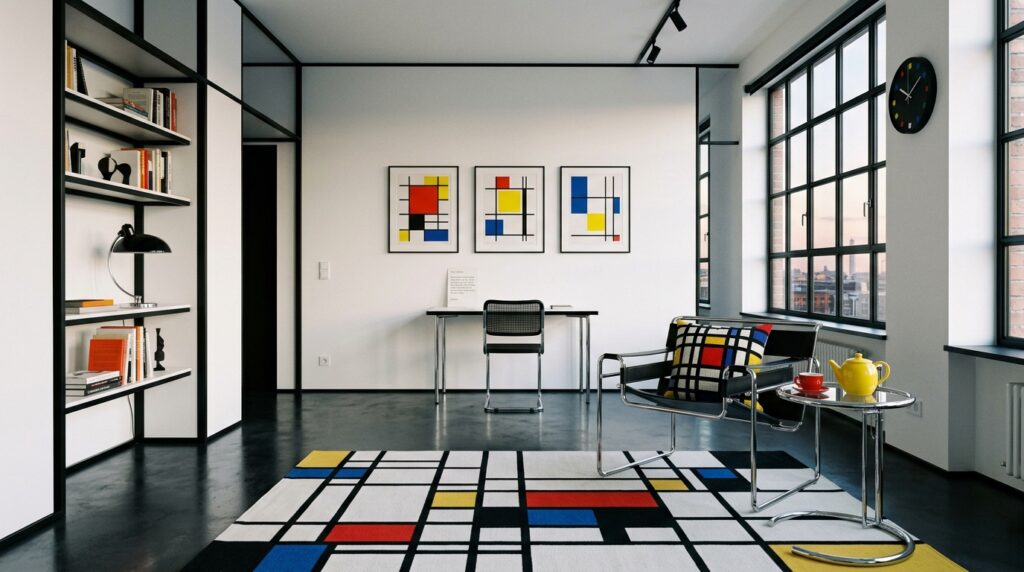
The Bauhaus school, founded in Germany by Walter Gropius in 1919, produced one of the most influential design philosophies in history. Its core idea: art and function must work together.
Key characteristics:
- Geometric forms and clean lines
- Primary color palette: red, yellow, blue, black, and white
- Tubular steel furniture (Marcel Breuer’s Wassily chair is iconic)
- Rejection of unnecessary ornamentation
- Form follows function
Bauhaus is the intellectual ancestor of modern design — its influence appears in everything from IKEA furniture to Apple product design.
15. Brutalist Interior Design
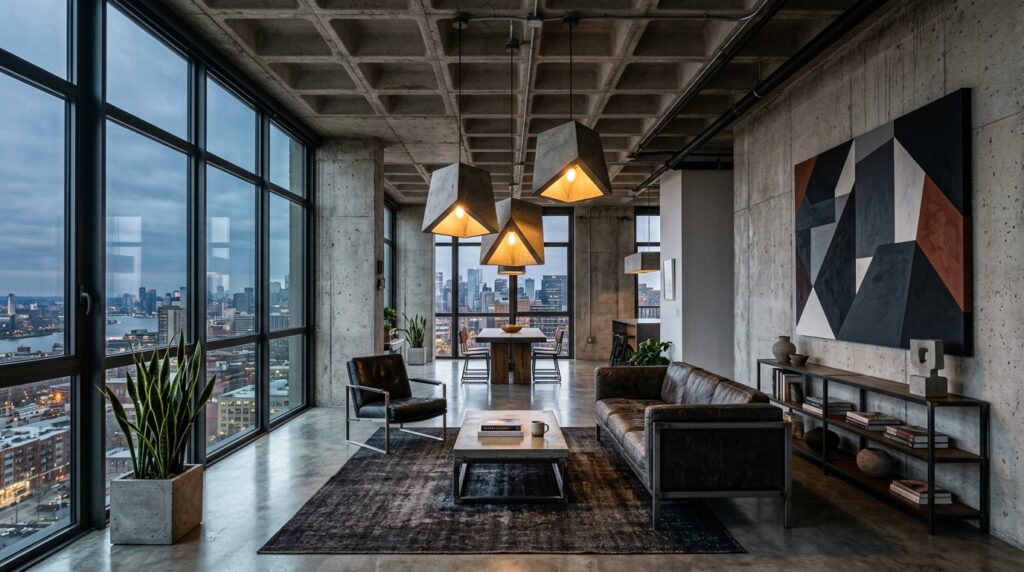
Brutalism in interior design takes its name from the French béton brut — meaning “raw concrete.” Originally an architectural movement from the 1950s–70s, brutalism has made a dramatic comeback in edgy, urban interiors.
Key characteristics:
- Exposed concrete walls, ceilings, and floors
- Raw, unfinished surfaces: exposed brick, unsealed wood
- Monochromatic palette: greys, blacks, dark charcoal
- Oversized, sculptural furniture
- Industrial lighting: bare bulbs, oversized pendants
- Bold geometric artwork
Brutalism isn’t for the faint of heart — but for those who embrace it, it creates some of the most striking and memorable interiors imaginable.
16. Art Nouveau Interior Design
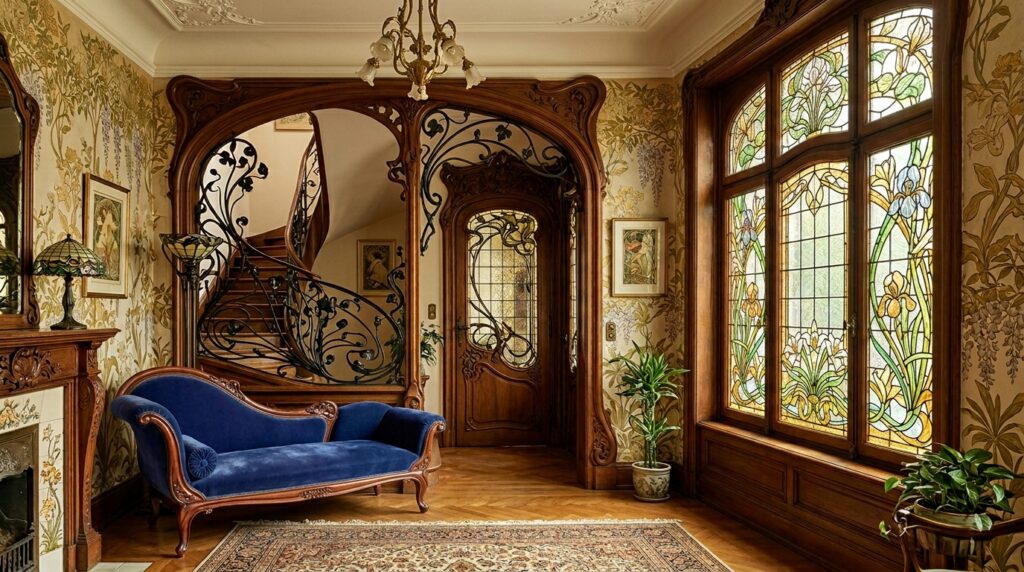
Art Nouveau flourished from roughly 1890 to 1910, and it was defined by its obsession with natural forms — flowers, vines, insects, and the sinuous curves found in nature.
Key characteristics:
- Organic, flowing curved lines (no straight angles if possible)
- Nature-inspired motifs: flowers, dragonflies, peacocks, waves
- Hand-crafted details: stained glass, mosaic tiles, carved wood
- Muted, natural color palette: sage, gold, lilac, ivory
- Integration of art into everyday functional objects
Architects like Antoni Gaudí and Victor Horta pushed Art Nouveau to its fullest expressions. Today, its organic sensibility is being revived as a counterpoint to cold, tech-driven interiors.
17. 70s Interior Design
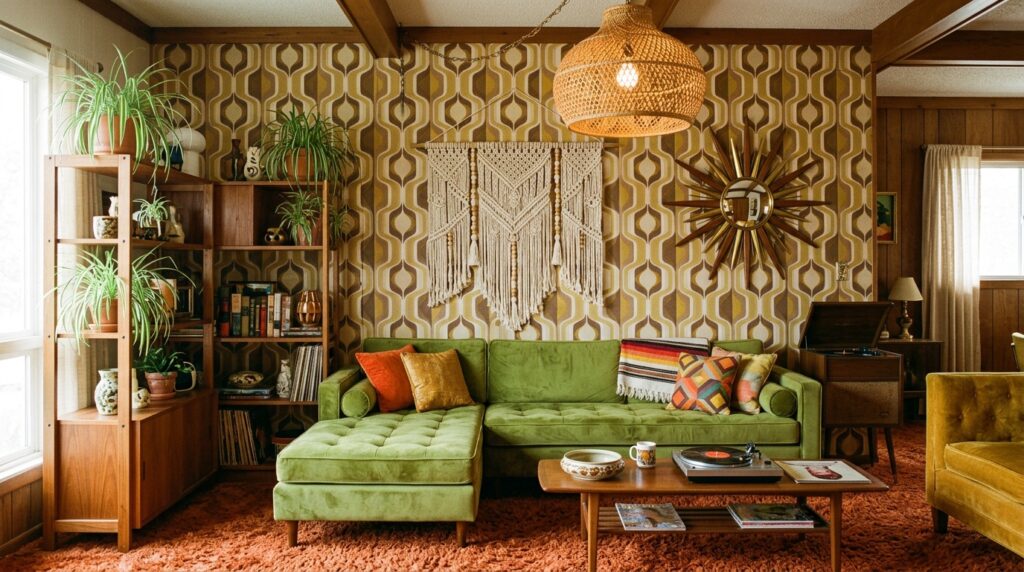
The 1970s produced some of the most distinctive — and now deeply nostalgic — design choices in American home history. And right now, they’re back with a vengeance.
Key characteristics:
- Avocado green, harvest gold, burnt orange, and chocolate brown
- Shag carpeting and velvet upholstery
- Sunburst mirrors and macramé wall art
- Rattan and wicker furniture
- Bold geometric wallpaper
- Low-profile, conversation pit–style seating
The 70s revival is a massive part of current interior design trends 2026, with many designers blending these earthy warm tones with contemporary clean lines for a “retro-modern” hybrid aesthetic
18. Bohemian vs. Eclectic: What’s the Difference?
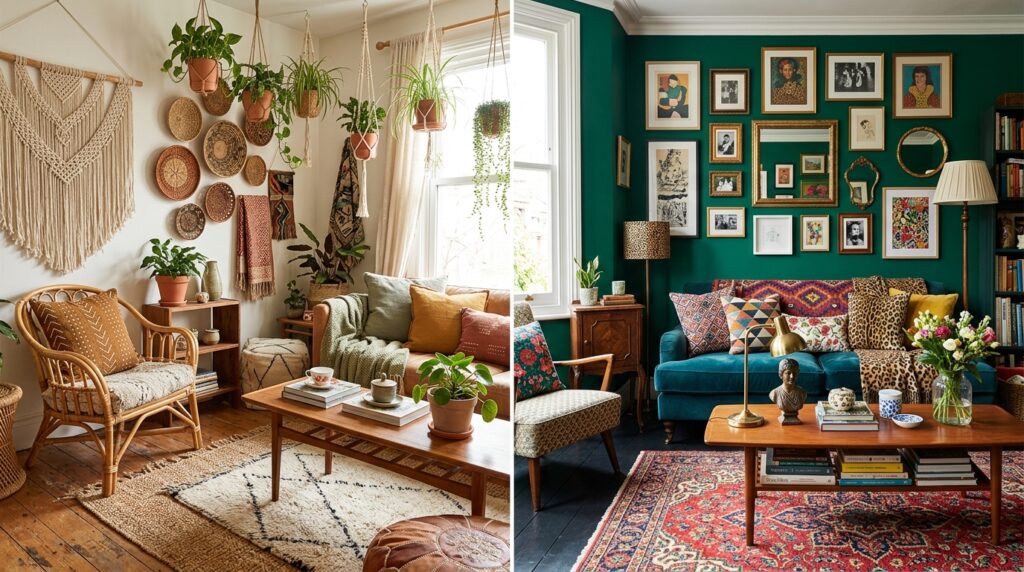
These two styles are often confused, so let’s settle it clearly:
| Feature | Bohemian | Eclectic |
|---|---|---|
| Mood | Relaxed, organic, nomadic | Curated, intentional, sophisticated |
| Color | Earthy + warm jewel tones | Controlled palette throughout |
| Furniture | Vintage, global, casual | Any era, any culture |
| Art | Tapestries, global crafts | Fine art, diverse mediums |
| Feel | Collected over time | Designed with editorial eye |
Interior Design Styles for Small Spaces
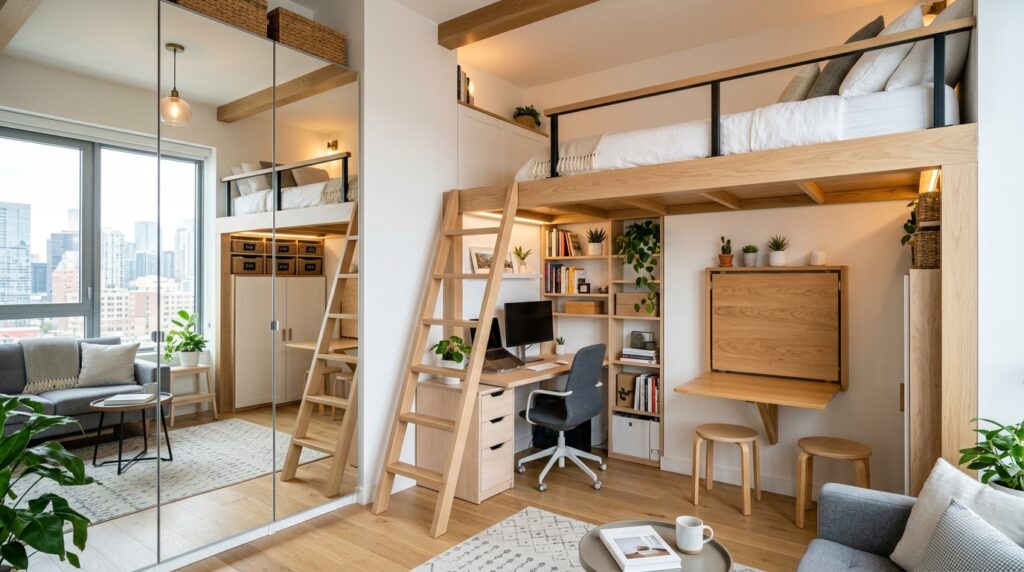
Living in a smaller space doesn’t mean you have to sacrifice style. It just means you need to be smarter about which elements you bring in.
Best styles for small spaces:
- Minimalist — Less furniture, more breathing room. A natural fit.
- Scandinavian — Light colors, functional furniture, minimal ornamentation.
- Contemporary — Sleek furniture with hidden storage features.
- Coastal — Light colors and open, airy feeling create the illusion of space.
Universal tips for small space design:
- Use mirrors to reflect light and visually double the space
- Choose furniture with legs (visible floor space makes rooms feel larger)
- Go vertical with shelving to maximize wall height
- Choose a monochromatic color scheme to eliminate visual clutter
- Invest in multi-functional furniture (ottomans with storage, sofa beds)
Resources like Apartment Therapy are packed with practical, photographed examples of small-space design done brilliantly.
Apartment Interior Design: Making the Most of Rented Spaces
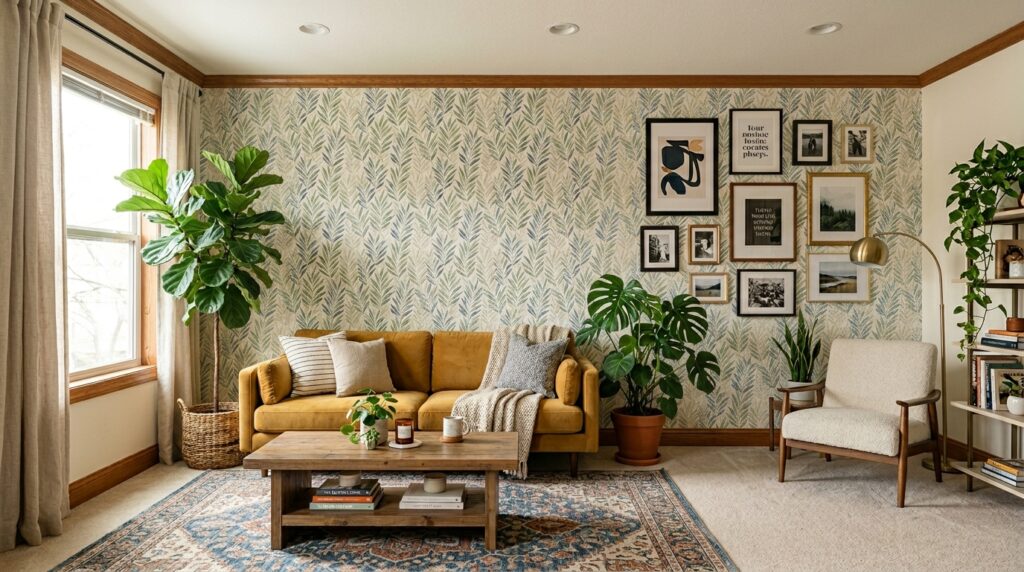
Apartment living comes with constraints — landlord rules, shared walls, limited square footage. But it absolutely doesn’t mean you can’t create a stunning space.
Renter-friendly style strategies:
- Removable peel-and-stick wallpaper adds pattern and personality without damaging walls (check out options at Tempaper)
- Large area rugs transform boring carpet or cold tile floors
- Furniture placement — don’t push everything against the walls
- Command strip gallery walls — a beautiful collection of art with zero damage
- Curtains hung high and wide make windows look larger and ceilings taller
- Lighting matters enormously — replace overhead fixtures with floor lamps for a warm, boutique-hotel glow
Interior Design Trends 2026: What’s Hot Right Now
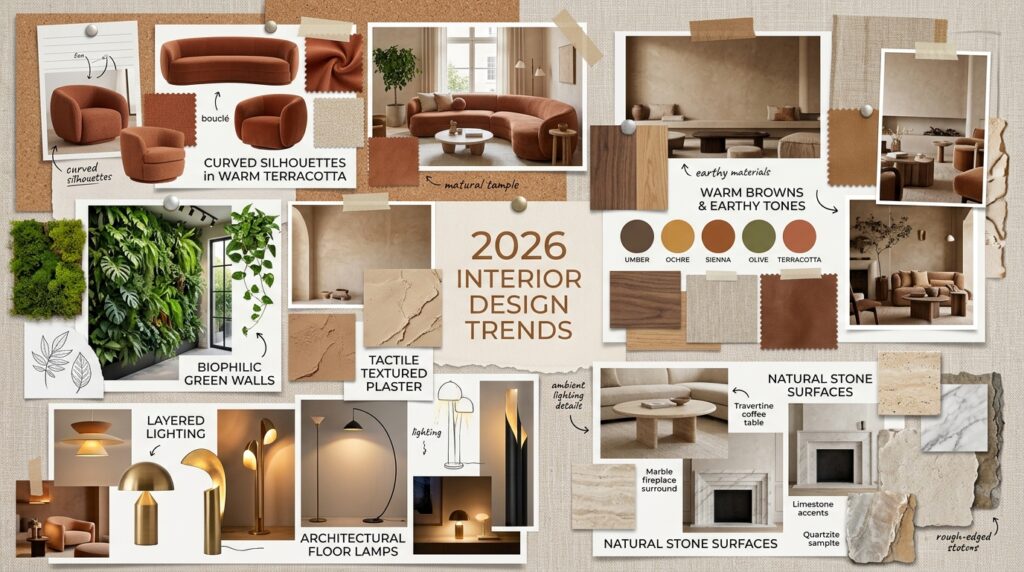
Design trends shift every year, and 2026 is bringing some genuinely exciting directions.
Top 2026 Interior Design Trends:
1. Warm Earth Tones Dominate The cool grey era is definitively over. Browns, warm taupes, terracotta, and sandy beiges have taken over — and they’re pairing beautifully with deep greens and rich rust tones.
2. Curved Everything Straight lines are retreating. Arched doorways, curved sofas, round coffee tables, and organic lamp shapes are everywhere. This softness feels intentional after years of hard, angular furniture.
3. Biophilic Design Goes Mainstream Biophilic design — incorporating natural elements like living walls, natural materials, natural light, and plant-based textures — has moved from niche wellness concept to mainstream design principle.
4. Quiet Luxury Understated, high-quality, logo-free elegance. Think cashmere throws, hand-thrown ceramics, artisanal furniture, and unbranded but clearly excellent everything. It’s the anti-maximalist luxury play.
5. Textured Walls Flat, painted walls are giving way to tactile interest — limewash paint, plaster textures, Venetian plaster, even fabric-wrapped panels. Walls are becoming a design feature in their own right.
6. Dark, Moody Rooms Deep hunter greens, midnight navy, charcoal, and even black paint are having a huge moment in dining rooms, libraries, and bedrooms.
7. The Nostalgia Wave (70s and Art Nouveau) Both the 70s revival and art nouveau influences are being incorporated into contemporary spaces — earthy palettes, organic curves, and artisanal craftsmanship.
According to Architectural Digest’s 2026 trend forecast, the overarching theme is “intentional comfort” — design that serves the actual human living in the space rather than performing for Instagram.
Interior Design Books Worth Reading
If you want to go deeper, these books are essential:
- The Kinfolk Home — Slow living and understated beauty
- Elements of Style by Erin Gates — Practical and personal design guide
- The Interior Design Reference & Specification Book — The industry bible for technical knowledge
- More: A Design Memoir by Abigail Ahern — The maximalist’s manifesto
- The Curated Home — Eclectic, personal, globally inspired
How Much Does an Interior Designer Cost?
One of the most common questions beginners ask is: Can I actually afford a designer? The answer is more nuanced than you might think.
Interior Designer Pricing Models:
1. Hourly Rate Most designers charge between $50–$500 per hour, depending on experience and location. According to HomeAdvisor, the national average in the U.S. is around $100–$200/hour.
2. Flat Fee Some designers charge a set project fee, typically ranging from $2,000 to $12,000+ for a single room, depending on scope and complexity.
3. Percentage of Total Project For full renovations and larger projects, designers often charge 10%–20% of the total project budget — including furniture, materials, and labor.
4. Cost-Plus Pricing The designer buys furniture and materials at trade/wholesale prices and charges a markup (usually 15%–35%) when billing you.
Budget-Friendly Alternatives:
- E-design services — Online-only design consultations, typically $300–$1,500 per room. Platforms like Decorilla and Havenly make this accessible.
- Design consultation only — One 2-hour session with a designer to get professional advice and a clear direction.
- Virtual staging tools — Apps like RoomSketcher and Planner 5D let you experiment yourself.
How to Find Your Interior Design Style
Before you buy a single piece of furniture, do this exercise:
Step 1: Audit what already draws you in. Scroll your Instagram or Pinterest saves. What rooms do you keep stopping on? What colors appear again and again? Look for patterns — not individual pieces, but feelings.
Step 2: Identify what you hate. Knowing what you don’t want is just as valuable. Do you hate clutter? Then minimalism is probably in your DNA. Hate stark white walls? You might lean bohemian or maximalist.
Step 3: Consider your lifestyle, not just your taste. A home with young children and pets probably shouldn’t be done in white linen and glass-top tables, no matter how beautiful that looks in photos. Match your style to how you actually live.
Step 4: Create a mood board. Collect images — physically or digitally (Pinterest works brilliantly for this) — until a clear visual story emerges. Notice the dominant colors, materials, and silhouettes.
Step 5: Start small. You don’t need to redesign your whole home at once. Pick one room, or even one corner, and apply what you’ve learned.
Expert Tips: Designing Like a Pro
After everything you’ve read, here are the principles that professional designers swear by:
1. Start with the Rug
The rug anchors everything. Choose it before your sofa, before your curtains. It sets the color palette and defines the zone.
2. Get the Scale Right
The biggest beginner mistake is choosing furniture that’s too small for the room. In a generous living room, a massive sectional usually looks better than a tiny loveseat floating in the center.
3. Layer Your Lighting
Every room needs three types of light: ambient (overhead), task (reading/working), and accent (art lights, candles, LED strips). Most people only have one — and it shows.
4. The 60-30-10 Color Rule
60% dominant color (walls, major furniture), 30% secondary color (rugs, curtains, secondary seating), 10% accent color (throw pillows, vases, art). This creates balance without boredom.
5. Don’t Rush
Great rooms are built over time. The best rooms have pieces collected over years — a mix of intentional purchases and happy discoveries. Give yourself permission to live in a space before filling it.
6. Mix Old and New
A brand-new room where everything came from the same store at the same time always looks flat. One vintage piece — a found lamp, an inherited rug, a thrifted artwork — adds the depth and soul that makes a room feel real.
Pros and Cons of Popular Interior Design Styles
| Style | Pros | Cons |
|---|---|---|
| Minimalist | Easy to maintain, timeless, calming | Can feel cold or impersonal |
| Maximalist | Expressive, joyful, personal | Requires strong editing eye to avoid chaos |
| Bohemian | Affordable, personal, creative | Hard to pull off without looking cluttered |
| Mid-Century Modern | Timeless, widely available, functional | Authentic vintage pieces can be expensive |
| Contemporary | Always current, flexible | Can date quickly as trends shift |
| Coastal | Breezy, relaxing, widely loved | Can feel clichéd with too-literal nautical elements |
| Traditional | Elegant, durable, formal | Can feel dated or heavy to younger buyers |
| Transitional | Crowd-pleasing, versatile, safe | Can lack a strong point of view |
FAQs About Interior Design Styles
What is the most popular interior design style in 2026?
Based on search trends and industry reports, transitional design remains the most broadly popular style in residential homes, while quiet luxury minimalism and warm maximalism are the fastest-growing aesthetics. Houzz’s 2026 Design Trends Report confirms that homeowners are prioritizing comfort and personalization over aesthetic perfection.
How do I combine two different interior design styles?
The safest way to mix styles is to: (1) stick to a cohesive color palette, (2) repeat one or two materials throughout (wood, brass, linen), and (3) ensure furniture scales are consistent. The rest — even wildly different styles — will feel cohesive when these three anchors are in place.
What’s the difference between modern and contemporary interior design?
Modern refers to the design movement of the early-to-mid 20th century (characterized by Bauhaus principles, organic forms, and functional furniture). Contemporary simply means current — whatever is being designed and trending right now. Contemporary design is always evolving.
What interior design style is best for resale value?
For maximum broad appeal, real estate agents and designers consistently recommend transitional or contemporary neutral interiors. These styles appeal to the widest range of buyers. According to National Association of Realtors, thoughtful interior design and staging can increase perceived home value by 1%–5%.
Can I mix interior design styles in different rooms?
Absolutely — and many designers actually recommend it. Each room can have its own personality while the home as a whole feels connected through consistent flooring, a recurring color, or a signature material used throughout. This “whole home design story” approach is far more interesting than using the exact same style in every room.
Conclusion: Your Home, Your Story
Interior design styles are not rigid rules — they’re starting points. They give you a vocabulary, a framework, and a community of visual ideas to draw from. Whether you’re drawn to the meditative calm of minimalism, the joyful abundance of maximalism, the nomadic spirit of bohemian design, or the raw power of brutalism, there’s a style — or a combination of styles — that’s perfectly suited to who you are and how you live.
The best interiors are the ones that tell a true story: about the person who lives there, the things they love, the places they’ve been, and the life they want to live. No mood board or trend report can tell you what that story is. Only you know that.
Start small. Collect intentionally. Trust your eye. And have fun.

