
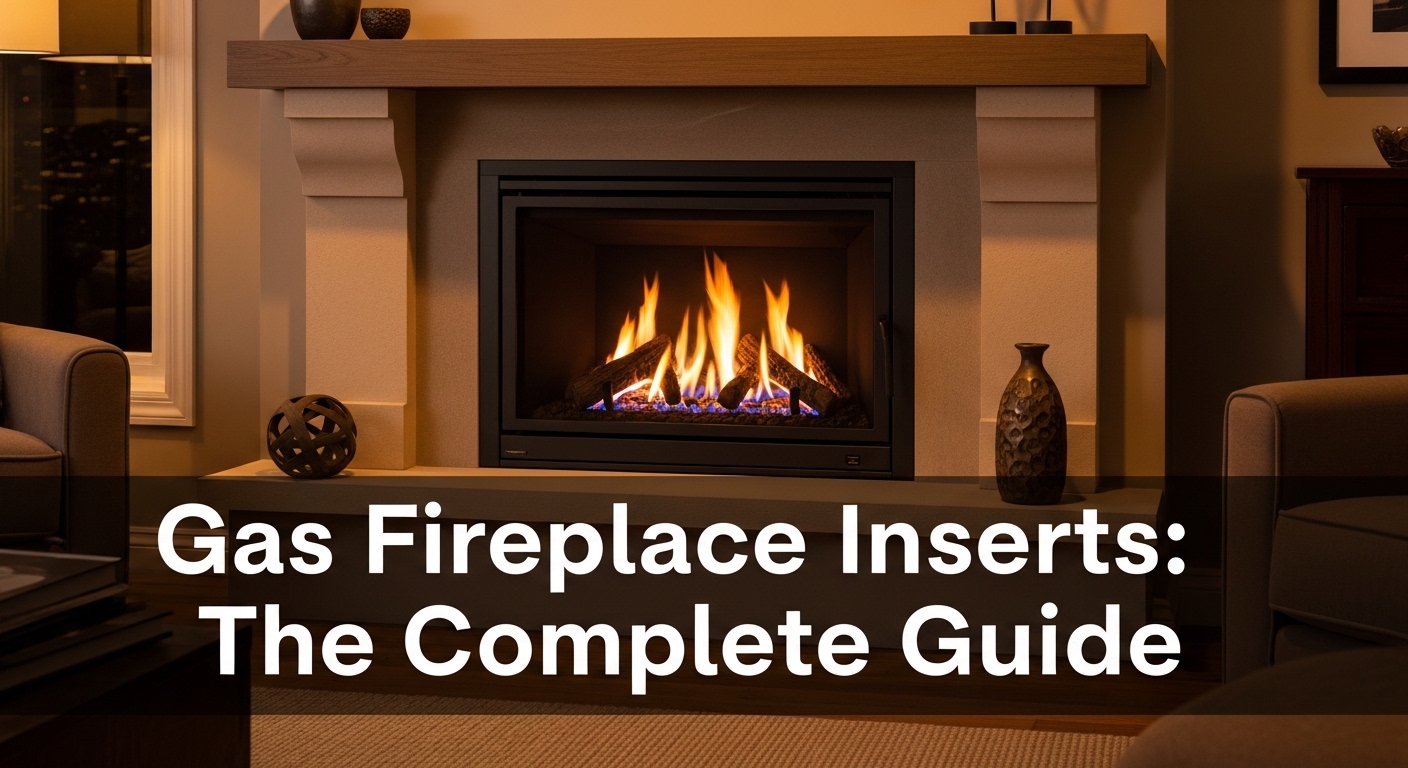
Imagine coming home on a freezing January evening. You walk in, press one button, and within seconds, real flames are dancing behind a glass panel — no hauling wood, no smoke, no ash cleanup. That’s exactly what a gas fireplace insert delivers.
But here’s where most homeowners get stuck: there are several different types of gas fireplaces, each with very different installation requirements, efficiency ratings, and costs. Pick the wrong one and you could end up with an underperforming unit, a massive installation bill, or worse — a safety issue.
This guide breaks down every major type of gas fireplace insert in plain English. Whether you’re converting an old wood-burning fireplace, building from scratch, or simply trying to figure out what’s already installed in your home, you’ll find everything you need right here.
What Is a Gas Fireplace Insert?
Before diving into the different types, it’s worth making sure we’re talking about the same thing.
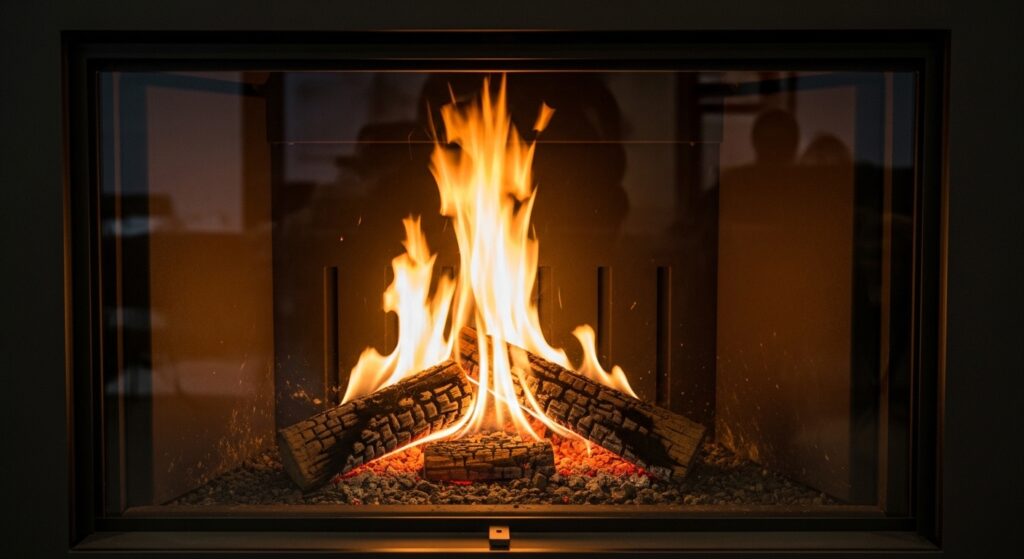
A gas fireplace insert is a self-contained firebox unit that slides into an existing masonry or factory-built fireplace opening. Think of it like an appliance — similar to sliding a built-in oven into a cabinet cutout. It converts an old, inefficient wood-burning fireplace into a clean, efficient, gas-powered heat source.
Gas inserts are different from:
- Freestanding gas stoves — standalone units that sit on the floor and don’t require an existing fireplace
- Gas fireplace mantels — decorative units built into a wall or cabinet, often used in homes without an existing fireplace
- Built-in gas fireplaces — zero-clearance units designed for new construction or major remodeling
According to the U.S. Department of Energy, gas fireplace inserts can be significantly more energy-efficient than open wood-burning fireplaces, which lose up to 90% of their heat up the chimney. A quality gas insert, by contrast, can achieve efficiency ratings between 70% and 90%+.
Why Choose a Gas Fireplace Insert? The Real Benefits
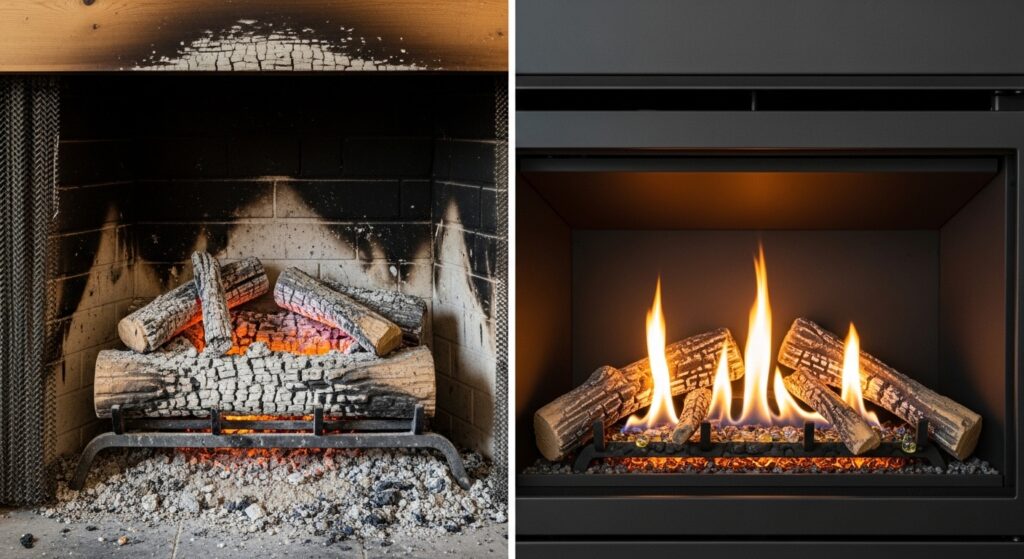
People switch to gas-burning fireplaces for a handful of compelling reasons — and most homeowners who make the switch say they’d never go back.
Convenience and Ease of Use
There’s no question about it — gas is easier. You flip a switch, use a remote, or even control it via a smartphone app with some modern models. No stacking wood, no kindling, no waiting for the fire to “catch.” With a gas insert, you have instant heat and instant ambiance, exactly when you want it.
Better Heating Efficiency
Open wood fireplaces are notoriously inefficient. The Environmental Protection Agency (EPA) notes that traditional open fireplaces can actually draw heat out of a room because they pull warm indoor air up the chimney. A gas insert with a sealed combustion chamber keeps that from happening, delivering measurable warmth to your living space.
Cleaner Air Quality
Gas burns cleaner than wood. No creosote buildup in your chimney, significantly lower particulate emissions, and no ash to dispose of. For households with allergy or asthma concerns, this is a major selling point.
Lower Long-Term Maintenance
Gas inserts require far less maintenance than wood-burning fireplaces. An annual inspection by a certified technician is typically all that’s needed. The Hearth, Patio & Barbecue Association (HPBA) recommends annual servicing for all gas hearth appliances to ensure safe and efficient operation.
Versatile Fuel Options
Most gas inserts run on either natural gas or propane. If you’re not connected to a municipal gas line, a propane fireplace with an on-site tank is a perfectly viable alternative. Many units are available in dual-fuel configurations or can be converted with a kit.
The Different Types of Gas Fireplaces: A Complete Breakdown
This is the heart of the guide. Understanding the different types of gas fireplaces — and more specifically, the different types of gas fireplace inserts — is essential before you spend a single dollar.
The major classifications break down into venting type and installation format. Let’s go through each one.
1. Direct Vent Gas Fireplace Insert
The direct vent gas fireplace is widely considered the gold standard for home heating, and for good reason. It’s the most popular type sold today, and most HVAC professionals and hearth specialists will recommend it as their first choice.
How It Works
A direct vent system uses a sealed, two-pipe system: one pipe brings outside air in for combustion, and the other pipe exhausts combustion gases to the outside. The firebox is completely sealed behind tempered glass, meaning combustion air never comes from inside your home.
This sealed design has two big advantages:
- It doesn’t compete with your home’s HVAC system for air
- Combustion gases (including carbon monoxide) can’t leak into your living space
Venting Configuration
Direct vent inserts can vent horizontally through an exterior wall or vertically through a chimney or roof. This gives them tremendous installation flexibility. Many can even vent in a combination of directions using an offset, making them suitable for a wide range of home layouts.
Efficiency
Direct vent inserts are highly efficient, with Annual Fuel Utilization Efficiency (AFUE) ratings typically ranging from 70% to over 85%. Because they pull combustion air from outside, none of the heated air in your home is consumed by the flame.
Who It’s Best For
Direct vent is the right choice for most homeowners — especially those with an existing masonry chimney that can be lined with a flexible liner, or those willing to run a coaxial pipe through an exterior wall.
| Feature | Direct Vent |
|---|---|
| Venting Required | Yes — through wall or chimney |
| Uses Indoor Air | No |
| Efficiency Range | 70–85%+ |
| Glass Front | Sealed |
| CO Risk | Very Low |
| Best For | Most homes, family-first safety |
2. Ventless Gas Fireplace Insert (Vent-Free)
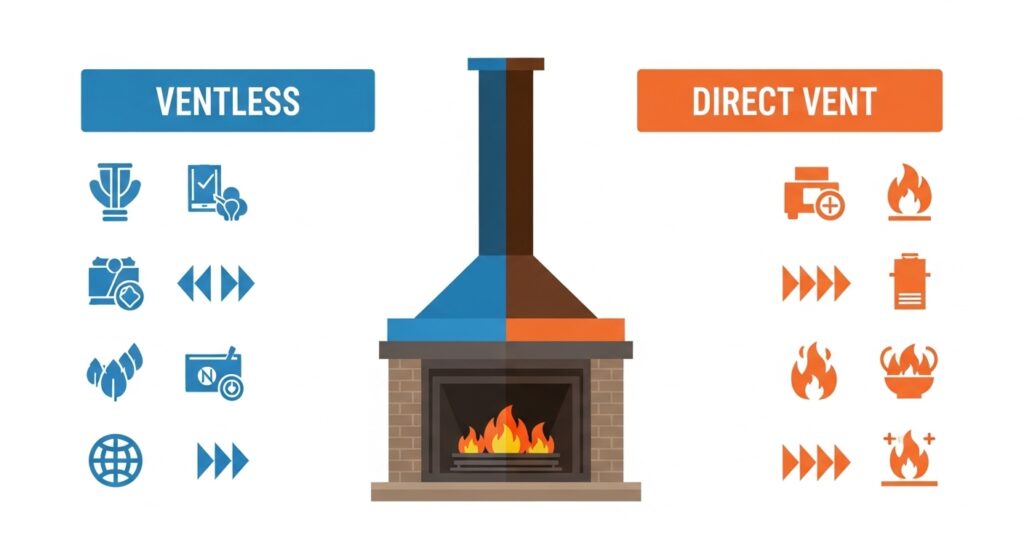
Ventless gas fireplaces — also called vent-free — operate without any flue, chimney, or exhaust pipe. They burn gas so cleanly and completely that combustion byproducts stay within acceptable limits according to ANSI standards, and all the combustion air and exhaust stays inside the room.
How It Works
A vent-free insert draws room air for combustion and releases combustion byproducts back into the room. Modern vent-free units are engineered to burn gas at a precise air-to-fuel ratio that minimizes CO and other byproducts. They typically include an Oxygen Depletion Sensor (ODS) that automatically shuts the unit off if oxygen levels in the room drop too low.
Key Advantage: Maximum Efficiency
Because 100% of the heat stays in the room, vent-free inserts boast efficiency ratings of 99% — the highest of any gas fireplace type. None of the heat you pay for goes out a chimney.
The Controversy: Ventless vs. Direct Vent
The gas fireplace ventless vs. direct vent debate is one of the most hotly contested topics in the hearth industry. Here’s an honest look at both sides:
Arguments For Ventless:
- Near-100% heating efficiency
- Easier and cheaper installation (no liner or pipe needed)
- Can be installed almost anywhere with a gas supply
Arguments Against Ventless:
- Releases water vapor and CO₂ into the living space (can increase humidity)
- Banned or restricted in several states (including California and Massachusetts) and some local municipalities
- Not recommended for bedrooms or small, tightly sealed rooms
- Some individuals report headaches, irritation, or other symptoms with extended use
Before purchasing a vent-free insert, always check your local building codes. You can find state-by-state information through the National Fire Protection Association (NFPA).
| Feature | Ventless (Vent-Free) |
|---|---|
| Venting Required | No |
| Uses Indoor Air | Yes |
| Efficiency Range | Up to 99% |
| Glass Front | Open or Sealed |
| CO Risk | Moderate (mitigated by ODS) |
| Best For | Areas with no chimney access, mild climates |
3. Natural Vent Gas Fireplace (B-Vent)
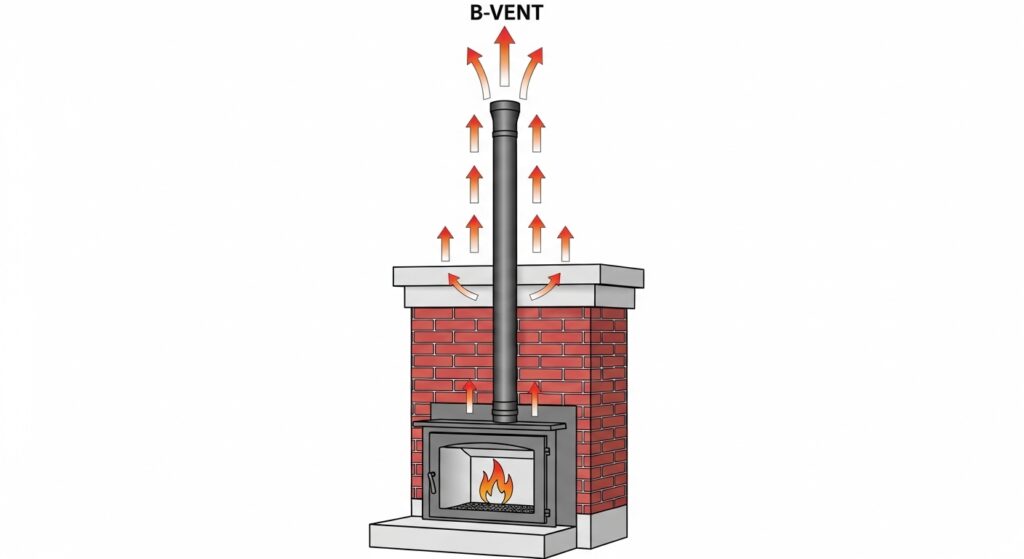
The natural vent gas fireplace — often called a B-vent fireplace — is an older venting technology that uses your home’s natural warm-air convection to draw combustion gases upward and out through a vertical vent pipe or existing chimney.
How It Works
Unlike direct vent, a B-vent system has a single flue pipe that carries exhaust gases upward. Combustion air is drawn from inside the living space. Because it relies on natural draft, the vent pipe must go straight up (or nearly so) — horizontal runs are very limited.
Efficiency and Limitations
Natural vent gas fireplaces are the least efficient of the three primary types, with AFUE ratings typically in the 50–70% range. Because they draw room air, they can also create a slight negative pressure effect — somewhat similar to the drafting problem seen with wood fireplaces.
They also require a vertical chimney or a dedicated vertical vent run, which limits installation flexibility considerably compared to direct vent systems.
Why You Might Still Choose It
Despite these drawbacks, natural vent inserts are still a reasonable choice if:
- You have an existing tall masonry chimney that isn’t suitable for a liner
- You prefer the appearance of an open-front fireplace (some B-vent models have an open front)
- You’re working with a very tight budget on installation costs
4. Propane Fireplace Insert
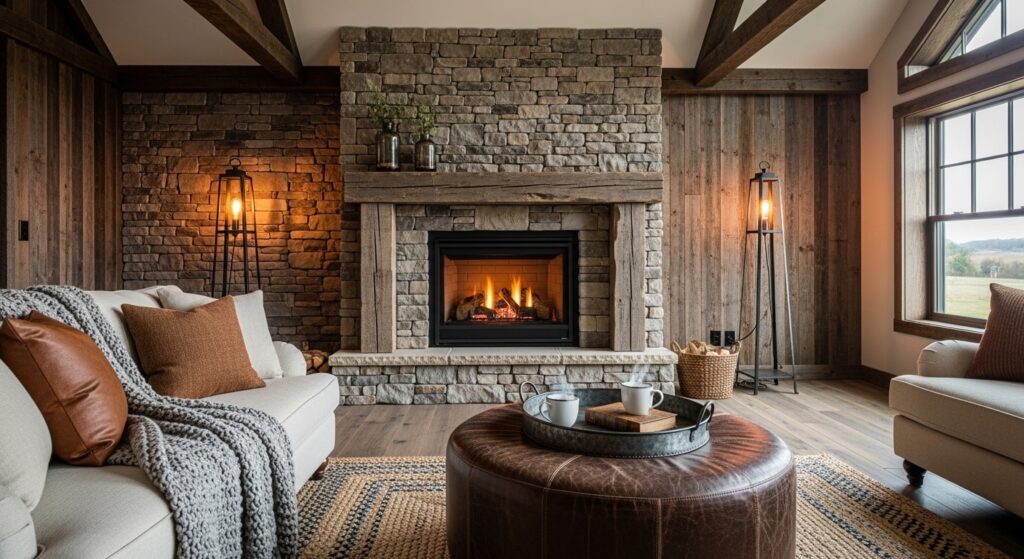
Technically, a propane fireplace is not a separate type by venting configuration — it’s a fuel type. However, it deserves its own section because many buyers specifically need a propane-compatible unit due to the absence of a natural gas line.
Natural Gas vs. Propane: The Key Differences
| Factor | Natural Gas | Propane |
|---|---|---|
| Source | Municipal pipeline | On-site tank |
| BTU Content | ~1,020 BTU/cu ft | ~2,516 BTU/cu ft |
| Cost (typical) | Lower per BTU | Higher per BTU |
| Availability | Urban/suburban | Rural areas |
| Conversion | Often possible with kit | Often possible with kit |
Propane burns hotter than natural gas, so burner orifices must be properly sized for the fuel type. Most quality gas inserts are available in both natural gas and propane versions, or include a conversion kit.
The American Gas Association provides useful resources on natural gas appliance standards, while the Propane Education & Research Council offers guidance specifically on propane-powered heating appliances.
Tank Sizing for a Propane Fireplace
If you’re running a propane fireplace insert as a primary or supplemental heat source, tank sizing matters. For a typical 30,000–40,000 BTU gas insert used 4–6 hours per day, most households find a 250- to 500-gallon above-ground tank adequate for a heating season, depending on climate.
5. Corner Gas Fireplace Insert
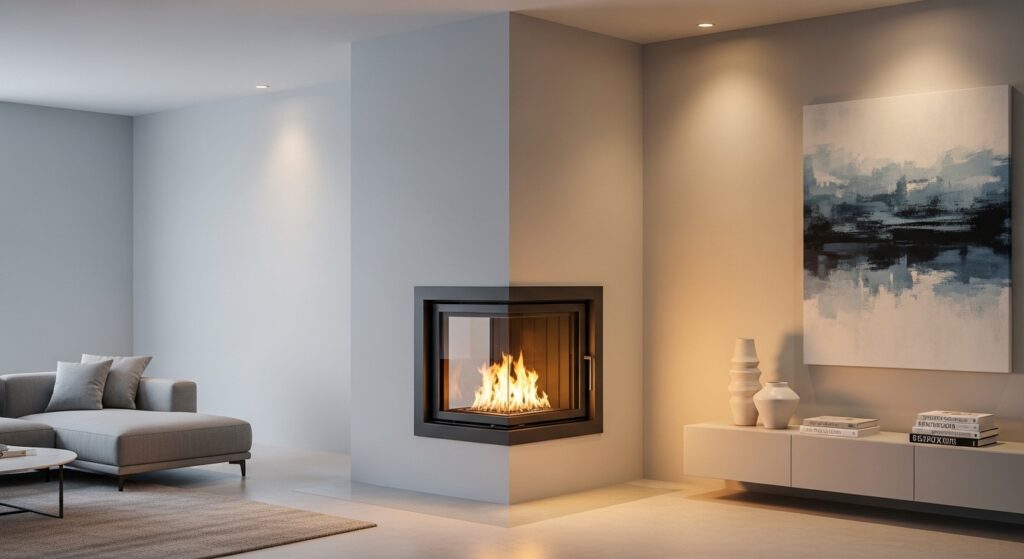
A corner gas fireplace isn’t defined by its fuel or venting type — it’s defined by its placement. These units are specifically designed to sit at a 45-degree angle in the corner of a room, making them ideal for maximizing floor space and creating a dramatic visual focal point.
Why Go Corner?
Corners are often wasted space in a room. A corner gas fireplace insert transforms that dead zone into one of the most eye-catching features in the home. They tend to radiate heat in a broader arc than a traditional flat-wall fireplace, which can be beneficial for open-plan living areas.
Most corner units use direct vent technology, though vent-free corner models exist as well. The venting on a corner install typically runs up through the ceiling or diagonally through a wall, and the installation is generally more complex than a standard flat-wall unit — factor in additional labor costs.
Design Versatility
Corner gas fireplaces come in a wide range of styles, from ultra-modern three-sided glass designs to traditional log-effect units with decorative brick surrounds. Many high-end models feature:
- Three-sided viewing panels (panoramic effect)
- Ember beds (glass beads, river stones, or driftwood)
- Adjustable flame height
- Built-in blowers for improved heat circulation
6. Built-In / Zero-Clearance Gas Fireplace
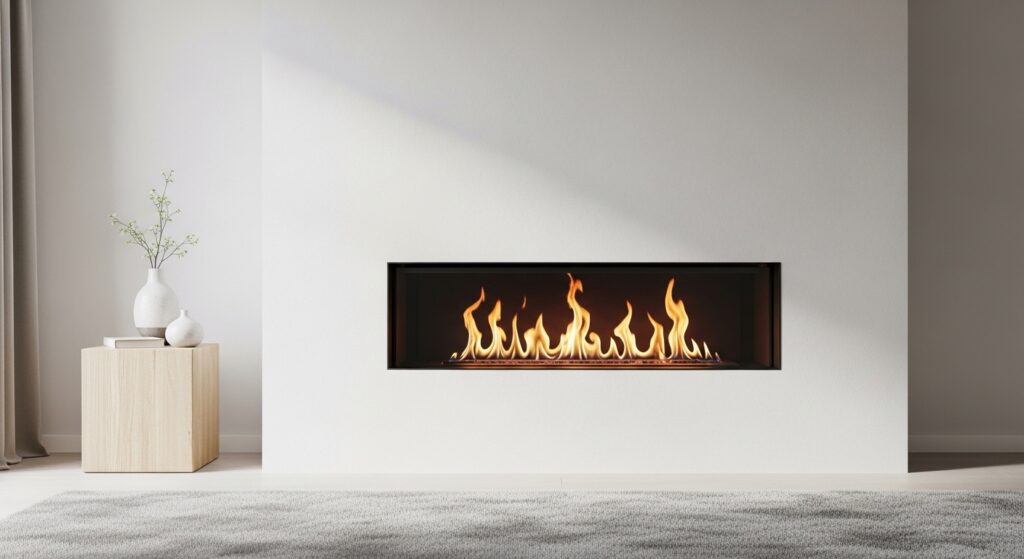
A zero-clearance gas fireplace (also called a built-in or linear gas fireplace) is designed for installation directly into a wall — not into an existing fireplace opening. It’s the go-to solution for new construction or homes that don’t have an existing fireplace at all.
How It Works
The “zero-clearance” name refers to the fact that these units are so well-insulated, they can be installed directly against combustible framing materials (wood studs, drywall) with zero clearance — no masonry surround required. This dramatically reduces construction costs and complexity.
Linear vs. Traditional
Modern zero-clearance fireplaces increasingly favor the linear (landscape) format — wide, horizontal glass panels with a strip of flames visible across the full width. This look has become extremely popular in contemporary and mid-century modern interiors.
Traditional (portrait format) built-in units are still widely available for those who prefer a more classic look.
Installation Consideration
Because these aren’t inserts into an existing fireplace, installation involves framing the wall opening, which is typically a job for a licensed contractor. Venting is usually via direct vent, with the coaxial pipe running horizontally to an exterior wall.
Types of Fireplace Inserts: A Quick Reference Comparison Table
Still trying to decide which type fits your situation? Here’s a side-by-side breakdown of all the major types.
| Type | Venting | Efficiency | Install Cost | Best Application |
|---|---|---|---|---|
| Direct Vent Insert | Dual pipe (in + out) | 70–85%+ | Moderate | Most homes, families |
| Ventless Insert | None | Up to 99% | Low | Supplemental heat, no chimney |
| Natural Vent (B-Vent) | Single upward flue | 50–70% | Low-Moderate | Existing masonry chimney |
| Propane Insert | Varies by type | Varies | Moderate | Rural homes, no gas line |
| Corner Insert | Usually direct vent | 70–85%+ | Moderate-High | Corner placement, open plans |
| Built-In / Zero-Clearance | Usually direct vent | 70–85%+ | High | New construction, no fireplace |
What to Look for When Buying a Gas Fireplace Insert: Key Factors
Understanding the types is half the battle. The other half is knowing which specific features matter most when comparing models.
BTU Output
BTU (British Thermal Unit) measures heating capacity. A higher BTU rating means the unit can heat a larger space. As a general rule:
- 15,000–25,000 BTUs → Best for small rooms (up to ~500 sq ft)
- 25,000–40,000 BTUs → Suitable for medium rooms (500–1,000 sq ft)
- 40,000+ BTUs → For large spaces or whole-home supplemental heating
Don’t just buy the highest BTU model you can find. An oversized unit will short-cycle, reducing efficiency and comfort.
Efficiency Rating (AFUE or Thermal Efficiency %)
Look for units with an AFUE (Annual Fuel Utilization Efficiency) rating or a Steady-State Efficiency percentage. Higher is better. Many premium inserts qualify for the ENERGY STAR label when they meet specific efficiency thresholds.
Ignition System
Modern gas inserts typically offer one of two ignition systems:
- Electronic Ignition (Intermittent Pilot) — The pilot only lights when the fireplace is in use, which saves gas when the unit is off. This is the more efficient choice.
- Standing Pilot — A small flame burns continuously, keeping the unit ready to ignite instantly. More reliable in power outages but uses more gas year-round.
Blower / Fan System
A built-in blower circulates warm air from around the firebox into the room, significantly improving heat distribution. Many inserts include a variable-speed blower. If your primary goal is heating (not just ambiance), don’t skip the blower.
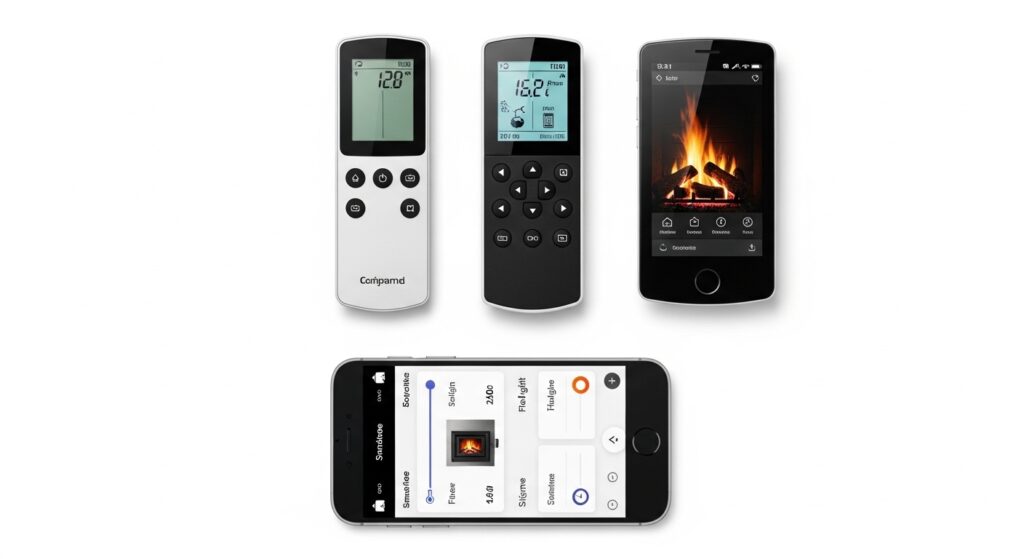
Controls and Smart Features
Top-end inserts now come with:
- Remote controls (thermostatic, timed, or simple on/off)
- Wall thermostats for zone heating
- Wi-Fi / app connectivity for smart home integration
- Variable flame height adjustment
Viewing Area / Glass Size
The size and shape of the glass viewing panel affects both the aesthetic impact and the perceived heat output. Larger glass panels create a more dramatic effect but may transmit more radiant heat into the room directly. Look for tempered ceramic glass rated for high temperatures.
Top Gas Fireplace Inserts: Brands Worth Knowing
You don’t need to memorize every model, but knowing the leading manufacturers helps you shop smarter and avoid low-quality off-brand units.
Regency Fireplace Products
Regency is widely regarded as one of the top gas fireplace insert brands in North America. Their inserts are known for high efficiency, quality construction, and a wide range of sizes and styles. The Regency Liberty L390E and Regency Panorama P36 are frequently cited as among the best gas fireplace inserts available.
Valor Fireplaces
Valor pioneered radiant gas heating and offers a distinctive product line focused on radiant heat efficiency. Their inserts use a patented radiant heat system that mimics the warmth of a traditional wood fire more closely than convective-only systems.
Napoleon Fireplaces
Napoleon offers an exceptionally broad range of gas inserts and built-ins at various price points. They’re particularly well-regarded for their mid-range value and aesthetics.
Heat & Glo
Heat & Glo is a Hearth & Home Technologies brand known for innovative designs, including their popular SL-550TR-IFT and the breathtaking Primo series. They offer some of the best-looking flame presentations in the industry.
Mendota Hearth
Mendota is a premium American-made brand known for exceptional craftsmanship and the best-in-class visual flame effect. Their inserts are often cited for having the most realistic log sets and ember beds.
Gas Fireplace Installation: What to Expect
Installation complexity and cost vary significantly based on the type of insert and your home’s existing infrastructure.
DIY vs. Professional Installation
Let’s be direct here: gas appliance installation is not a DIY project for most homeowners. It involves:
- Gas line connections (requires a licensed plumber or gas fitter in most jurisdictions)
- Venting and flue modifications
- Electrical connections for ignition and blowers
- Building code compliance and inspection
The International Fuel Gas Code (IFGC), published by the International Code Council, governs gas appliance installation standards across most of the country. Work that doesn’t meet code can void your homeowner’s insurance and create serious safety hazards.
Typical Installation Costs
These are ballpark figures and vary widely by region and specific installation complexity:
| Situation | Estimated Installation Cost |
|---|---|
| Insert into existing lined chimney | $500 – $1,500 |
| Insert requiring new chimney liner | $1,500 – $3,500 |
| Zero-clearance / built-in (new framing) | $2,000 – $5,000+ |
| Direct vent through exterior wall | $1,000 – $2,500 |
| Vent-free (simplest installation) | $300 – $800 |
Note: These figures are for labor only and don’t include the cost of the insert itself.
What About Gas Line Extension?
If you don’t already have a gas line near your fireplace location, you’ll need to factor in the cost of running a new gas line. According to HomeAdvisor, extending a gas line typically costs $15–$25 per linear foot of pipe, plus connection fees.
Gas Fireplace Safety: What Every Homeowner Should Know
A gas fireplace is one of the safest types of heating appliances when properly installed and maintained — but there are important safety practices every owner should follow.
Carbon Monoxide Awareness
Every home with any gas appliance should have at least one UL-listed carbon monoxide detector installed. The Consumer Product Safety Commission (CPSC) recommends CO detectors on every level of the home and within 15 feet of each sleeping area.
Direct vent fireplaces pose minimal CO risk due to their sealed combustion system. Vent-free models pose a slightly higher risk, which is why their ODS system is critical.
Annual Inspections
Schedule a professional inspection and cleaning once a year — ideally before the heating season begins. A Certified Fireplace Inspector (CFI) through the Chimney Safety Institute of America (CSIA) can inspect both the appliance and its venting system.
Glass Panel Safety
The glass front on a gas insert gets extremely hot during operation — hot enough to cause severe burns on contact. This is a particular concern for households with young children or pets. Many manufacturers now offer a screen barrier kit that mounts in front of the glass without blocking heat, keeping little hands safe.
Keep the Area Clear
Maintain at least 36 inches of clearance in front of the fireplace from any combustible material — furniture, rugs, curtains, décor. Check your owner’s manual for the manufacturer’s specific clearance requirements, which may differ.
Expert Tips: Getting the Most from Your Gas Fireplace Insert
Here are practical insights based on how real homeowners use their gas fireplaces — and what hearth professionals consistently recommend.
Use Zone Heating Strategically A gas fireplace insert is a powerful zone heating tool. Rather than heating your entire home to 70°F, turn your central system down to 65°F and use the insert to keep your main living area comfortable. Studies by the American Council for an Energy-Efficient Economy (ACEEE) suggest zone heating can reduce heating bills by up to 20%.
Don’t Neglect the Blower Many homeowners leave the blower off because it adds a slight noise. Don’t. The blower can increase the usable heat output by distributing warm air rather than letting it collect at the ceiling. Try the lowest blower speed setting for a near-silent operation.
Choose Ceramic Logs Carefully The visual appearance of your gas insert is heavily influenced by the ceramic log set and ember bed. Premium sets from manufacturers like Peterson Real Fyre or from your fireplace brand’s own accessory line create a far more convincing flame presentation than cheap generic log sets.
Inspect the Pilot Light Seasonally If you have a standing pilot system, check it at the beginning of each heating season. A yellow, flickering, or oversized pilot flame can indicate a dirty or misaligned thermocouple — something a technician can fix in minutes.
Upgrade Your Thermostat Integration If your insert supports a thermostat connection (most modern direct vent models do), add a dedicated thermostat to your living room for precise temperature control. This prevents the fireplace from overheating the space.
Frequently Asked Questions (FAQs)
1. What is the best gas fireplace insert for heating a large room?
For a large room (1,000–1,500+ sq ft), look for a direct vent gas insert with an output of 40,000 BTUs or more and a quality blower system. Models like the Regency Liberty L390E or Napoleon NPI40 are frequently recommended for larger spaces. Ensure the blower is included or add one as an upgrade — without it, heat tends to stratify near the ceiling.
2. What is the difference between a gas fireplace insert and a built-in gas fireplace?
A gas fireplace insert slides into an existing masonry or factory-built fireplace opening. A built-in gas fireplace (also called zero-clearance) is designed to be installed directly into a wall or framed opening where no fireplace previously existed. If you have an old wood-burning fireplace and want to upgrade it, you want an insert. If you’re starting from scratch, you want a built-in unit.
3. Is a ventless gas fireplace safe to use indoors?
Ventless gas fireplaces are designed to meet ANSI Z21.11.2 safety standards and include an Oxygen Depletion Sensor (ODS) that automatically shuts off the unit if oxygen levels fall. However, they are banned in several states (including California and Massachusetts) and some counties, and they are not recommended for use in bedrooms or small, tightly sealed spaces. Always check local building codes before purchasing a vent-free model.
4. Can I convert my gas fireplace insert from natural gas to propane?
In most cases, yes — but it requires a proper conversion kit and should always be performed by a licensed gas technician. The burner orifices are different sizes for natural gas vs. propane, and using the wrong orifice can create a serious safety hazard. Contact your fireplace manufacturer or a certified hearth professional to confirm compatibility and obtain the correct conversion kit for your specific model.
5. How long do gas fireplace inserts last?
A well-maintained gas fireplace insert can last 15 to 25 years or more. Key factors that extend lifespan include annual professional servicing, prompt repair of minor issues (such as worn ignitor wires or thermocouple), and using the unit within its rated capacity. The gas valve and ignition components are typically the first things to need replacement, usually after 10–15 years of regular use. Many manufacturers offer extended warranties of 5–10 years on major components.
Final Thoughts: Which Gas Fireplace Insert Is Right for You?
Let’s bring it all together.
If you have an existing masonry fireplace and want the safest, most efficient conversion with maximum installation flexibility — a direct vent gas insert is almost always the right answer. It’s the industry benchmark for good reason.
If you’re in a rural area without a natural gas supply — a propane fireplace insert running on a tank is a fully viable and popular alternative, with essentially the same performance characteristics.
If you’re building new or remodeling and don’t have an existing fireplace — a zero-clearance built-in gas fireplace opens up incredible design possibilities, particularly with the modern linear format.
If maximizing heating efficiency matters more than everything else and your local codes allow it — a ventless insert delivers unmatched thermal efficiency, but proceed with full awareness of the safety considerations and local restrictions.
Whatever type you choose, commit to annual servicing, install a CO detector, and buy from a reputable brand. A gas fireplace insert is a long-term investment in comfort, ambiance, and home value — when you make a smart choice upfront, it pays dividends for decades.
Ready to Find the Perfect Gas Fireplace Insert?
Visit a local HPBA-member hearth retailer to see models in person, ask questions from certified hearth professionals, and get a free installation estimate for your specific home layout. Seeing the flame live — and feeling the heat — makes the decision a whole lot easier.
Quick Recap: Types of Gas Fireplaces at a Glance
| Type | Ideal For | Key Advantage |
|---|---|---|
| Direct Vent Insert | Most homeowners | Safety + efficiency + flexibility |
| Ventless (Vent-Free) | No chimney, max efficiency | Highest BTU efficiency (up to 99%) |
| Natural Vent (B-Vent) | Existing tall chimneys | Simpler install with classic look |
| Propane Insert | Rural homes | Works without a gas line |
| Corner Gas Fireplace | Corner placement | Space-saving + panoramic view |
| Zero-Clearance Built-In | New construction | Design flexibility, no existing fireplace needed |
This article is for informational purposes only. Always consult a licensed hearth professional or HVAC contractor for installation guidance specific to your home’s layout, local building codes, and fuel supply.

