
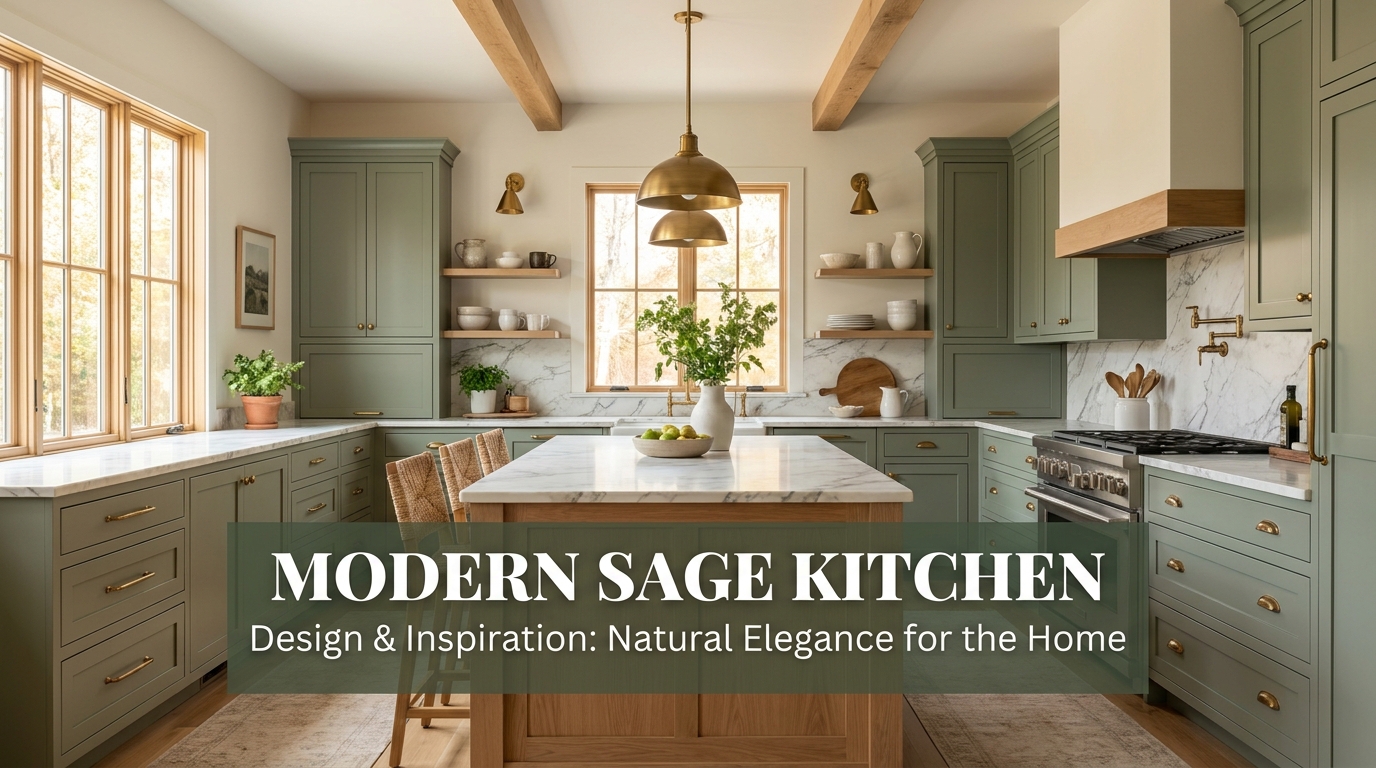
There’s something quietly powerful about a green kitchen.
It feels alive. Grounded. Like nature decided to move indoors and got comfortable. Whether you’ve been scrolling through Instagram mood boards or standing in the paint aisle completely overwhelmed, you’re not alone — green has officially become one of the most searched kitchen colors of the decade.
And honestly? It deserves the hype.
From soft, barely-there sage green kitchen walls to dramatic emerald green kitchen cabinets that stop you in your tracks, green is not a one-note color. It’s a whole spectrum of moods, personalities, and design stories — each one capable of turning an ordinary kitchen into the most talked-about room in your home.
In this guide, we’re covering everything: sage green kitchen ideas, dark green kitchen paint, olive green kitchen walls, green kitchen tile ideas, color pairings, expert tips, and practical advice to help you make the right choice — whether you’re doing a full renovation or just considering a fresh coat of paint.
Let’s dig in.
Why a Green Kitchen Is More Than Just a Trend
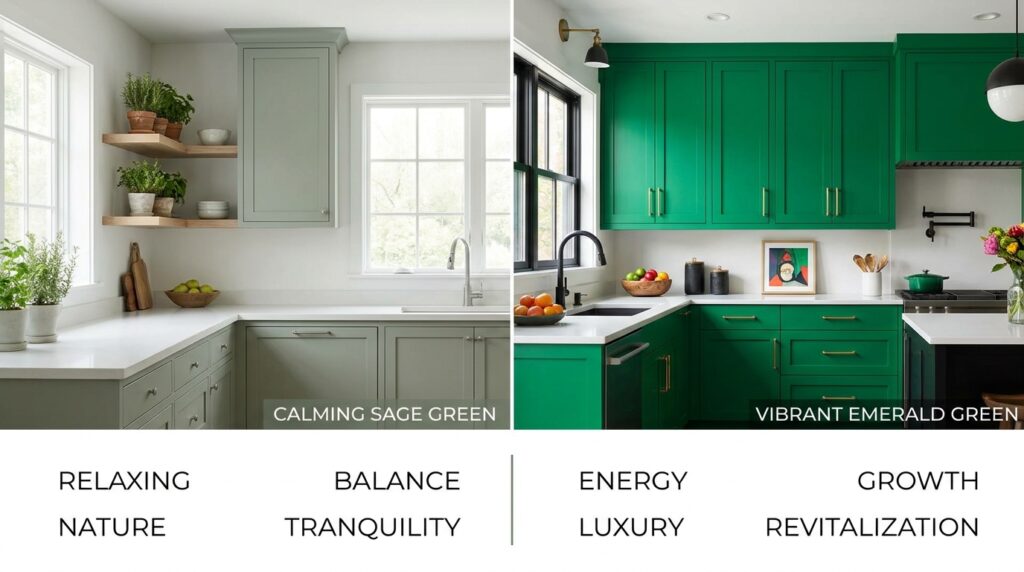
Green has been trending in kitchens for a few years now, but calling it “just a trend” undersells what’s actually happening. Interior designers and color psychologists point to something deeper.
According to color psychology research, green is the color most associated with balance, renewal, and calm — which makes it ideal for a space where people cook, gather, and unwind. It’s tied to nature and organic living, which aligns with a wider cultural shift toward biophilic design.
Pantone’s Color Institute has noted that earthy, muted greens like sage, olive, and hunter consistently rank among the most emotionally soothing palettes in interior environments. It’s not a coincidence that kitchens — spaces where families spend enormous amounts of time — have embraced this color so enthusiastically.
Beyond mood, green is also remarkably flexible. It plays beautifully with:
- Warm metals (brass, copper, gold)
- Natural textures (wood, rattan, linen)
- Cool marble and stone
- Crisp whites and creams
- Deep navies and blacks
And unlike some trendy colors that look stunning in a magazine but exhausting in real life, green tends to age gracefully. It deepens with light changes throughout the day — fresh and energizing in morning sun, moody and sophisticated in candlelight.
Sage Green Kitchen Ideas: The People’s Favorite
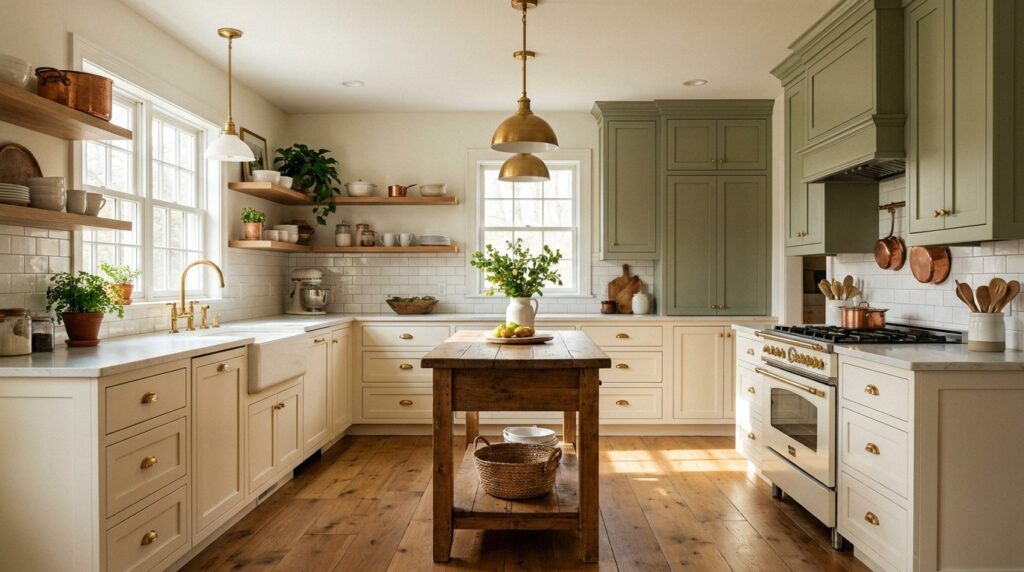
If there’s one green that has genuinely taken over the kitchen design world, it’s sage. Soft, dusty, and eternally elegant, sage green kitchen ideas work across styles — traditional, modern farmhouse, transitional, and even contemporary minimalist.
What Is Sage Green, Exactly?
Sage green sits in the grey-green family. It’s muted, not vibrant — more dusty than bright. Think of dried sage leaves, eucalyptus, or pale lichen on stone. That grey undertone is what makes it so livable. It doesn’t compete with your food, your décor, or your cabinetry. It just… works.
Popular sage green paint colors include:
- Benjamin Moore Sage (2143-40) — a classic, soft sage with cool undertones
- Sherwin-Williams Rosemary (SW 6187) — richer and slightly deeper
- Farrow & Ball Mizzle (No.266) — a warm, chalky sage with a heritage feel
- Behr Sagebrush Green (PPU11-07) — budget-friendly and widely available
Sage Green Kitchen Cabinet Ideas
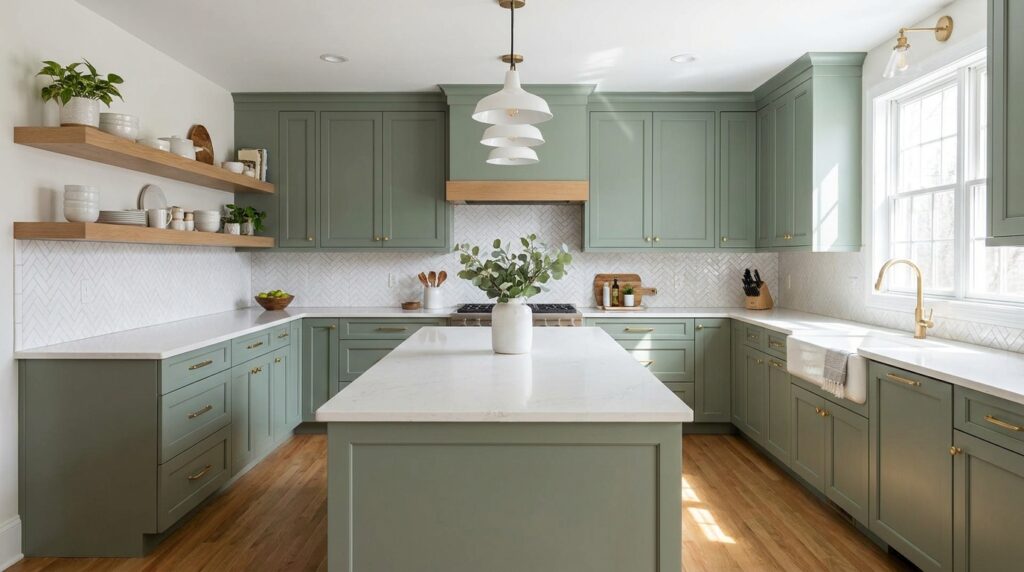
Sage green kitchen cabinets are the most popular application — and for good reason. Painting your cabinetry (rather than full walls) lets you control how much green enters the space.
Some designer-approved approaches:
- Two-tone cabinetry: Sage green on the uppers, white or cream on the lowers (or vice versa). This keeps the kitchen feeling light while adding depth.
- Island only: Paint just your kitchen island sage green for a pop of color without full commitment.
- All-sage: Go bold with all-sage cabinets and balance them with light countertops and warm wood flooring.
For a sage green country kitchen, pair sage cabinets with open shelving, a Belfast sink, shaker-style doors, and vintage-inspired hardware. This combination has been described by House Beautiful as one of the most timeless kitchen looks in current interior design.
Sage Green Kitchen Walls
If cabinets feel like too much commitment, sage green kitchen walls are a lighter-touch approach. Paint the walls, keep your cabinets white or natural wood, and let the color add warmth as a backdrop.
Light sage green kitchen walls work especially well in smaller kitchens — they add color without making the space feel enclosed. Pair with:
- White trim and crown molding
- Brass or matte black cabinet hardware
- A white or cream subway tile backsplash
- Wood countertops for organic warmth
For sage green kitchen wall ideas that feel collected rather than matchy-matchy, consider mixing textures: limewashed plaster walls in sage, unfinished linen curtains, and pottery on open shelves create a kitchen that feels curated over years, not assembled overnight.
Sage Green Kitchen Color Scheme Options
| Color Pairing | Mood Created | Best For |
|---|---|---|
| Sage + White | Clean, fresh, timeless | Any style |
| Sage + Warm Wood | Natural, organic, earthy | Farmhouse, Scandinavian |
| Sage + Brass Gold | Elegant, warm, inviting | Traditional, transitional |
| Sage + Black | Dramatic, sophisticated | Modern farmhouse |
| Sage + Navy | Coastal, layered, rich | Coastal, preppy |
| Sage + Terracotta | Warm, Mediterranean | Bohemian, rustic |
What colors go with a sage green kitchen? According to Houzz design data, the most popular pairings are white, warm wood tones, and aged brass — a combination that feels simultaneously fresh and deeply rooted.
Emerald Green Kitchen Ideas: Bold, Beautiful, Unapologetic
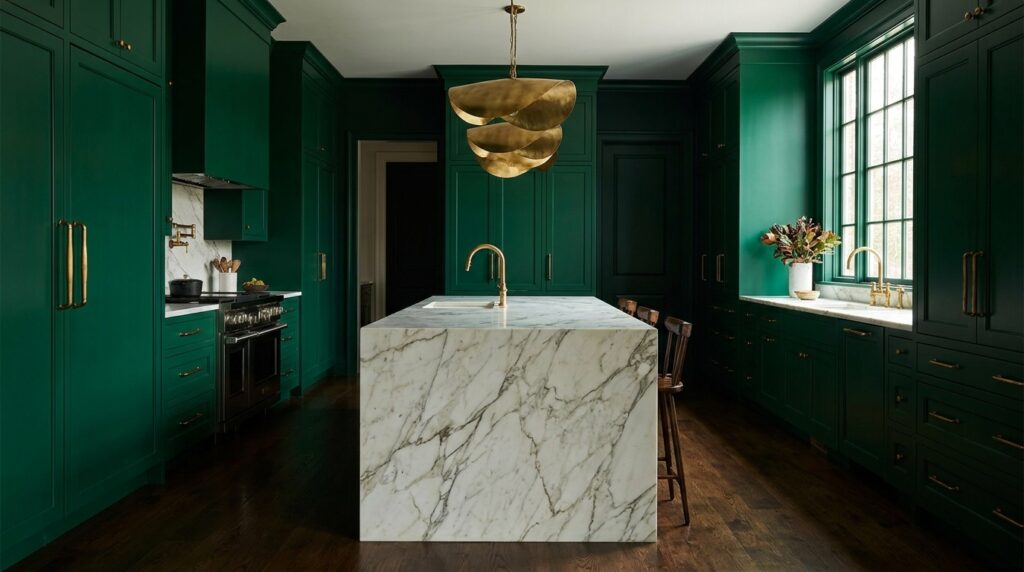
If sage green is a whisper, emerald green is a full sentence. Rich, jewel-toned, and completely commanding, emerald belongs in kitchens that aren’t afraid to make a statement.
Emerald Green Kitchen Cabinets
Emerald green kitchen cabinets work best in kitchens with good natural light and high ceilings. The depth of the color demands space — in a small, dark kitchen, it can feel heavy. But in the right environment? Absolutely stunning.
Pair emerald cabinets with:
- Unlacquered brass or antique gold hardware for a luxurious, jewel-box feel
- White or cream marble countertops to keep the look from feeling too dark
- Warm wood floors to ground the richness of the green
- Statement pendant lighting in black or aged brass
Popular emerald paint picks include Emerald and Benjamin Moore Salamander — the latter being a deep, saturated green that veers toward emerald with significant visual presence.
Emerald Green Kitchen Walls
Emerald green kitchen walls create an immersive, enveloping effect that’s particularly stunning in open-plan spaces. Rather than painting all four walls, consider a green feature wall kitchen approach — focus the emerald on one wall (typically behind open shelving or a range hood) and keep surrounding walls neutral.
This technique, well-documented by Architectural Digest, allows you to enjoy the richness of deep green without overwhelming the space.
Emerald Green Kitchen Accessories
Not ready to commit to full cabinets or walls? Emerald green kitchen accessories are a brilliant way to test the color:
- Emerald green stand mixer (Le Creuset or KitchenAid)
- Dark green ceramic canisters and bowls
- Velvet or linen bar stools in emerald
- A green-glazed pendant lamp
- Emerald zellige or ceramic tile as a backsplash
Small doses of emerald add vibrancy without permanence — and they’re easy to swap out if your taste evolves.
Forest Green and Dark Green Kitchen Ideas
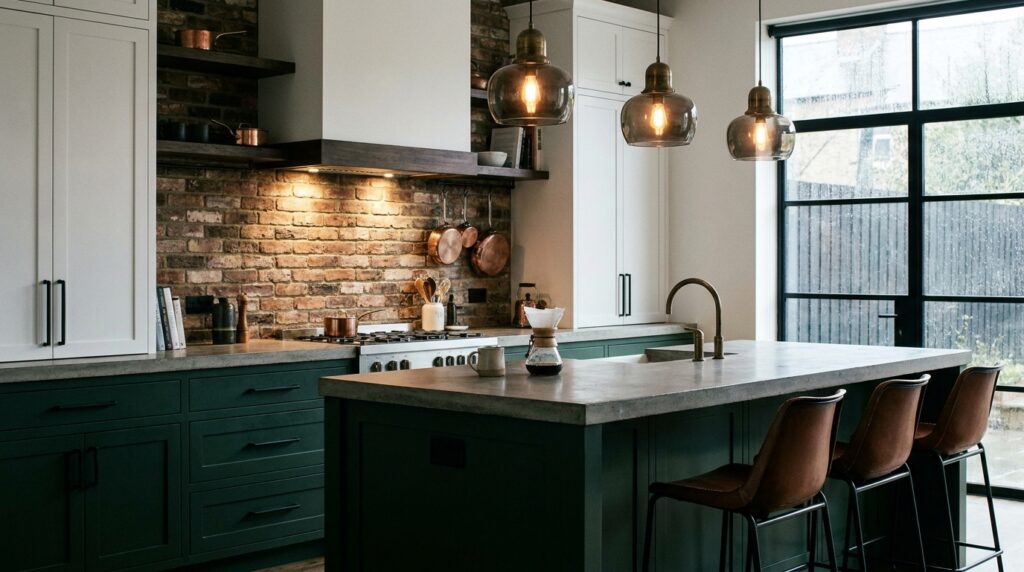
Forest green kitchen ideas sit between sage and emerald — they’re deeper than sage, but earthier than emerald. Think pine trees, dark moss, and deep botanical greens. Colors like hunter green, bottle green, and racing green all fall into this family.
Dark Green Kitchen Paint
Dark green kitchen paint requires confidence — but it rewards that confidence generously. The key is managing light and contrast. When working with dark green kitchen paint, designers recommend:
- Keeping upper cabinets or shelving lighter to prevent the space from feeling closed in
- Using high-gloss or satin finishes on dark cabinets — they reflect light better than matte
- Installing statement lighting — pendant clusters, under-cabinet strips, or a skylight if possible
- Contrasting with warm metals like copper or brass to offset the coolness of deep green
Dark green paint options worth considering:
- Sherwin-Williams Billiard Green — rich, traditional bottle green
- Benjamin Moore Black Forest Green — a very deep, moody shade
- Farrow & Ball Calke Green (No.80) — earthy, slightly muted forest green with a chalky finish
Kitchen with Green Feature Wall
A green feature wall in the kitchen is one of the most effective design moves if you’re drawn to depth but worried about commitment. The feature wall concept — popularized in interior design circles and widely covered by Elle Decor — draws the eye to a focal point without saturating the entire room.
Great spots for a green kitchen feature wall:
- Behind the range or cooker hood
- The wall behind open shelving
- A dining nook or breakfast bar wall
- A glass-fronted cabinet wall in a deeper green
Olive Green Kitchen Ideas: Warm, Earthy, and Endlessly Versatile
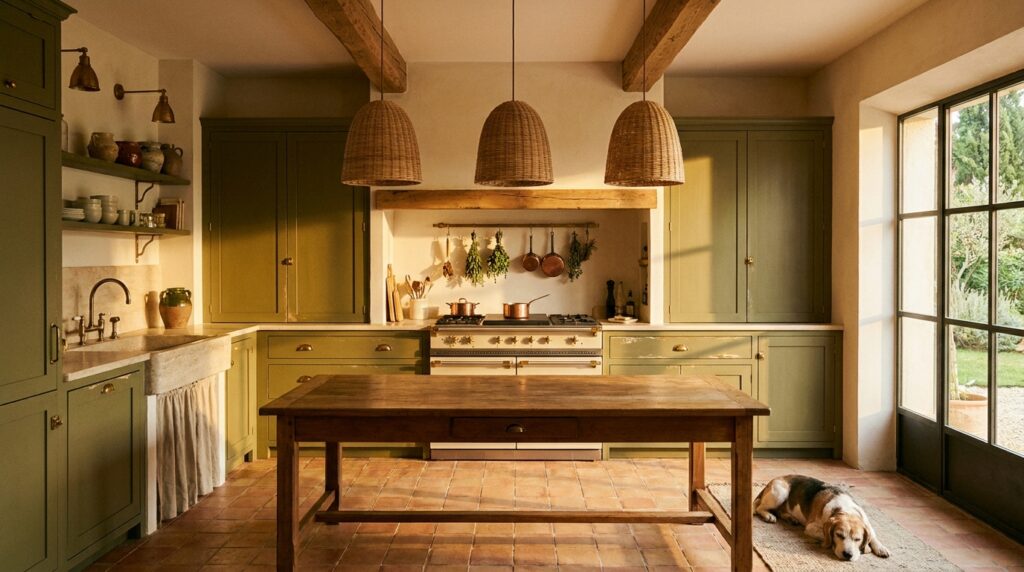
There’s something inherently nostalgic about olive green. It’s the color of old Italian farmhouses, sun-dried herbs, and oil-slicked produce markets. In a kitchen, that energy translates into warmth, earthiness, and a timeless quality that doesn’t follow trends — it predates them.
What Makes Olive Green Different?
Olive green is warmer than sage and less saturated than emerald. It carries a distinctly yellow-brown undertone, which is what gives it that earthy, Mediterranean quality. Unlike cooler greens, olive green kitchen walls pair exceptionally well with warm materials:
- Terracotta and clay tiles
- Warm honey wood tones
- Aged copper and bronze hardware
- Linen, jute, and woven textures
- Burnt orange, ochre, and rust accents
Olive Green Kitchen Cupboards and Walls
Olive green kitchen cupboards have a distinctive vintage appeal. They work particularly well in:
- Country and cottage-style kitchens — where the warmth of olive green echoes garden herbs and natural surroundings
- Bohemian and eclectic kitchens — where the earthy tone plays off mixed patterns and textures
- Mediterranean and Tuscan-inspired kitchens — where the connection to the natural landscape is intentional
Olive green colour kitchen ideas from designers often center around layering natural textures. A kitchen with olive cupboards, open shelves of rustic pottery, a terracotta backsplash, and reclaimed wood flooring creates an environment that feels completely lived-in — in the best possible way.
Popular olive green paint choices:
- Sherwin-Williams Basque Green — a warm, muted olive
- Farrow & Ball Mole’s Breath — not a traditional olive but has warm olive undertones in certain lights
Green and Orange Kitchen: A Bolder Pairing
The green and orange kitchen — or more specifically, olive green and terracotta/rust orange — is one of the most underrated color combinations in kitchen design. These are complementary colors on the color wheel, and in muted, earthy tones, they feel completely natural rather than garish.
Try:
- Olive green lowers + terracotta upper tile backsplash
- Olive walls + burnt orange ceramic pendant lighting
- Sage green walls + orange-toned hardwood flooring
This combination is increasingly covered by design publications like Better Homes & Gardens as one of the warmest, most inviting kitchen palettes going into 2025.
Light Green Kitchen Ideas: Fresh, Airy, and Effortlessly Pretty
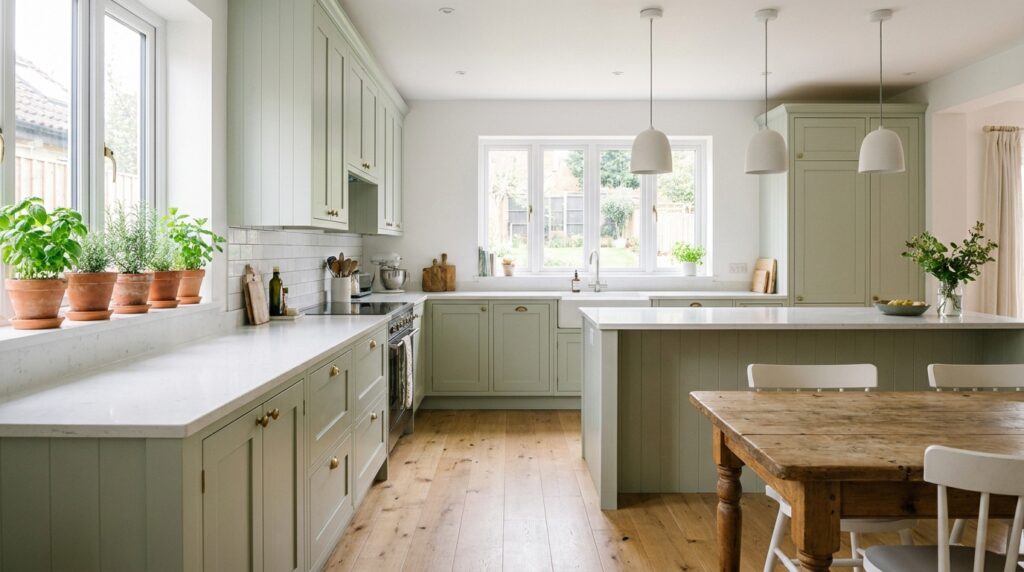
Not every green kitchen needs drama. Light green kitchen ideas offer a softer, fresher take — colors that feel more like spring than autumn, more morning than evening.
Light Green Kitchen Cabinets
Light green kitchen cabinets in pale mint, pistachio, or celery green tones are especially popular in:
- Small kitchens — lighter greens expand the perceived space
- Scandinavian-style kitchens — clean lines, pale tones, minimal clutter
- Vintage or retro kitchens — 1950s-inspired mint or seafoam cabinets with chrome hardware
- Children’s kitchen spaces or playful family kitchens — light greens feel cheerful without being overwhelming
Light green paint colors worth exploring:
- Benjamin Moore Spearmint — a clean, soft mint
- Sherwin-Williams Palladian Blue — technically blue-green but reads as very light sage in kitchens
- Farrow & Ball Mints (No.84) — an old-fashioned, chalky mint with real character
Light Green Kitchen Walls
Light green kitchen walls with white cabinetry is arguably the most timeless green kitchen formula. It’s bright, it’s welcoming, and it doesn’t date. The color reads differently depending on light direction — it can be almost white in a north-facing kitchen or warmly green in a south-facing space.
For light sage green kitchen walls, the trick is choosing a shade with enough pigment to register as green, but light enough to avoid feeling heavy. Farrow & Ball’s Mizzle and Benjamin Moore’s Pale Vista (692) are excellent benchmarks.
Green Kitchen Cabinets: The Complete Design Guide
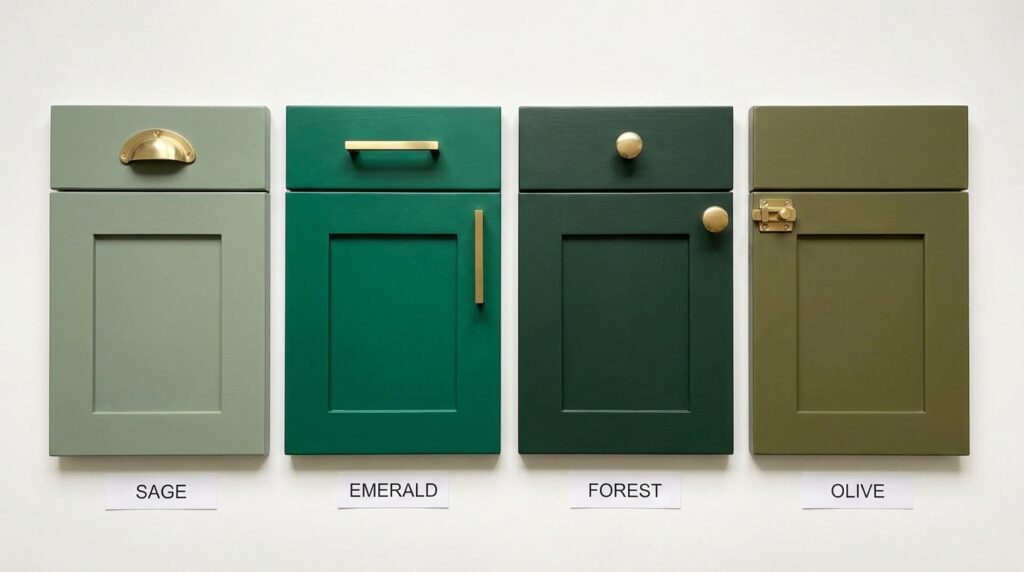
Whether you’re going bespoke or painting existing cabinets yourself, green kitchen cabinets ideas span an enormous range. Here’s a practical breakdown.
Painted vs. Factory-Finished Cabinets
Green painted kitchen cabinets (DIY or professionally spray-painted) are the most accessible route. Annie Sloan, one of the most respected names in decorative paint, has made kitchen cabinet painting genuinely achievable for DIYers — and their chalk paint range includes several beautiful greens.
For a factory-finished look, companies like IKEA offer pre-finished green cabinet options, while custom cabinet makers can match virtually any shade you choose.
Tips for painting kitchen cabinets green:
- Always prime before painting — adhesion is everything
- Use a specialist cabinet paint or enamel (not standard wall paint)
- Lightly sand between coats for a smooth, professional finish
- Choose your sheen wisely: satin is most popular for kitchens (easier to clean than matte, less reflective than gloss)
- Consider a topcoat for high-traffic kitchens
Hardware Pairings for Green Cabinets
| Cabinet Shade | Best Hardware Finish | Why It Works |
|---|---|---|
| Sage green | Brushed brass or antique gold | Warm contrast, classic elegance |
| Emerald green | Unlacquered brass or polished gold | Jewel-box luxury pairing |
| Forest/dark green | Matte black or aged bronze | Dramatic, grounded contrast |
| Olive green | Aged copper or antique bronze | Earthy, Mediterranean warmth |
| Light green | Chrome, nickel, or brass | Keeps things fresh and airy |
Green Kitchen Wall Ideas: Paint, Tile, and Beyond
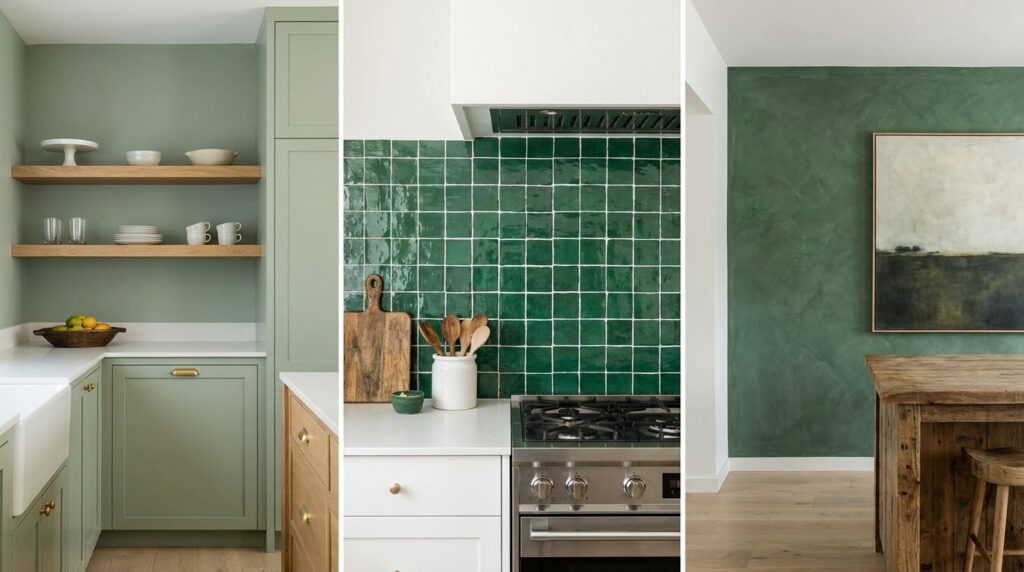
The walls of your kitchen offer multiple surfaces to work with — and green isn’t limited to just paint.
Green Kitchen Paint Ideas
Green kitchen paint ideas go well beyond slapping on a coat of color. Techniques like limewashing, color washing, and sponging add texture and depth to green walls, making the color feel more organic and artisan.
For green wall in kitchen applications, consider:
- Full-wall color — all four walls in one green for an immersive, cocooning effect
- Feature wall only — one wall in a rich green, others neutral
- Dado rail or half-wall treatment — paint below a dado rail in green, above in white or cream
- Skirting and trim in green — a subtle way to introduce green without touching the main walls
Green Kitchen Tile Ideas
Green kitchen tile ideas have exploded in popularity, driven by the rise of zellige tile (handmade Moroccan clay tile with natural color variation and an irregular surface) and hand-painted ceramic tiles.
Kitchen with green tiles creates visual texture that paint simply can’t replicate. Options include:
- Sage green subway tile — understated, classic, pairs well with any cabinet color
- Emerald zellige tile — rich, jewel-like, artisan feel
- Forest green metro tile — retro-inspired, especially popular in vintage and industrial kitchens
- Mint mosaic tile — tiny tiles in light green, perfect for a retro-fresh look
- Handpainted green botanical tile — perfect for a Mediterranean or bohemian kitchen
For a green feature wall kitchen, an entire wall of zellige tile in a deep green or sage tone is one of the most photographed looks in current kitchen design — widely featured on platforms like Pinterest and publications like Domino.
Color Combinations: What Works (and What Doesn’t)
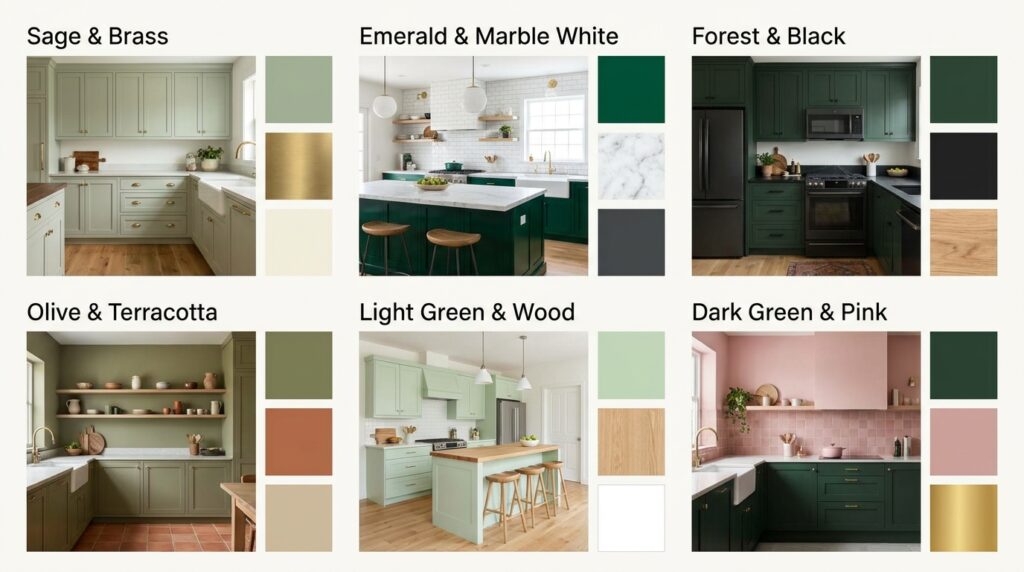
Choosing the right color partners for your green kitchen is as important as choosing the green itself.
What Colors Go with a Sage Green Kitchen?
This is the most searched question in the green kitchen design space — and for good reason. Sage green is versatile but can veer toward dull if paired incorrectly.
Best combinations:
- Sage green + cream/white — timeless, fresh, universally flattering
- Sage green + warm wood — organic, Scandinavian-inspired, endlessly welcoming
- Sage green + dusty pink — soft, romantic, slightly vintage (increasingly popular in 2024–2025)
- Sage green + terracotta — warm, earthy, Mediterranean-influenced
- Sage green + charcoal/black — modern farmhouse, graphic contrast
Red and Green Kitchen Ideas
The red and green kitchen combination sounds risky but can be spectacular when handled correctly. The key is ensuring both colors are equally muted or equally saturated — not mixing a muted sage with a bright pillar-box red, for example.
Think red and green kitchen ideas like:
- Sage green cabinets + brick red tile backsplash — earthy, traditional, warm
- Olive green walls + cranberry red vintage appliances — retro, charming, personality-packed
- Forest green cabinets + cherry red accents — bold, festive but sophisticated if tones match
Green and Pink Kitchens
Green and pink kitchens are having a major cultural moment, driven by maximalist interiors trends and the enduring influence of the “dopamine design” movement popularized widely in mainstream design press including Vogue Living.
The combination works because pink and green are found together constantly in nature (think flowers against foliage). In a kitchen:
- Sage green + dusty rose pink — soft, romantic, grown-up
- Forest green + bright coral pink — bold, fun, maximalist
- Mint green + hot pink — retro, playful, brilliantly confident
Orange and Green Kitchen
As previously touched on in the olive section, the orange and green kitchen works on a complementary color principle. For a sophisticated version:
- Choose muted, earthy versions of both (olive and burnt sienna, or sage and terracotta)
- Use orange as an accent (pottery, bar stools, small appliances) rather than a dominant color
- Ground the palette with natural wood and neutral stone
Green Kitchen Decor Ideas: The Finishing Touches
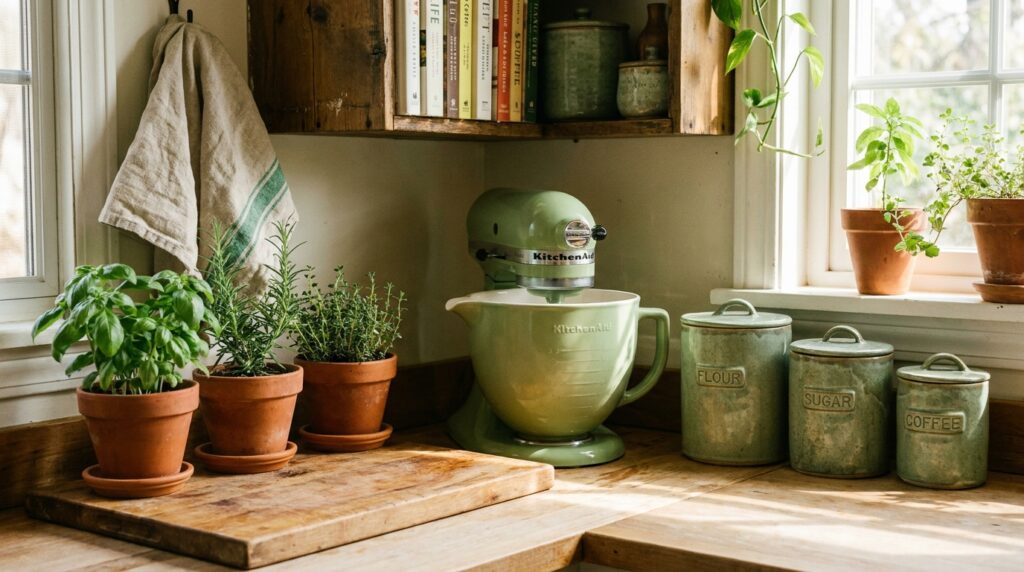
Once you’ve sorted your color palette, the decor is what makes a green kitchen feel truly personal.
Accessories and Styling
Green kitchen decor ideas worth incorporating:
- Potted herbs — rosemary, sage, thyme, and basil on a windowsill bring in live green that complements any shade of painted green
- Ceramic vessels — sage green pottery, olive green canisters, or dark green glazed bowls add tonal depth
- Woven textures — rattan pendant lights, jute rugs, and wicker baskets work beautifully with green kitchens
- Botanicals and dried flowers — framed botanical prints or dried eucalyptus bunches lean into the garden-inspired mood
- Coloured glassware — green depression glass or modern olive-tinted drinking glasses add vintage charm
For emerald green kitchen accessories in a bold kitchen: a jewel-toned KitchenAid mixer, dark green ceramic cookware (like Le Creuset’s Artichaut range), and emerald velvet bar stools all reinforce the color story without painting a single wall.
Expert Tips From Interior Designers
We’ve compiled insights from experienced interior designers and color experts to help you avoid the most common mistakes.
Always Test in Your Actual Kitchen
Paint colors look dramatically different under different light conditions. What reads as a soft sage in the store can appear almost grey in a north-facing kitchen or almost minty in a south-facing one. Benjamin Moore recommends painting large swatches (at least A4 size) on multiple walls and observing them at different times of day before committing.
Consider Undertones Carefully
Green paint colors can have undertones of blue, yellow, grey, or brown. These undertones interact with your existing floor, countertop, and cabinetry colors in unexpected ways.
- Blue undertones (as in many sage greens) feel cooler and more contemporary
- Yellow undertones (as in olive and warmer greens) feel earthy and warm
- Grey undertones create a sophisticated, muted effect
- Brown undertones (some forest greens) feel very grounded and traditional
Don’t Ignore the Ceiling
In a bold green kitchen, the ceiling matters more than most people think. In dark-ceilinged kitchens, painting the ceiling one shade lighter than the walls creates a cohesive, enveloping effect (a technique designers call “color-drenching,” discussed in depth by Architectural Digest). In lighter kitchens, a white ceiling provides essential visual relief.
Get Your Lighting Right
Dark greens absorb light. If you’re committed to a deep forest or emerald green kitchen, compensate with:
- Layered lighting (ambient, task, and accent)
- Under-cabinet LED strips (great for task lighting and countertop highlighting)
- Reflective surfaces — mirrored backsplash, gloss cabinet doors, or polished stone countertops
Start Small if You’re Unsure
You don’t have to commit to a full green kitchen immediately. Start with green kitchen paint ideas on a single wall or try green kitchen tile ideas on just the backsplash. Accessories can also introduce the color at zero risk. Build confidence with smaller commitments before going all-in.
Match the Finish to the Function
In kitchens — where steam, grease, and moisture are realities — paint and cabinet finish matters practically, not just aesthetically:
- Matte: Beautiful but marks easily — not ideal for high-traffic kitchens
- Eggshell/Satin: The sweet spot — wipeable, less reflective, durable
- Semi-gloss/Gloss: Easy to clean, reflects light well, but shows every imperfection
Green Kitchen Design Ideas by Kitchen Style
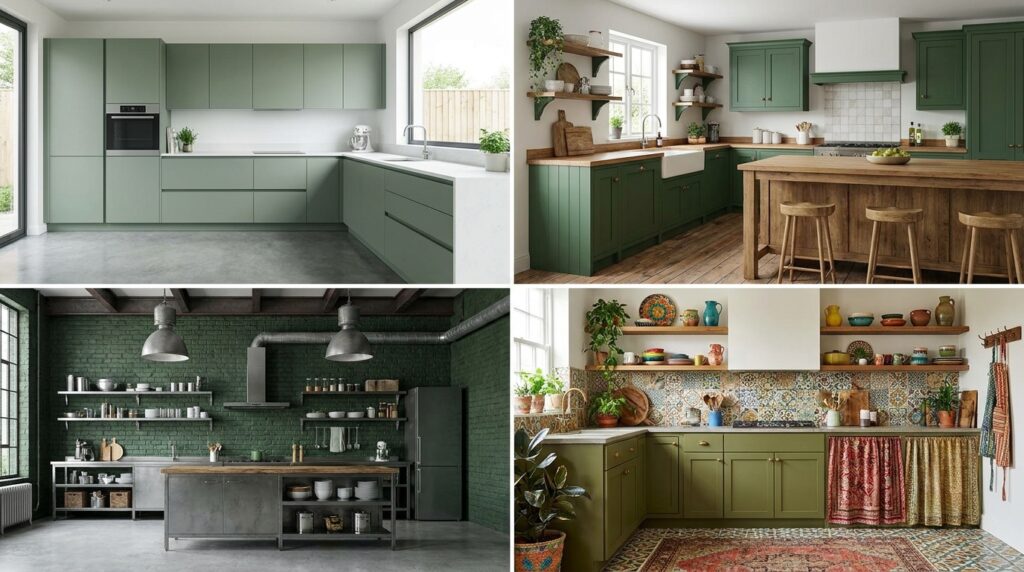
| Kitchen Style | Best Green Shade | Key Design Elements |
|---|---|---|
| Modern / Contemporary | Flat matte emerald or deep teal-green | Handle-less cabinets, stone countertops, integrated appliances |
| Farmhouse / Cottage | Sage green or light sage | Shaker cabinets, apron-front sink, open shelving, wood accents |
| Traditional / Country | Hunter green or bottle green | Raised-panel cabinets, brass hardware, marble tops |
| Industrial | Dark forest or olive green | Exposed brick, steel, matte black hardware |
| Bohemian / Eclectic | Olive green or deep sage | Mixed tiles, plants, patterned textiles, pottery |
| Coastal / Nautical | Seafoam, pale sage, or mint | White cabinetry, rattan, natural woven elements |
| Scandinavian | Pale green, sage, pistachio | Minimalist lines, light wood, white walls |
Frequently Asked Questions
1. Is a green kitchen a good idea for resale value?
Green kitchens can positively impact resale value when chosen thoughtfully. According to a Zillow paint color analysis, kitchens with updated, on-trend but neutral-adjacent color schemes tend to attract more buyers. Muted greens like sage are broadly appealing and unlikely to alienate prospective buyers the way very bold or niche colors might. Bright or saturated greens, however, carry more risk — they may appeal to some buyers strongly while turning off others.
2. What is the most popular green for kitchen cabinets right now?
Sage green is consistently the most popular green for kitchen cabinets in current interior design trends. Paints like Sherwin-Williams Rosemary and Benjamin Moore October Mist — Colour of the Year 2022 — remain heavily requested. Emerald is the second most popular choice for bolder, more maximalist kitchens.
3. Will a dark green kitchen make my space feel smaller?
Dark greens can make a space feel more intimate, but “smaller” is only a problem if it feels oppressive. To counteract that effect: maximize natural light, use light-colored countertops and flooring, incorporate reflective surfaces (gloss tiles, mirrored backsplash), and keep upper cabinets lighter or open. Many designers argue that a deep, well-lit dark green kitchen actually feels more luxurious than a plain white kitchen — rather than “smaller,” it feels intentionally cocooning.
4. Can I mix different shades of green in one kitchen?
Yes — and it’s increasingly encouraged. The key is tonal coherence. Mixing a dark forest green island with sage green uppers works because they share the same green family. The contrast creates visual interest while the shared undertone keeps it cohesive. Avoid mixing greens with clashing undertones (e.g., a warm olive green with a cool mint green — they’ll fight each other).
5. What countertop colors work best with green kitchen cabinets?
The most universally successful options are:
- White marble or quartz — classic, crisp, offsets any shade of green
- Warm cream quartz — slightly warmer than white, works beautifully with sage and olive
- Butcher block / wood — organic, warm, pairs especially well with sage and olive greens
- Concrete or grey stone — works well with darker greens for an industrial-modern look
- Black granite or quartz — dramatic with dark greens; stunning if you want high contrast
Avoid very dark countertops with very dark cabinets — you’ll lose definition. For dark green kitchen paint or cabinets, a lighter countertop is almost always the right choice.
Pros and Cons of a Green Kitchen
Pros
- Timeless, nature-connected color that transcends trends
- Enormous range of shades to suit every style and taste
- Works with virtually every material — wood, metal, stone, tile
- Psychologically calming and mood-boosting
- Highly versatile — works in traditional, modern, farmhouse, and eclectic styles
- Can increase perceived value and desirability of a home
- Ages gracefully and adapts as décor trends evolve
Cons
- Requires careful undertone matching with existing floor, countertop, and appliance colors
- Some shades (particularly dark greens) can make small kitchens feel enclosed if poorly lit
- Repainting can be more disruptive than neutral kitchens if you change your mind
- Some muted greens can “disappear” in poor light and read as grey or brown
- Trending shades (like sage) could feel dated in 10 years if the trend shifts dramatically
Final Thoughts:
Green kitchens are not a passing fad. They’re a genuine homecoming — a return to color that feels rooted in nature, grounded in tradition, and endlessly fresh.
Whether you fall in love with the quiet sophistication of sage green kitchen walls, the bold drama of emerald green kitchen cabinets, the earthy warmth of olive green kitchen cupboards, or the cool serenity of light green kitchen ideas, there’s a shade and a style that was made for your home.
The best green kitchen isn’t the one in the magazine. It’s the one that makes you feel something when you walk in.
Start with a paint sample. Live with it for a week. Let the light change around it. Then commit — fully, confidently, and without apology.

