
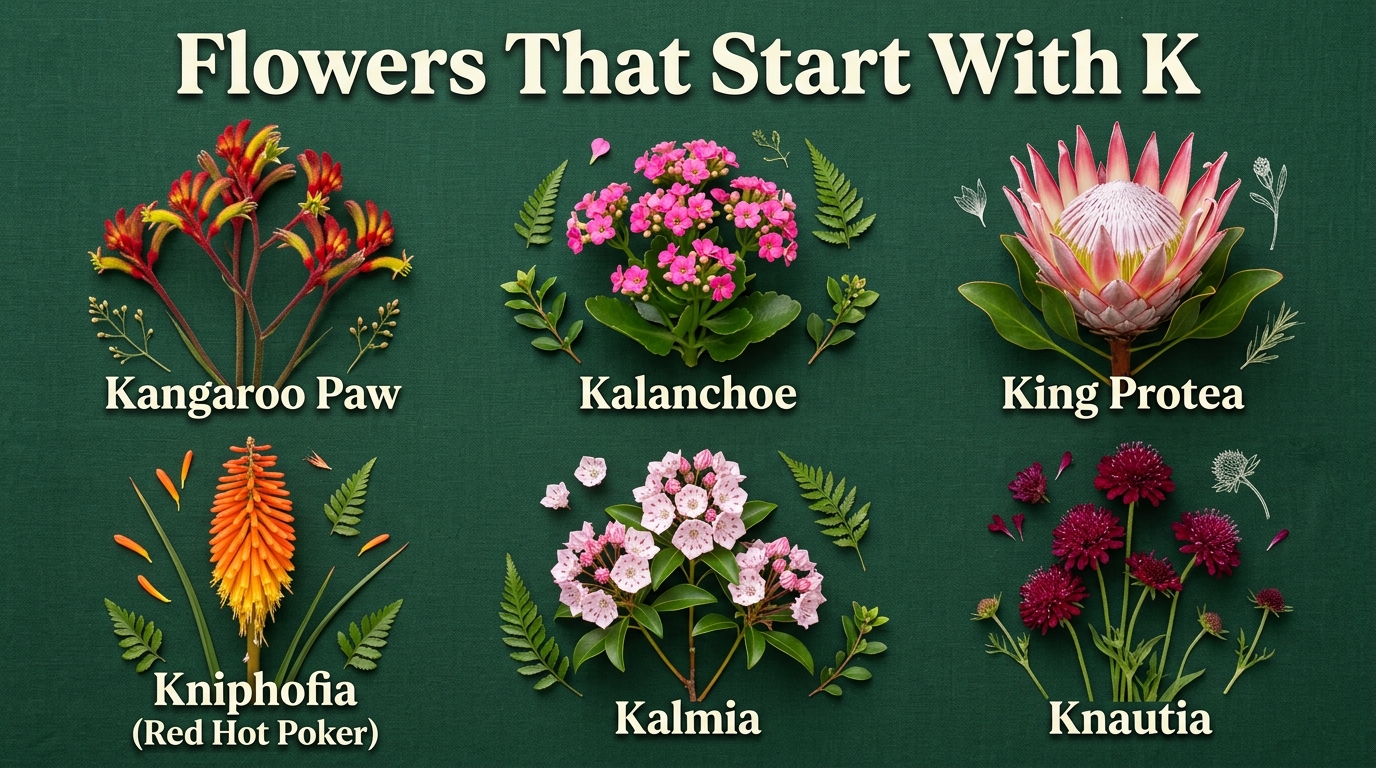
Picture this: you’re planning a garden bed, assembling a bouquet, or just browsing for your next botanical obsession — and you want something a little different. Something that feels unexpected, almost exotic, but is still entirely growable.
That’s where flowers beginning with K come in.
The letter K doesn’t get nearly as much love as A or R in the flower world, but that’s part of what makes it so exciting. From bold tropical spikes to delicate mountain shrubs, flowers that start with K span every climate, every color, and every garden style you can imagine.
In this guide, you’ll find over 25 flowers starting with K — complete with scientific names, bloom seasons, growing zones, care tips, and cultural significance. Whether you’re a first-time gardener, a flower trivia fan, or a florist scouting new additions, you’re going to find something here worth falling in love with.
Let’s dig in.
Quick Reference: Full List of Flowers That Start With K
Before we dive deep into each flower, here’s a complete at-a-glance table to help you scan the lineup:
| Common Name | Scientific Name | Color(s) | Bloom Season | USDA Zones |
|---|---|---|---|---|
| Kalanchoe | Kalanchoe blossfeldiana | Red, pink, yellow, orange | Winter–spring | 10–12 |
| Kalmia (Mountain Laurel) | Kalmia latifolia | Pink, white, red | Late spring–summer | 4–9 |
| Kangaroo Paw | Anigozanthos spp. | Red, yellow, green, orange | Spring–summer | 10–11 |
| King Protea | Protea cynaroides | Pink, red, white | Spring–summer | 9–11 |
| Kniphofia (Red Hot Poker) | Kniphofia uvaria | Red, orange, yellow | Summer–fall | 5–9 |
| Knautia | Knautia macedonica | Purple, pink, red | Summer | 5–9 |
| Kaffir Lily | Clivia miniata | Orange, red, yellow | Late winter–spring | 9–11 |
| Kerria (Japanese Rose) | Kerria japonica | Yellow | Spring | 4–9 |
| Kolkwitzia (Beauty Bush) | Kolkwitzia amabilis | Pink | Spring | 4–8 |
| Kennedia | Kennedia spp. | Red, purple, pink | Spring–summer | 9–11 |
| Koelreuteria (Golden Rain Tree) | Koelreuteria paniculata | Yellow | Summer | 5–9 |
| King’s Spear | Asphodeline lutea | Yellow | Late spring–summer | 5–9 |
| Knapweed | Centaurea spp. | Purple, pink | Summer–fall | 3–8 |
| Kiss Me Over the Garden Gate | Persicaria orientalis | Pink, rose | Late summer–fall | 2–11 |
| Kunzea | Kunzea spp. | White, pink | Spring | 8–10 |
| Kalimeris (False Aster) | Kalimeris spp. | White, blue, purple | Summer | 4–8 |
| Kaempferia (Peacock Ginger) | Kaempferia spp. | Purple, white | Summer | 8–11 |
| Korean Chrysanthemum | Chrysanthemum zawadskii | Pink, white | Fall | 4–9 |
| Kosteletzkya (Seashore Mallow) | Kosteletzkya virginica | Pink | Summer–fall | 5–10 |
| Keckiella | Keckiella spp. | Red, coral | Summer | 7–10 |
| Koki’o | Kokia drynarioides | Red, orange | Winter–spring | 10–12 |
| Kanawao | Broussaisia arguta | Lavender, blue, yellow | Spring | 10–12 |
| Kashmir Lily | Lilium candidum | White | Summer | 5–8 |
| King’s Mantle | Thunbergia erecta | Purple | Spring–fall | 10–12 |
| Krameria (Rhatany) | Krameria spp. | Magenta | Spring | 8–10 |
The Most Popular Flowers That Start With K (With Full Growing Guides)
1. Kalanchoe (Kalanchoe blossfeldiana)
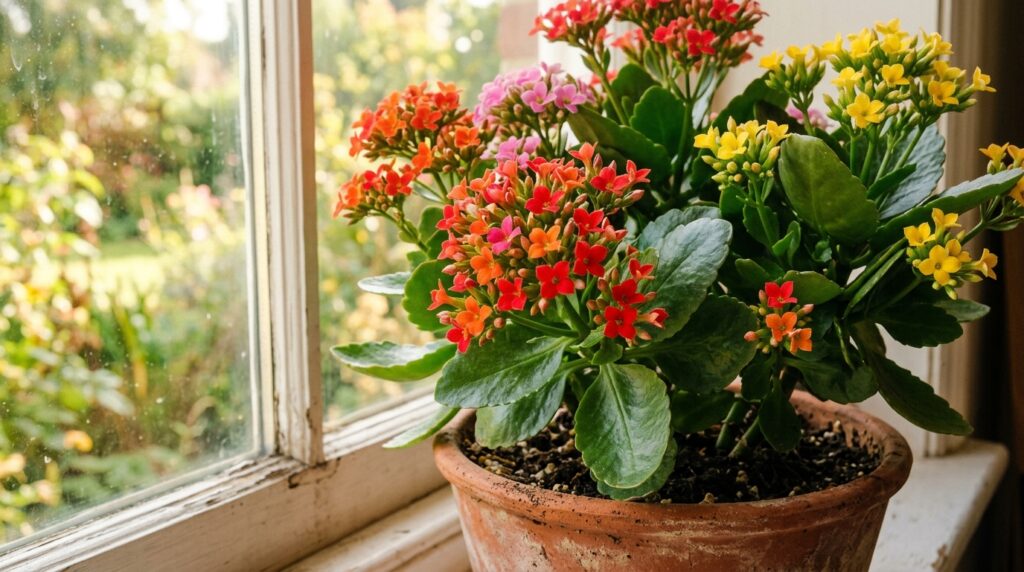
Walk into almost any grocery store, garden center, or home décor shop and you’ll find a Kalanchoe sitting patiently on a shelf. It’s one of the most widely sold flowering houseplants in the world — and for good reason.
Kalanchoe blossfeldiana is a succulent native to Madagascar. It produces dense clusters of tiny, waxy flowers in red, pink, yellow, orange, and white — and those blooms can last for several weeks, which is exceptional for any indoor plant.
Here’s something most people don’t know: Kalanchoe was the very first plant ever sent to space. It traveled aboard a Soviet spacecraft in 1979. So if you have one on your windowsill, you’re essentially housing a cosmic traveler.
Growing Tips:
- Light: Bright indirect light; avoid harsh afternoon sun
- Water: Water deeply, then let soil dry completely before watering again — it’s a succulent
- Soil: Well-draining cactus or succulent mix
- USDA Zones: 10–12 outdoors; grown as a houseplant everywhere else
- Bloom: Flowers naturally in late winter and spring, triggered by shorter days
Pro Tip: To get a Kalanchoe to rebloom, place it in complete darkness for 14 hours a day for 6 weeks. This mimics winter short-day conditions and triggers a new flowering cycle.
2. Kalmia — Mountain Laurel (Kalmia latifolia)
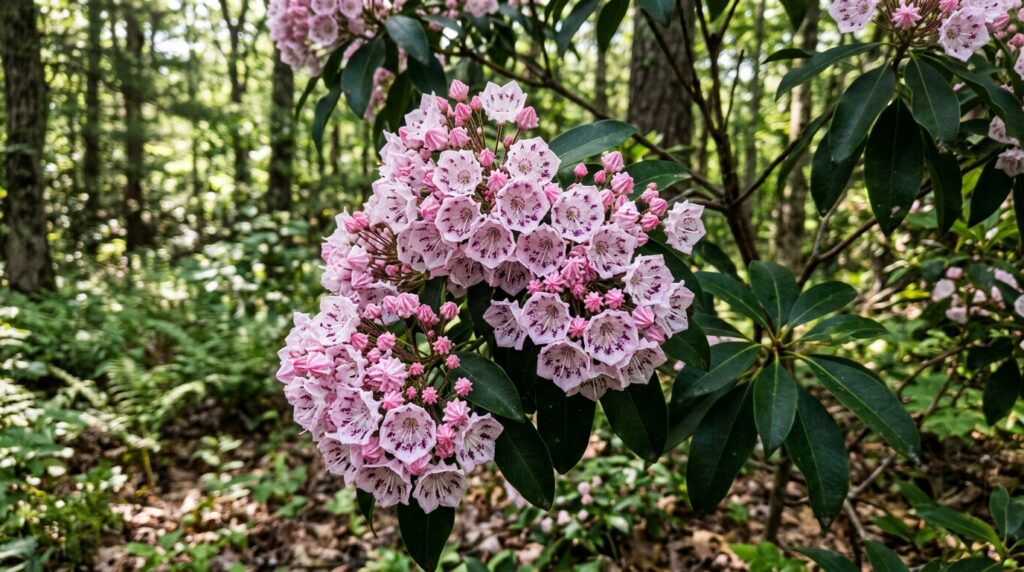
Mountain Laurel might be one of the most underappreciated flowering shrubs in North American gardens. When it blooms in late spring, it produces such dense clusters of cup-shaped flowers — ranging from pure white to deep rose pink with purple interior markings — that the entire plant looks like it’s been dusted in confetti.
Kalmia latifolia holds the distinction of being the official state flower of both Connecticut and Pennsylvania. That’s not a coincidence — this plant thrives naturally in the cool, acidic soils of the Eastern woodland states.
Each individual flower is about an inch wide and has five sides, with a unique geometric symmetry that makes it a favorite subject for macro photography.
⚠️ Important Note: All parts of Kalmia — leaves, stems, and flowers — are toxic to humans and livestock if ingested. Historically, Indigenous peoples used small amounts medicinally with great care, but it should never be consumed.
Growing Tips:
- Soil: Acidic (pH 4.5–6.0), rich, and well-draining — similar to what azaleas prefer
- Light: Partial shade is ideal; tolerates full sun in cooler climates
- USDA Zones: 4–9
- Bloom: Late spring to early summer
- Maintenance: Low; minimal pruning needed
3. Kangaroo Paw (Anigozanthos spp.)
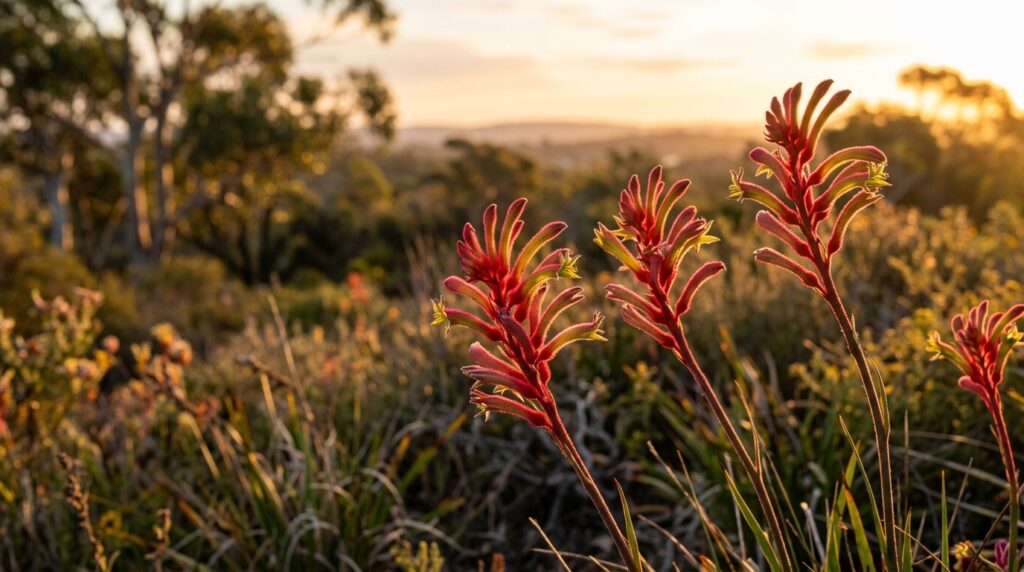
No flower on this entire list looks quite like the Kangaroo Paw. Native to Australia, this extraordinary perennial produces long club-shaped buds covered in dense, velvety hairs — giving them an unmistakable texture that’s unlike anything else in the plant kingdom.
Anigozanthos is the floral emblem of Western Australia, where it symbolizes uniqueness and resilience. The flowers come in an astonishing range of colors — red, yellow, green, orange, and pink — and the tubular shape has evolved specifically to be pollinated by honeyeater birds whose heads get dusted with pollen as they reach inside for nectar.
In the cut flower industry, Kangaroo Paw is highly valued for its dramatic appearance and exceptional vase life. Florists love it for tropical and architectural arrangements.
Growing Tips:
- Climate: Warm and dry; struggles with humidity
- Soil: Sandy, well-draining
- Light: Full sun
- USDA Zones: 10–11 outdoors; grown in containers elsewhere
- Bloom: Spring through early summer
Expert Insight: In cooler climates, grow Kangaroo Paw as a container plant and bring it indoors before the first frost. Use a sandy or gritty potting mix and keep it on the dry side over winter.
4. King Protea (Protea cynaroides)
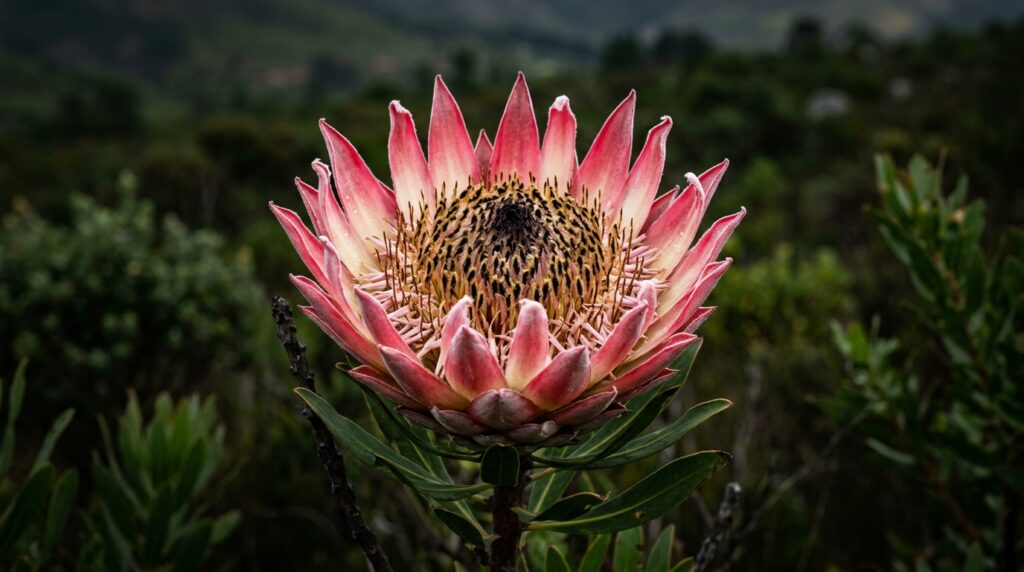
If there’s one flower on this list that commands attention from across the room, it’s the King Protea. The largest member of the protea family, it produces extraordinary blooms that can reach up to 12 inches (30 cm) in diameter — making it look more like an alien artifact than an ordinary flower.
Protea cynaroides is the national flower of South Africa, where it represents transformation and courage. The name comes from Proteus, the Greek god who could change his form — fitting for a plant that comes in over 90 recognized color forms.
What truly sets King Protea apart is its incredible vase life. The blooms can last for weeks in a floral arrangement, which is why they’re prized in luxury wedding bouquets and high-end florist displays.
Growing Tips:
- Soil: Sandy, well-draining, low-phosphorus (avoid fertilizers with phosphorus)
- Light: Full sun
- Water: Drought-tolerant once established; avoid overwatering
- USDA Zones: 9–11
- Bloom: Spring through summer
5. Kniphofia — Red Hot Poker (Kniphofia uvaria)
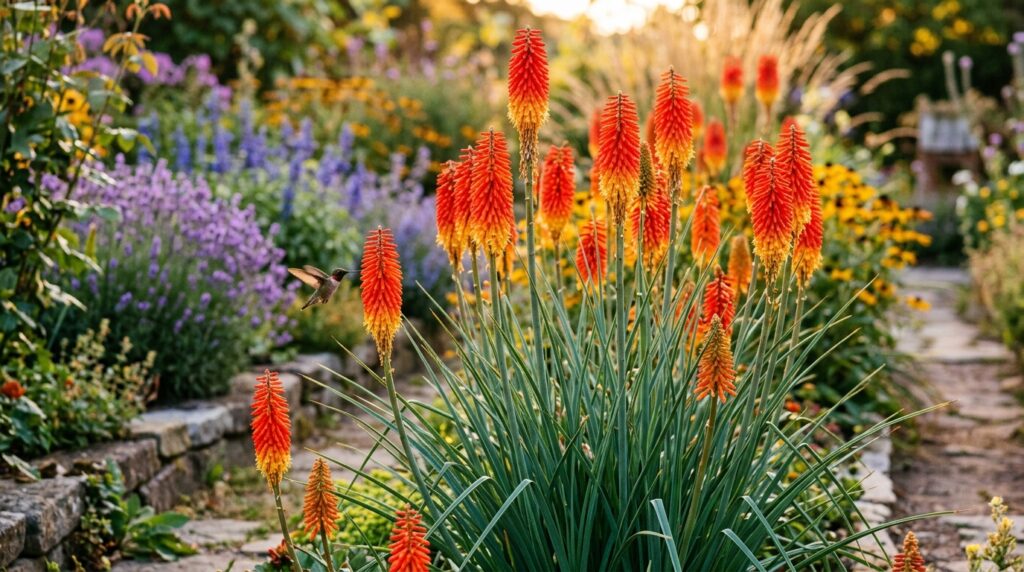
Few flowers have a better name than the Red Hot Poker. And once you see one in full bloom, you understand exactly why. The tall, torchlike spikes of tubular flowers — blazing red at the tips and fading to golden yellow at the base — look like someone stuck a lit torch into your garden bed.
Kniphofia is native to South Africa and belongs to the Asphodelaceae family — the same family as aloe plants. With over 70 species, Red Hot Poker grows in USDA zones 5–9 and is an upright perennial that typically reaches 2–5 feet tall.
The blooms are hummingbird magnets. If you’ve ever wanted to attract these tiny birds to your garden without a feeder, a row of Red Hot Pokers will do the job reliably every summer.
The flowers open from the bottom of the spike upward, starting bright and fading as they age. Flowering begins in midsummer and can continue into fall.
Growing Tips:
- Light: Full sun; at least 6 hours of direct sun daily
- Soil: Rich, well-draining; amend clay soils with compost or sand
- Plant Time: Best planted in spring or early fall when temperatures are mild
- Spacing: 18–24 inches apart
- USDA Zones: 5–9; plants in zones 5–6 will need winter protection — add a layer of mulch such as straw or leaves over the crown in fall
Pros: ✅ Deer and rabbit resistant ✅ Drought-tolerant once established ✅ Attracts hummingbirds, bees, and butterflies ✅ Excellent cut flower
Cons: ❌ Can spread aggressively via rhizomes in warm climates ❌ Needs winter mulching in zones 5–6 ❌ Not ideal for containers (large mature clumps)
6. Knautia (Knautia macedonica)
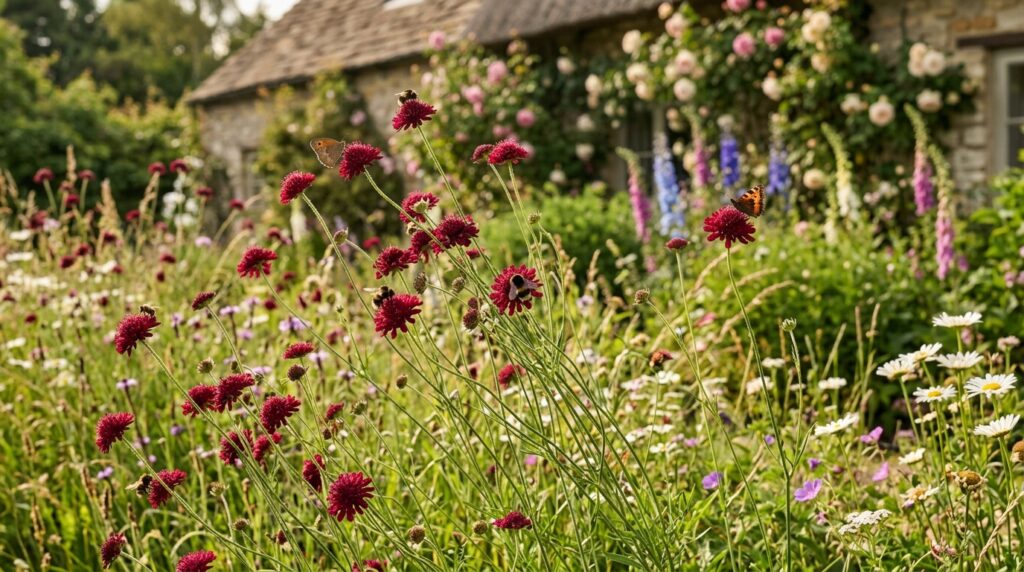
Knautia is what you plant when you want your garden to look like a wildflower meadow — effortless, airy, and alive with pollinators. The pincushion-shaped blooms come in rich crimson red, soft lilac, and dusky pink, bobbing on tall wiry stems from early summer right through fall.
Knautia macedonica is a cottage garden staple in temperate gardens. It’s especially beloved by bees and butterflies, making it one of the most ecologically valuable flowers on this K-flower list.
The blooms look stunning cut and used in loose, romantic floral arrangements. They also dry reasonably well.
Growing Tips:
- Light: Full sun to partial shade
- Soil: Well-draining; tolerates poor soils surprisingly well
- USDA Zones: 5–9
- Bloom: Early summer through early fall
- Deadheading: Regular deadheading encourages continuous blooming
7. Kaffir Lily (Clivia miniata)
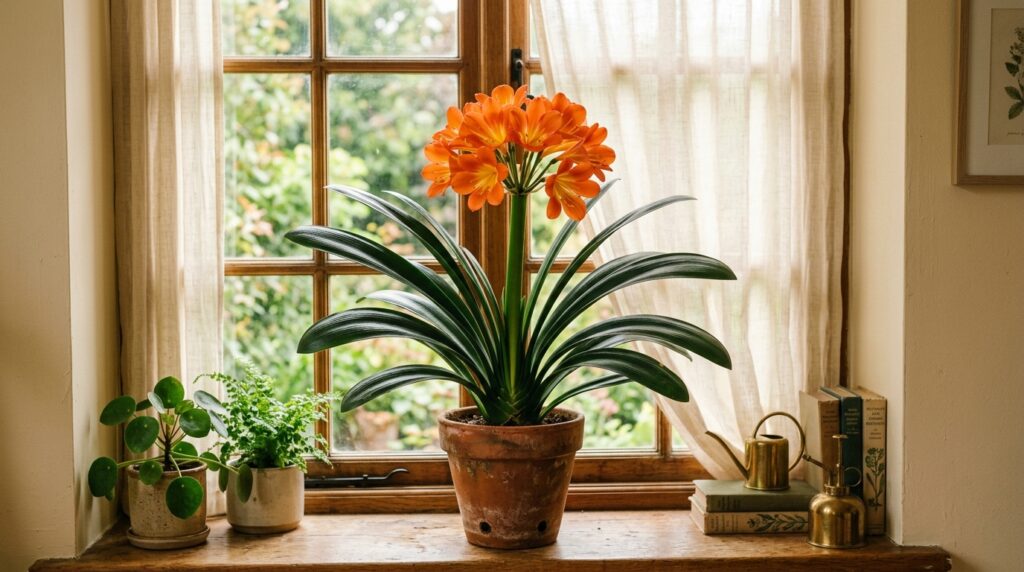
Despite its common name being problematic in some cultural contexts (many now prefer to call it simply “Clivia”), this plant is a spectacular performer. In the dead of winter, when most gardens are bare and houseplants are barely hanging on, the Clivia miniata puts on an absolute show.
Clivia miniata produces impressive umbels — rounded clusters of 10–20 funnel-shaped flowers in brilliant orange, red, or yellow — atop strong, upright stems. It’s native to the woodland and coastal regions of South Africa, which means it naturally prefers shade and doesn’t like to be overwatered.
It’s an excellent choice for shaded patios, covered porches, and indoor spaces that receive indirect light.
Growing Tips:
- Light: Partial to full shade — bright direct sun scorches the leaves
- Water: Water moderately; allow soil to partially dry between waterings
- USDA Zones: 9–11 outdoors; grown as a houseplant elsewhere
- Bloom: Late winter to spring
- Pro tip: A cool, dry rest period in fall (reduce watering significantly) encourages better flowering the following spring
8. Kerria — Japanese Rose (Kerria japonica)
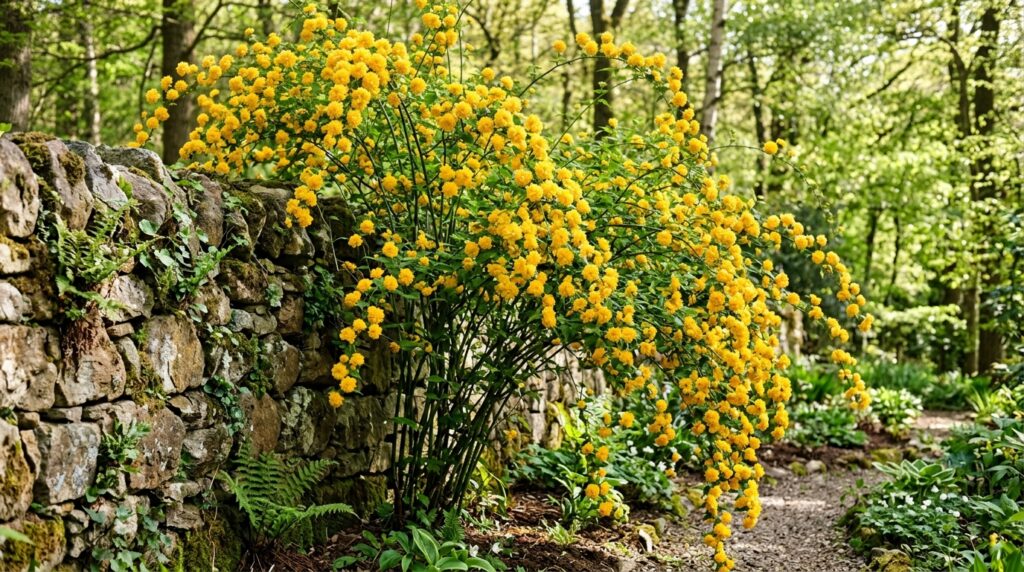
Here’s a flowering shrub that earns its keep even when it’s not blooming. The bright lime-green stems of Kerria japonica remain vivid all winter, adding color to an otherwise dull landscape. Then, in early spring, it erupts in cheerful golden-yellow flowers that look like tiny pompoms.
Kerria japonica is sometimes called Japanese Rose, though it isn’t related to true roses at all. It’s actually part of the rose family (Rosaceae) but belongs to a genus all its own. The double-flowered variety ‘Pleniflora’ is the most commonly grown form and the showiest.
One of the best things about Kerria is its shade tolerance. While most flowering shrubs demand full sun, this one actually prefers dappled shade — making it perfect for the tricky shaded spots most gardeners struggle to fill.
Growing Tips:
- Light: Partial to full shade; tolerates more sun in cooler climates
- Soil: Any well-draining soil; not fussy at all
- USDA Zones: 4–9
- Bloom: Early to mid-spring
- Maintenance: Prune immediately after flowering to shape and encourage new growth
9. Kolkwitzia — Beauty Bush (Kolkwitzia amabilis)
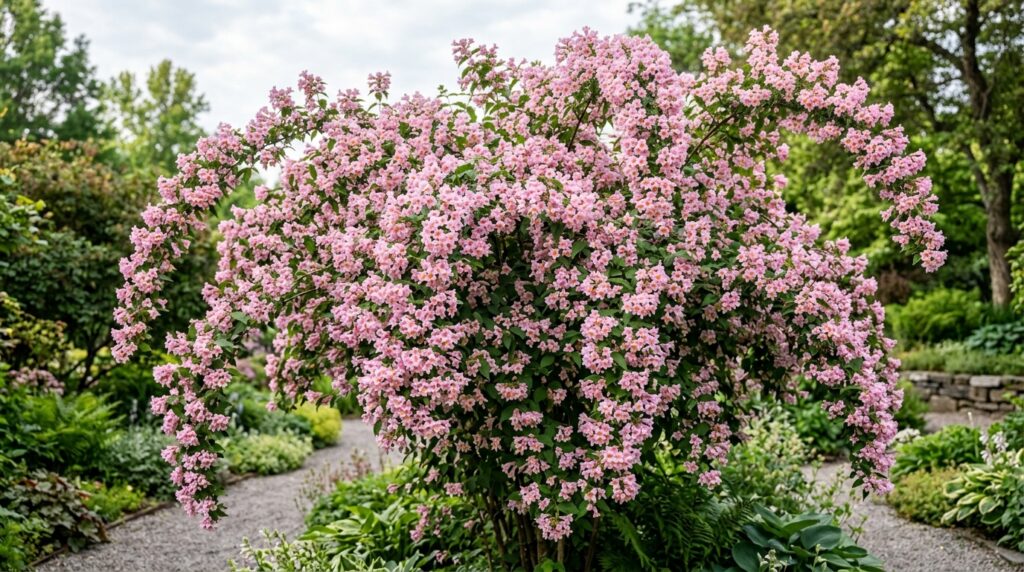
When a plant gets nicknamed “Beauty Bush,” it has to deliver — and Kolkwitzia amabilis absolutely does. In late spring, this deciduous shrub covers itself so completely in soft pink, yellow-throated bell-shaped flowers that the branches nearly disappear beneath them.
Kolkwitzia amabilis is native to central China and was introduced to gardens in the early 20th century by the renowned plant hunter Ernest Wilson. It quickly became a beloved garden staple for its spectacular spring display and low maintenance needs.
After flowering, the seed heads develop a fuzzy, decorative texture that adds interest through summer and fall.
Growing Tips:
- Light: Full sun to partial shade
- Soil: Well-draining; tolerates poor soils
- USDA Zones: 4–8
- Bloom: Late spring
- Size: Can reach 6–10 feet tall and wide — give it room to spread its arching branches
Lesser-Known Flowers Starting With K Worth Discovering
10. Kennedia — Coral Vine (Kennedia spp.)
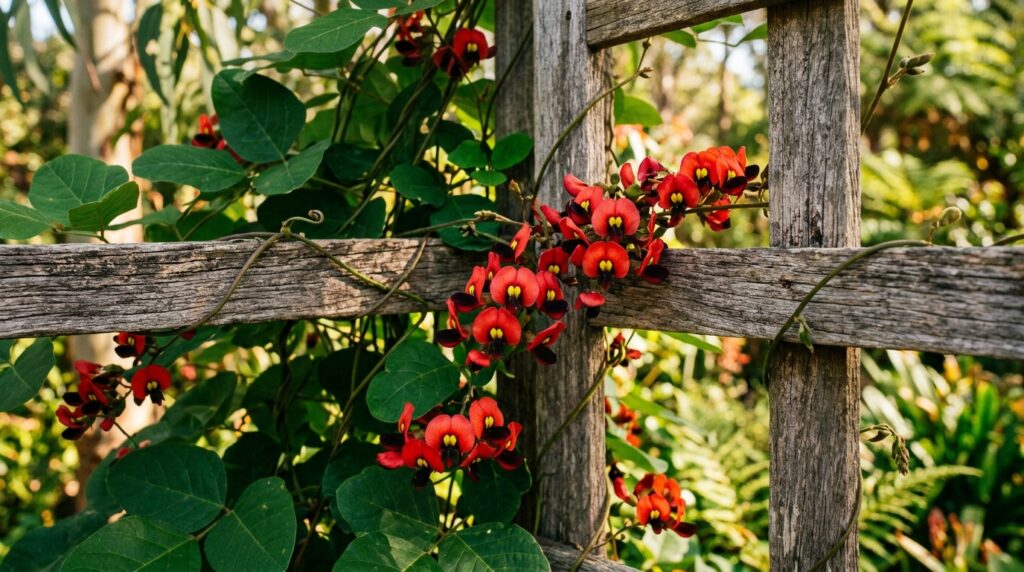
Kennedia is one of Australia’s botanical gems — a genus of fast-growing climbing perennials that produce vivid pea-shaped flowers in red, black, purple, and pink. Kennedia rubicunda, or Dusky Coral Pea, is the most dramatic species, featuring scarlet and black flowers that look almost painted.
The genus belongs to the legume family (Fabaceae) and fixes nitrogen in the soil — a win for your garden’s ecosystem.
Growing Tips:
- Needs warm climate; not frost-tolerant
- Ideal for trellises, fences, and covering slopes
- USDA Zones: 9–11
11. Koelreuteria — Golden Rain Tree (Koelreuteria paniculata)
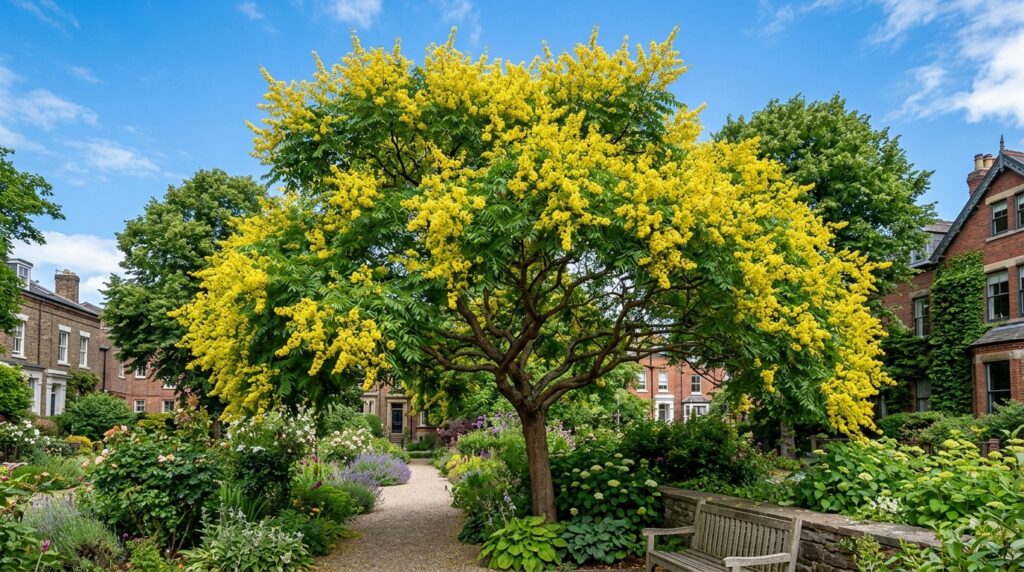
Technically a tree, but undeniably a flower that starts with K worth knowing. The Golden Rain Tree earns its name in summer when it drips with enormous panicles of tiny golden-yellow flowers — sometimes covering the entire canopy. After the flowers drop, papery lantern-shaped seed pods appear in pink and brown, extending the ornamental show through fall.
It’s a tough, adaptable tree that handles urban conditions well: heat, drought, poor soil, and pollution.
Growing Tips:
- USDA Zones: 5–9
- Full sun
- Drought-tolerant once established
- Maximum height: 25–40 feet
12. King’s Spear (Asphodeline lutea)
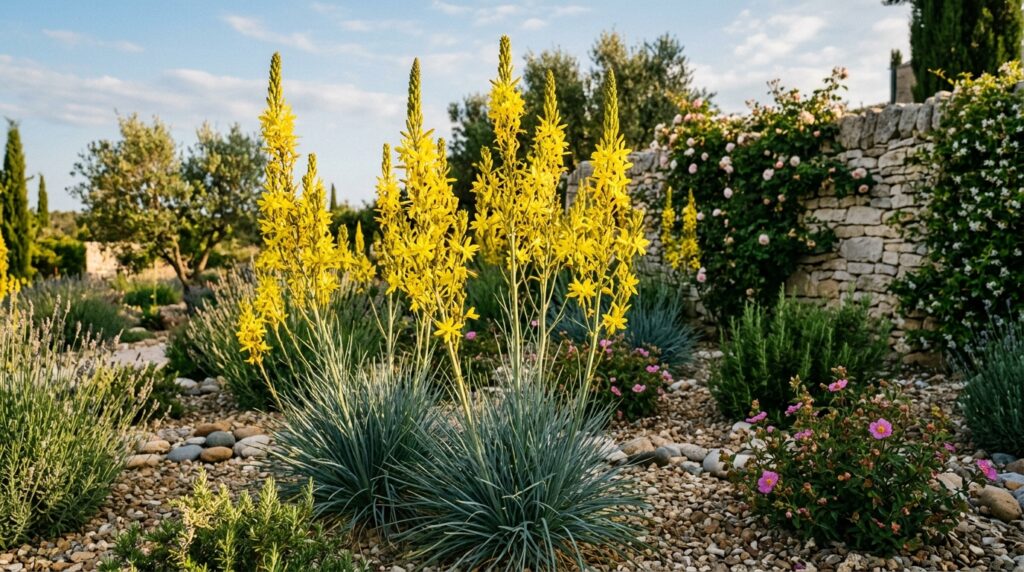
King’s Spear is a plant with ancient stories attached to it. In Greek mythology, the white asphodel flower was associated with the afterlife and the Elysian Fields — and Asphodeline lutea is its golden cousin, a real asset in dry, sunny gardens where few plants thrive.
Asphodeline lutea produces tall, fragrant yellow flower spikes above a mound of fine, blue-gray, needle-like leaves. It blooms in late spring and early summer and smells lightly of honey.
The roots were historically used by ancient peoples to make a type of rough flour during times of famine.
Growing Tips:
- USDA Zones: 5–9
- Full sun; thrives in rocky, poor soils
- Excellent for xeriscaping and dry borders
- Bloom: Late spring to early summer
13. Knautia vs. Scabiosa — What’s the Difference?
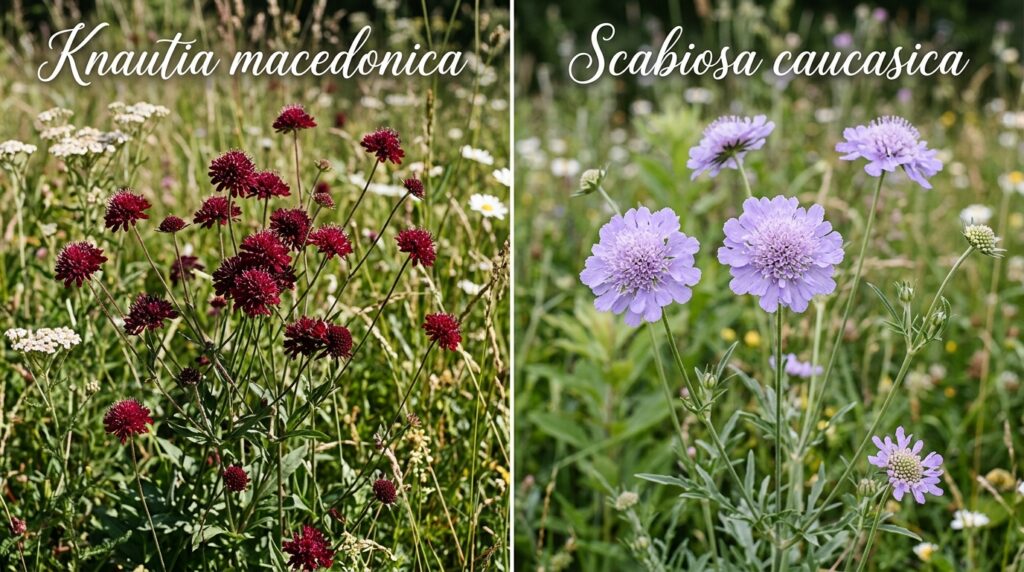
Many beginner gardeners confuse Knautia with Scabiosa (Pincushion Flower). They’re close relatives in the Caprifoliaceae family and share the same pincushion-shaped flower form.
The key differences:
- Knautia flowers tend to be darker (deep crimson to maroon) and carried on longer, more flexible stems
- Scabiosa leans toward lavender, blue, and soft pinks
- Both are equally pollinator-friendly and cottage garden-worthy
- Both bloom from early summer through fall if deadheaded regularly
If you can only choose one for a small garden, Knautia is generally tougher and more drought-tolerant.
14. Kiss Me Over the Garden Gate (Persicaria orientalis)
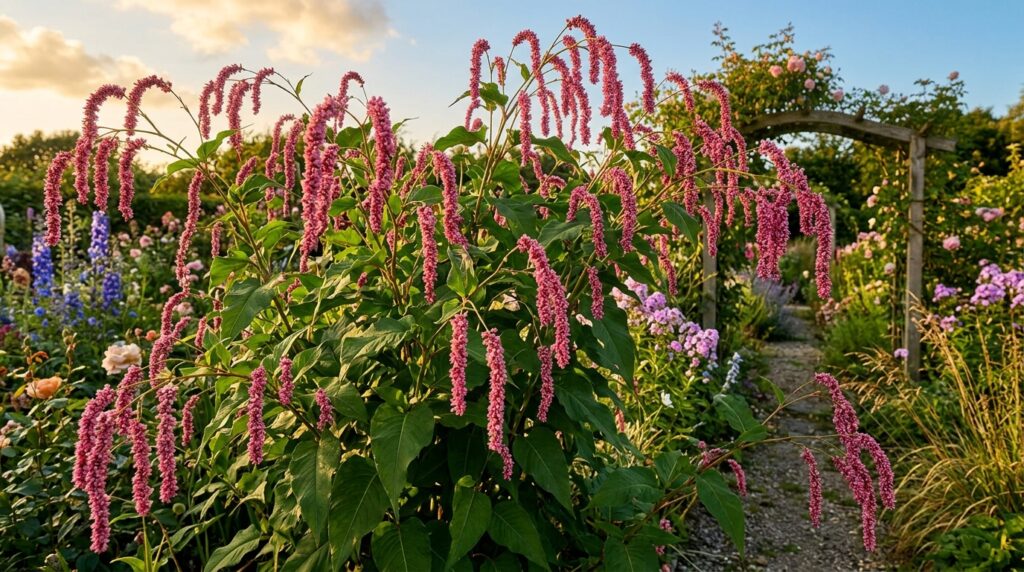
This has to be the most romantically named flower on the entire list. Persicaria orientalis, or “Kiss Me Over the Garden Gate,” is a towering annual that can reach 5–7 feet tall, producing long, drooping chains of tiny deep-pink to rose-colored flowers that sway in the breeze like botanical curtains.
It’s native to Asia and has naturalized across many temperate regions. Despite its giant size, it’s incredibly easy to grow from seed — direct sow in spring, give it full sun and average soil, and stand back. It spreads freely by self-seeding, so once you plant it, you’ll likely have it for years to come.
Growing Tips:
- Annual; self-seeds prolifically
- Direct sow after last frost; prefers full sun
- Bloom: Late summer through first frost
- Perfect as a dramatic back-of-border plant
15. Knapweed (Centaurea spp.)
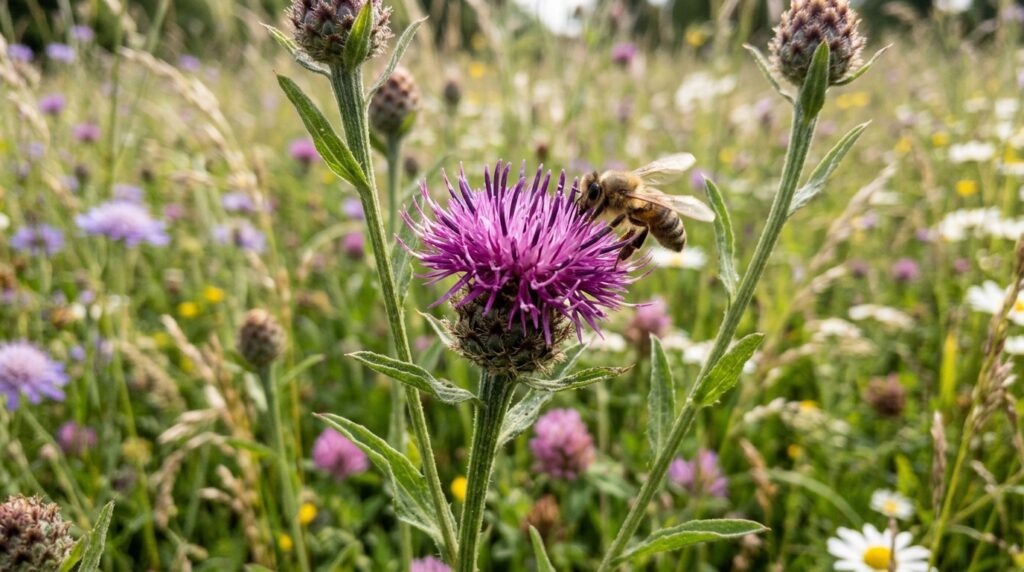
Knapweed is the wildflower garden’s honest workhorse. Part of the Centaurea genus, these plants produce thistle-like flower heads in purple, pink, and occasionally white that are absolute bee magnets throughout summer and fall.
Greater Knapweed (Centaurea scabiosa) and Common Knapweed (Centaurea nigra) are the most familiar species. They thrive in poor, chalky, or gravelly soils where more pampered garden plants struggle.
Key Fact: Knapweed is one of the top five most valuable wildflowers for native bees and bumblebees, according to pollinator research in the UK. If supporting pollinators is your goal, this is an easy, low-maintenance choice.
⚠️ Note: Some Centaurea species, particularly Centaurea stoebe (Spotted Knapweed), are classified as invasive in parts of North America. Always check your local guidelines before planting.
Rare and Unusual Flowers Starting With K
16. Koki’o (Kokia drynarioides)
Koki’o is more than a flower — it’s a story of survival. This rare Hawaiian hibiscus was once believed completely extinct in the wild. Through careful propagation and conservation efforts, small numbers were preserved, and the species now exists in botanical gardens and protected reserves.
The flowers are a brilliant red-to-orange, reminiscent of traditional Hawaiian hibiscus varieties, and bloom primarily in winter and spring. Growing Koki’o isn’t just aesthetically rewarding — it’s a small act of participation in botanical conservation.
17. Kanawao (Broussaisia arguta)
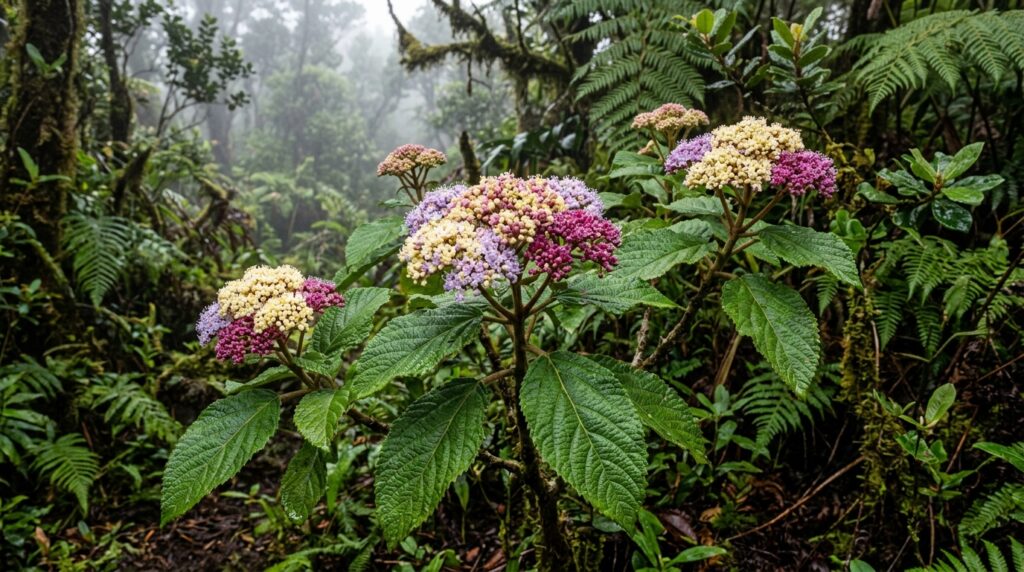
Kanawao (Broussaisia arguta) is the only species in its genus and is endemic to Hawaii — meaning it exists nowhere else on Earth. It belongs to the hydrangea family and produces lacy, hydrangea-like flower clusters that shift through creamy yellow, blue, lavender, and magenta tones.
It plays an important ecological role in Hawaiian rainforests, providing nectar and shelter for native birds and insects. It’s not commonly grown outside Hawaii, but it represents the kind of rare botanical gem that makes the K-flower list richer.
18. Kaempferia — Peacock Ginger (Kaempferia spp.)
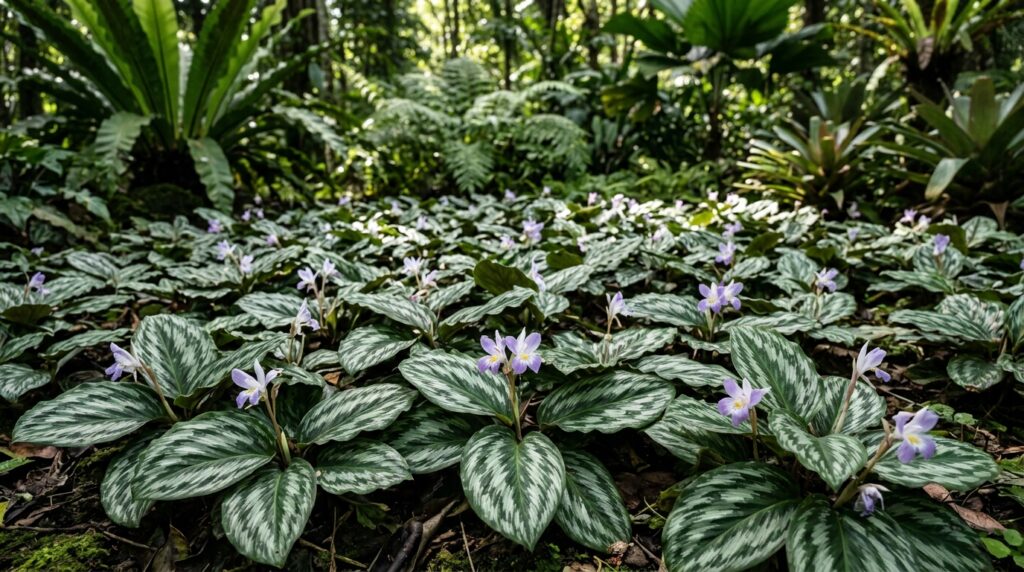
Most people grow Kaempferia for the leaves rather than the flowers — and the leaves are spectacular. Broad, flat, and patterned with silver-green markings, they look like they’ve been painted by hand.
But the flowers, small and purple-white, emerging directly from the center of the leaf rosette throughout summer, add a delicate bonus to what is already a visually remarkable ground-cover plant. Kaempferia is native to tropical Asia and has traditional uses in herbal medicine across Thailand, India, and China.
Growing Tips:
- USDA Zones: 8–11 (grow as a houseplant in cooler zones)
- Deep shade to partial shade only
- Rich, moist, well-draining soil
- Goes dormant in winter; store rhizomes indoors in cold climates
Flowers That Start With K for Pollinators
If your goal is creating a pollinator-friendly garden, here are the best K flowers for the job:
Best K Flowers for Bees
- Knautia — one of the most bee-visited wildflowers
- Knapweed (Centaurea) — top-tier for bumblebees
- Kunzea — produces masses of small flowers rich in nectar
- Kolkwitzia (Beauty Bush) — excellent early-season bee plant
Best K Flowers for Hummingbirds
- Kniphofia (Red Hot Poker) — hummingbird favorite; the tubular shape is designed for them
- Keckiella — tubular red flowers adapted for hummingbird pollination
- Kennedia — attracts hummingbirds in warm-climate gardens
- Kangaroo Paw — evolved specifically for bird pollination
Best K Flowers for Butterflies
- Knautia — pincushion shape provides a perfect butterfly landing platform
- Knapweed — essential for many species of skipper and fritillary butterflies
- Kalanchoe (outdoors) — attracts butterflies in warm climates
Flowers Beginning With K: Growing Zones Comparison
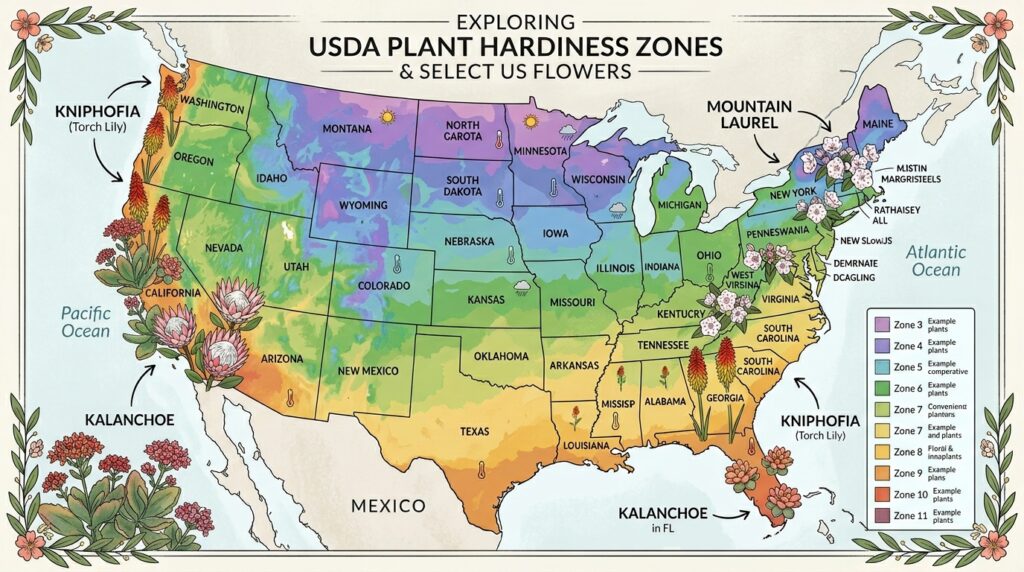
Understanding your USDA Plant Hardiness Zone is the single most important piece of knowledge when selecting any flower for your garden. Here’s how our K flowers break down by zone:
| USDA Zone Range | Best K Flowers |
|---|---|
| Zones 3–5 (Cold) | Kalmia, Kerria, Knautia, Knapweed |
| Zones 5–7 (Temperate) | Kniphofia, Kolkwitzia, Koelreuteria, King’s Spear |
| Zones 7–9 (Warm Temperate) | Kennedia, Kniphofia, Kaempferia (sheltered) |
| Zones 9–11 (Subtropical) | King Protea, Kaffir Lily, Kangaroo Paw, Koki’o |
| Zones 10–12 (Tropical) | Kalanchoe, Kanawao, King’s Mantle |
| All Zones (as annuals/houseplants) | Kalanchoe, Kiss Me Over the Garden Gate |
How to Use K Flowers in Garden Design
For Cottage Gardens
The best K flowers for a classic cottage garden style are Knautia, Kerria, Kolkwitzia, and Kalmia. These all have a romantic, informal quality — loose flower clusters, natural habit, and soft color palettes that look like they belong in a Jane Austen landscape.
For Modern or Architectural Gardens
Go bold with Kniphofia (Red Hot Poker), King Protea, and Kangaroo Paw. These have strong geometric forms, vivid colors, and striking silhouettes that suit clean, contemporary planting schemes.
For Pollinator Gardens
Build around Knautia, Knapweed, Kniphofia, and Kunzea — all proven magnets for bees, butterflies, and hummingbirds. Place them in drifts rather than single plants for maximum visual and ecological impact.
For Low-Maintenance Xeriscaping
King’s Spear (Asphodeline), Kniphofia, Kosteletzkya, and Krameria all thrive in dry conditions with minimal watering once established. They’re ideal for water-wise landscapes.
For Indoor Spaces
Kalanchoe is the clear winner here — easy to find, easy to care for, long-blooming, and available in every color. Kaffir Lily (Clivia) is a close second for larger indoor spaces with indirect light.
Expert Tips for Growing Flowers That Start With K
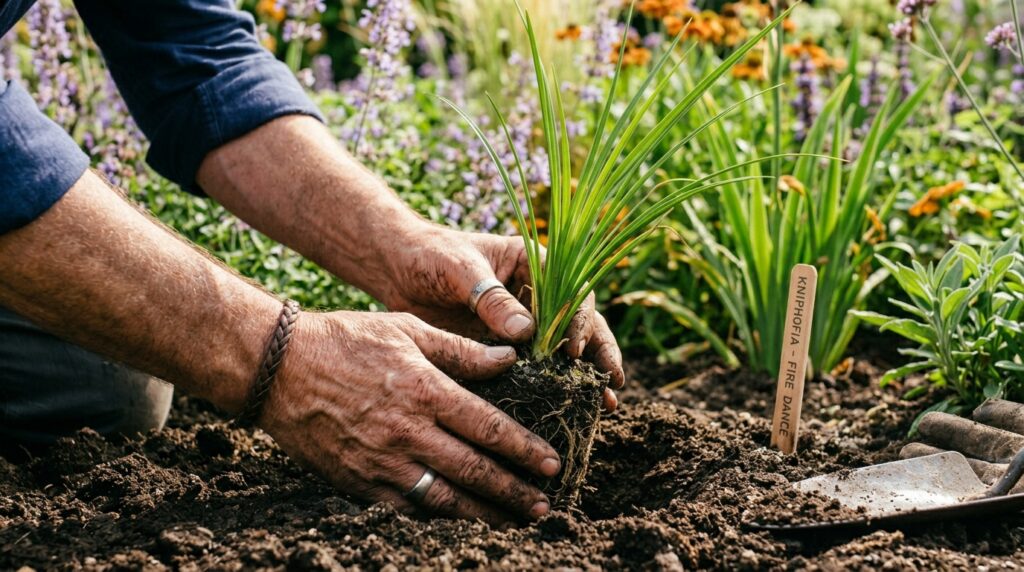
Here are key expert-level tips gathered from horticultural best practices:
1. Soil Preparation Is Everything Almost every K flower on this list suffers in waterlogged or compacted soil. Before planting, work in a generous amount of compost or coarse grit to improve drainage. For King Protea specifically, avoid fertilizers containing phosphorus — it actively harms the plant.
2. Don’t Overwater Succulents and South African Natives Kalanchoe, Kniphofia, and King Protea all come from climates with seasonal dry periods. They’re programmed to handle drought but will suffer with soggy roots. The golden rule: when in doubt, water less.
3. Match Your Shade Tolerance Kerria and Kaffir Lily (Clivia) are two of the few K flowers that genuinely prefer and perform better in shade. Don’t make the mistake of putting them in full sun to “help” them — it usually backfires.
4. Deadhead Strategically Regular deadheading dramatically extends the bloom period of Knautia, Kniphofia (sometimes), and Kalanchoe. For Kniphofia specifically, cut spent flower spikes all the way down to the base — not just the top portion.
5. Think About Wildlife From the Start Several K flowers — particularly Kalmia and all parts of the Kangaroo Paw — can be toxic to pets or livestock if ingested. If you have animals that roam your garden, plan accordingly and check the ASPCA’s toxic plant database before planting.
Flowers That Start With K: Symbolism and Cultural Significance
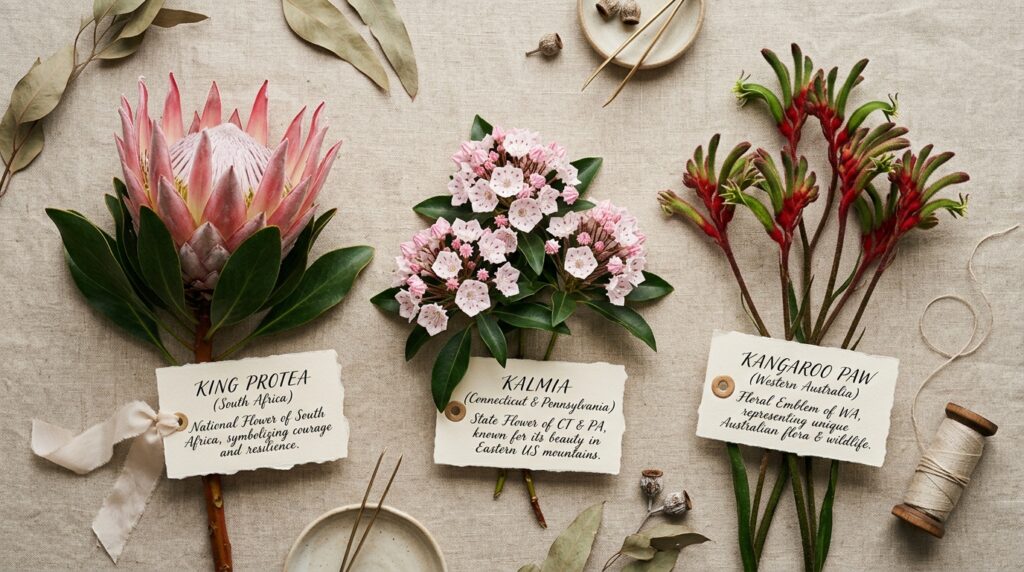
Many flowers beginning with K carry deep cultural meaning:
King Protea (Protea cynaroides) South Africa’s national flower since 1976. It represents the beauty of the nation’s floral diversity and the resilience of its people. The artichoke-like form was once compared by Carl Linnaeus to the mythological Proteus, who could change form — hence the genus name.
Kalmia (Mountain Laurel) The official state flower of Connecticut and Pennsylvania. Mountain Laurel appears in Indigenous plant knowledge across Eastern North America, where it was used medicinally with great care given its toxicity.
Kangaroo Paw The floral emblem of Western Australia, representing uniqueness, resilience, and the irreplaceable character of Australian native flora.
Kalanchoe The first plant ever grown in space (1979, Soviet spacecraft), Kalanchoe has become a global symbol of low-maintenance beauty. In many cultures, it’s given as a gift representing prosperity and endurance.
Quick FAQs: Flowers Beginning With K
Q1: What is the most popular flower that starts with K?
Kalanchoe is consistently the most recognized and widely available flower beginning with K. It’s sold in grocery stores, garden centers, and home décor shops across the country. Its long bloom time, vibrant colors, and ease of care make it the go-to K flower for beginners. For outdoor gardens, Kniphofia (Red Hot Poker) is arguably the most popular garden perennial starting with K.
Q2: What flower that starts with K is easiest to grow?
For beginners, Kalanchoe (indoors) and Knautia or Kerria (outdoors) are the easiest flowers beginning with K to grow successfully. Kalanchoe requires only bright indirect light and infrequent watering. Kerria tolerates shade, poor soil, and needs almost no maintenance once established. Knautia is similarly undemanding in a sunny, moderately well-drained spot.
Q3: What is the national flower that starts with K?
The King Protea (Protea cynaroides) is the most famous national flower starting with K — it’s the national flower of South Africa. The Kangaroo Paw (Anigozanthos manglesii) is the floral emblem of Western Australia. Kalmia latifolia (Mountain Laurel) is the state flower of both Connecticut and Pennsylvania.
Q4: Can I grow flowers starting with K in containers?
Yes — several K flowers grow beautifully in containers. Kalanchoe is specifically designed for pot culture. Knautia works well in large pots on sunny patios. Kangaroo Paw and Kaffir Lily (Clivia) both adapt to containers if given the right conditions. Kniphofia can be grown in containers using dwarf varieties, though large forms become unwieldy. Proven Winners offers several compact Kniphofia cultivars bred specifically for containers.
Q5: Which flower starting with K is best for attracting hummingbirds?
Kniphofia (Red Hot Poker) is widely regarded as the best K flower for hummingbird attraction. The flowers are highly attractive to hummingbirds, butterflies, and other insect pollinators. The tubular shape and vivid red-orange color are precisely what hummingbirds seek out. Keckiella is a strong second choice in warmer, drier climates where it grows naturally alongside native hummingbird populations.
Conclusion: Your Garden Deserves a K Flower (Or Six)
The letter K might not be the most famous in the floral alphabet, but as you’ve just seen, it’s far from empty. From the tropical drama of Kangaroo Paw and the architectural fire of Kniphofia to the quiet woodland elegance of Mountain Laurel and the global icon of King Protea — flowers starting with K span every style, climate, and skill level.
Whether you’re planting your very first garden or adding to a well-developed one, at least one flower beginning with K belongs in your space.
Ready to Start?
If you’re new to gardening, pick up a Kalanchoe — you can find one at virtually any garden center or even a grocery store. If you’re ready for something more dramatic outdoors, plant a Kniphofia in a sunny border this spring and watch the hummingbirds find it within days.
And if you’re building a list of beautiful flowers by letter — or helping a child learn about the natural world — this collection of flowers that start with K is a wonderful place to begin.
Have a favorite K flower we didn’t include? Drop it in the comments — we love expanding this list with reader suggestions.
Enjoyed this guide? Explore our other flower alphabet guides — from flowers that start with A all the way through Z — for more botanical inspiration, growing tips, and garden ideas.
Also Read:

