
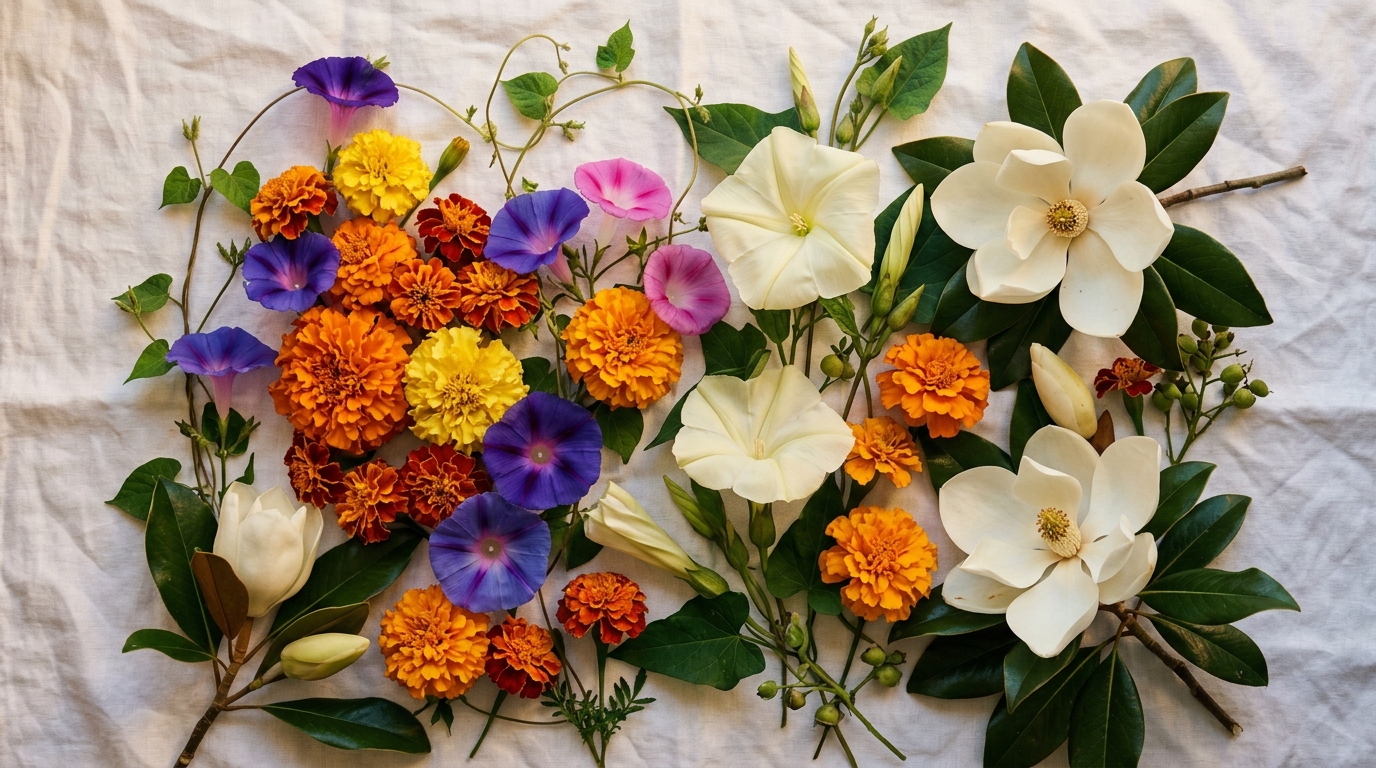
There’s something oddly satisfying about organizing the plant world by alphabet. And when you land on the letter M? You hit a goldmine.
The letter M is home to some of the most recognizable, most beloved, and most breathtaking flowers in the world. Whether you’re a weekend gardener trying to plan your summer beds, a florist sourcing inspiration, or just a curious plant lover — knowing your M flowers gives you an incredible range to work with.
From the cheerful brightness of the Marigold to the moody elegance of the Moonflower, flowers that start with M span nearly every color, size, fragrance profile, and growing condition imaginable.
In this guide, you’ll discover over 25 flowers beginning with M — complete with growing tips, landscape uses, interesting facts, and expert advice to help you grow them confidently. Let’s dig in.
Why Explore Flowers Alphabetically?
Before we dive into the list, you might wonder: why organize flowers by letter at all?
It’s actually a surprisingly useful framework — especially when you’re searching for plants for a specific purpose, shopping at a garden center, or building a themed garden. Many gardeners use alphabetical searches to cross-reference plant databases, and the letter M is one of the richest starting points.
According to the Royal Horticultural Society plant database, hundreds of flowering plants begin with the letter M — ranging from native wildflowers to cultivated hybrids. This guide cuts through the noise to highlight the best ones.
25+ Flowers That Start With M (Complete List)
1. Marigold (Tagetes spp.)
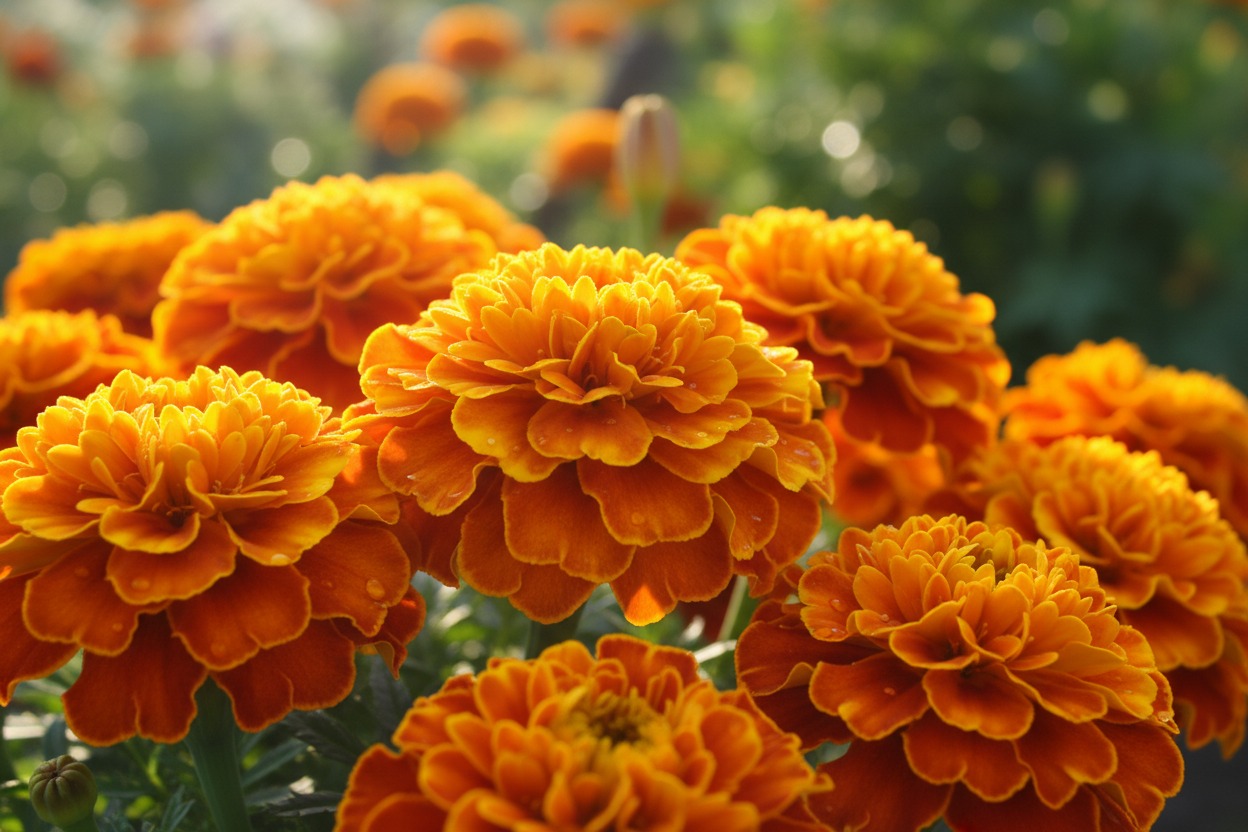
Marigolds are probably the most universally recognized flower beginning with M — and for very good reason.
These sun-loving annuals bloom in fiery shades of orange, yellow, gold, and deep burgundy. They’re incredibly easy to grow from seed, which makes them a top pick for beginner gardeners. But don’t let the simplicity fool you — professional landscapers use them extensively for their season-long blooming habit.
Why gardeners love them:
- Bloom from early summer through frost
- Natural pest deterrents — they repel aphids, whiteflies, and even nematodes
- Attract pollinators like bees and butterflies
- Edible petals used in teas and culinary garnishes
Growing Tips:
- Plant in full sun (6+ hours daily)
- Well-draining soil; drought-tolerant once established
- Deadhead spent blooms to encourage continuous flowering
- Companion plant them with tomatoes, peppers, and roses
The University of Florida IFAS Extension notes that Marigolds are one of the top companion plants used in organic vegetable gardening due to their pest-repellent properties.
2. Magnolia (Magnolia spp.)
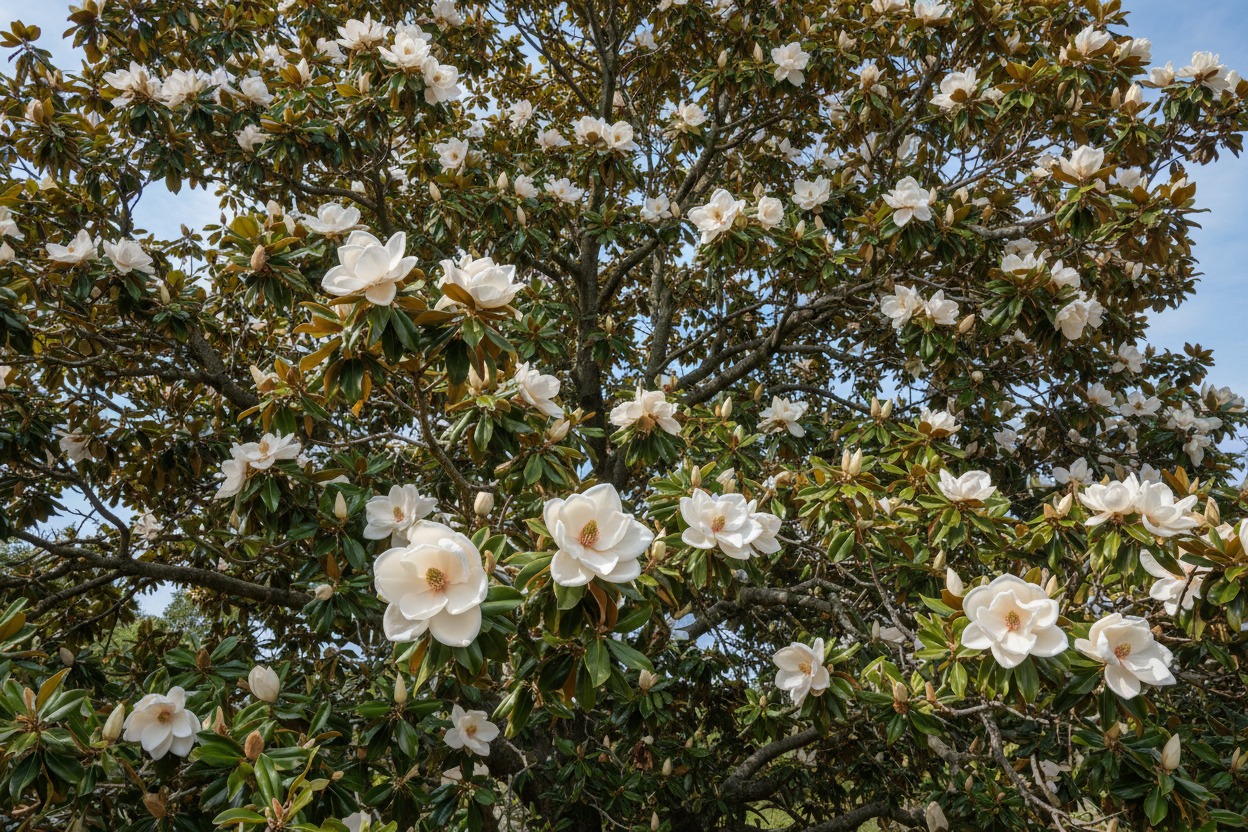
Few flowers command attention the way a Magnolia does.
These trees and shrubs produce some of the most spectacular blooms in the plant world — large, waxy, cup-shaped flowers in white, pink, purple, or creamy yellow. Some magnolias bloom in early spring before the leaves emerge, creating a dramatic show of color against bare branches.
Key varieties to know:
- Southern Magnolia (M. grandiflora) — evergreen, iconic white flowers, can reach 80 feet
- Star Magnolia (M. stellata) — compact shrub, perfect for smaller gardens, white star-shaped blooms
- Saucer Magnolia (M. × soulangeana) — classic pink-purple tulip-shaped flowers in early spring
- Little Gem Magnolia — dwarf evergreen variety popular for urban landscaping
Care Basics:
- Prefer slightly acidic, well-draining soil
- Best in full sun to partial shade
- Minimal pruning required — prune only after flowering
- Hardy in USDA zones 4–9 depending on variety
The American Magnolia Society is an excellent resource for identifying specific cultivars and regional growing recommendations.
3. Morning Glory (Ipomoea purpurea)
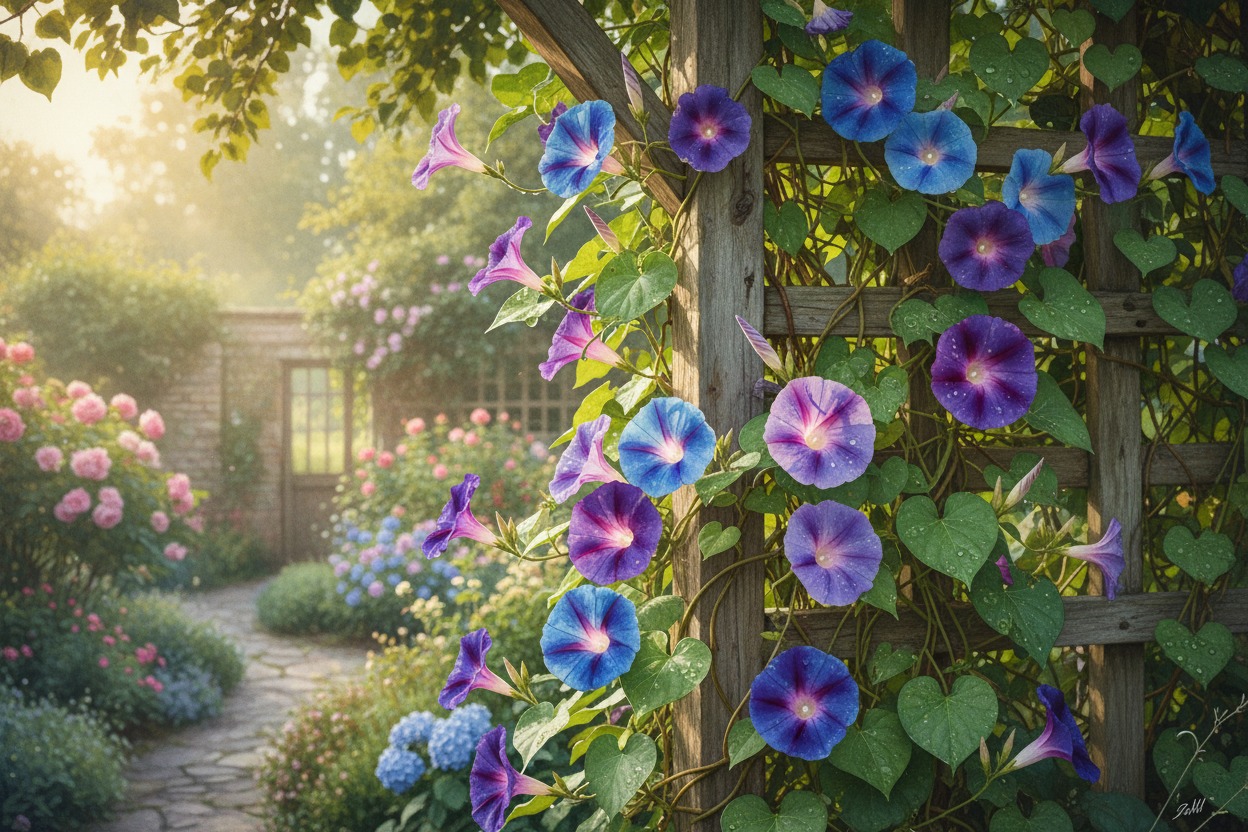
Morning Glory is one of those flowers that earns its name every single day. The blooms open fresh and vivid each morning and close by afternoon — a beautiful little daily ritual in the garden.
These fast-growing vines are available in stunning shades of purple, blue, pink, red, and white — often with a contrasting throat. They’re among the easiest flowers to grow from seed and can cover a fence, trellis, or mailbox post within a single season.
Fun facts:
- Flowers reopen fresh each morning — even on the same vine — throughout the season
- Seeds germinate in just 5–7 days
- The blue variety (Ipomoea tricolor ‘Heavenly Blue’) is one of the most photographed garden flowers worldwide
Growing Tips:
- Soak seeds overnight before planting to speed germination
- Plant in full sun against a structure to climb
- Avoid over-fertilizing — too much nitrogen reduces blooms
- Self-seeds readily; may return year after year in warm climates
Note: Morning Glory seeds are toxic if ingested. Keep away from children and pets.
4. Moonflower (Ipomoea alba)
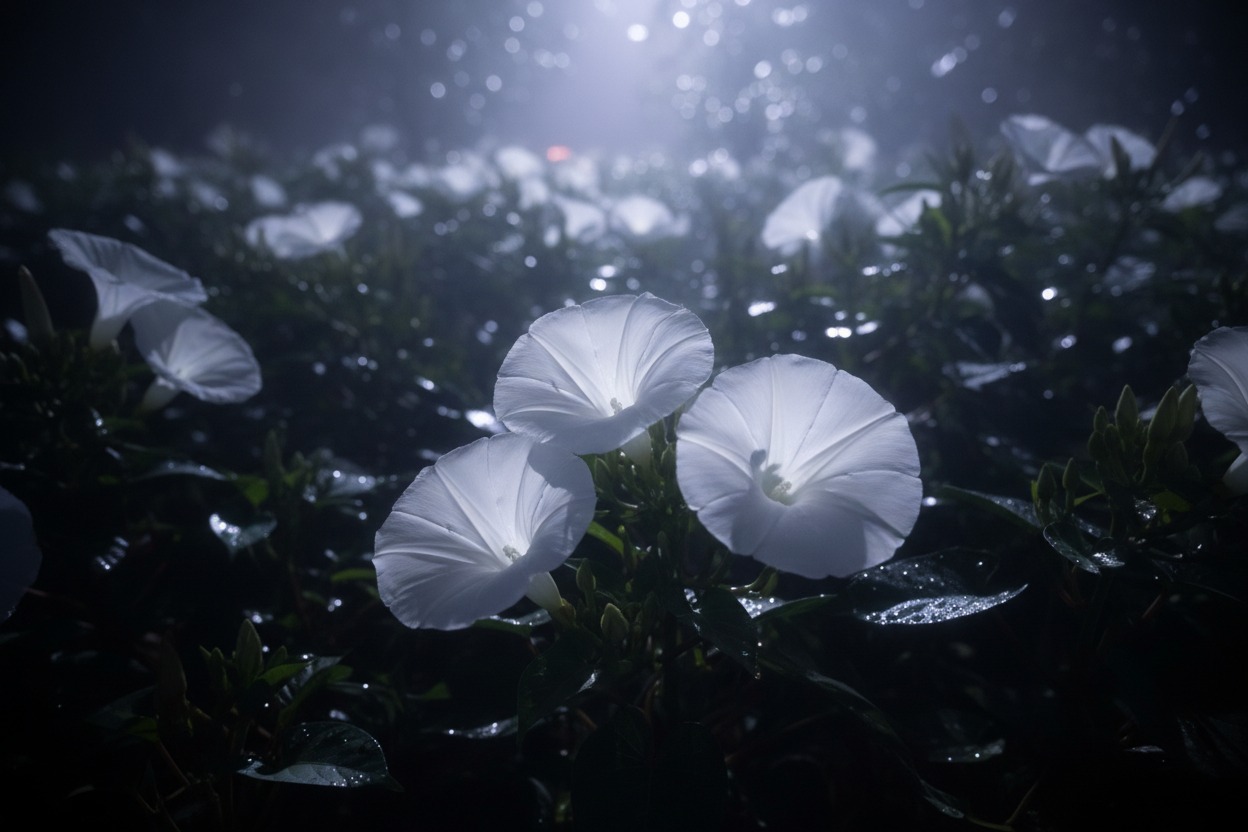
If Morning Glory is the daytime twin, Moonflower is its mystical nocturnal counterpart.
Moonflowers are large, pure-white, trumpet-shaped blooms that open at dusk and fill the night air with a sweet, intoxicating fragrance. They’re a favorite for evening gardens, outdoor entertaining spaces, and moon gardens — garden designs built around white and silver plants visible at night.
Why you’ll love them:
- Blooms can reach 5–6 inches across — impressively large
- Fragrance intensifies after dark; ideal near patios and outdoor seating
- Fast-growing vine, similar in habit to Morning Glory
- Perfect companion plant to Morning Glory for round-the-clock blooms
Growing Tips:
- Nick or soak seeds before planting
- Full sun location; blooms open in the evening
- Rich, well-draining soil
- Provide a sturdy trellis — vines can reach 10–15 feet
5. Mauve / Mallow (Malva spp.)
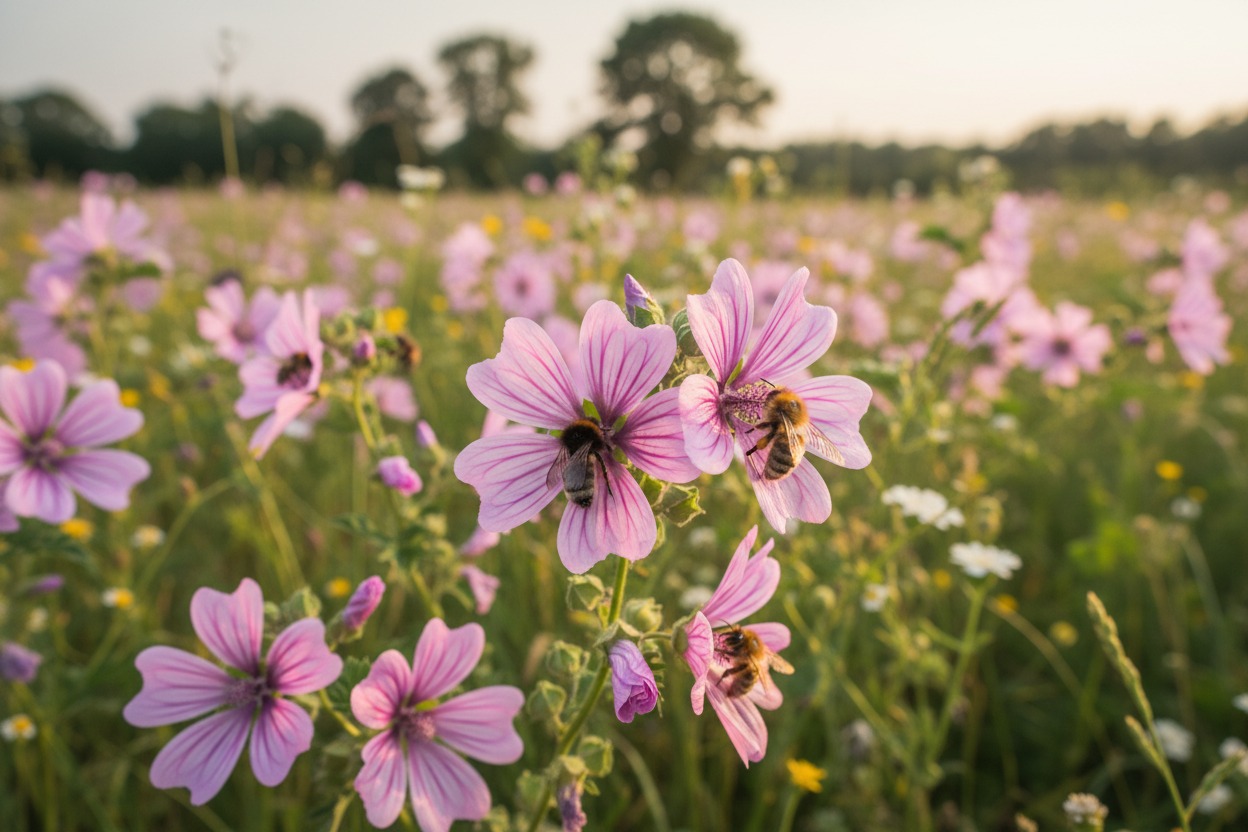
The Mallow family (Malva) gives us some of the most charming cottage garden flowers you can grow.
These plants produce cup-shaped flowers with distinctive veining on the petals — most commonly in shades of lavender, pink, mauve, and white. They bloom prolifically over a long season and attract a remarkable variety of pollinators.
Popular varieties:
- Common Mallow (Malva sylvestris) — classic cottage garden plant
- Zebra Mallow (Malva sylvestris ‘Zebrina’) — striped purple-pink petals, showstopping
- Tree Mallow (Malva arborea) — taller shrubby form, great for structure
Interesting fact: Many Mallow species have edible leaves and flowers. The leaves have been used in traditional Mediterranean cooking for centuries.
6. Mimosa (Albizia julibrissin)
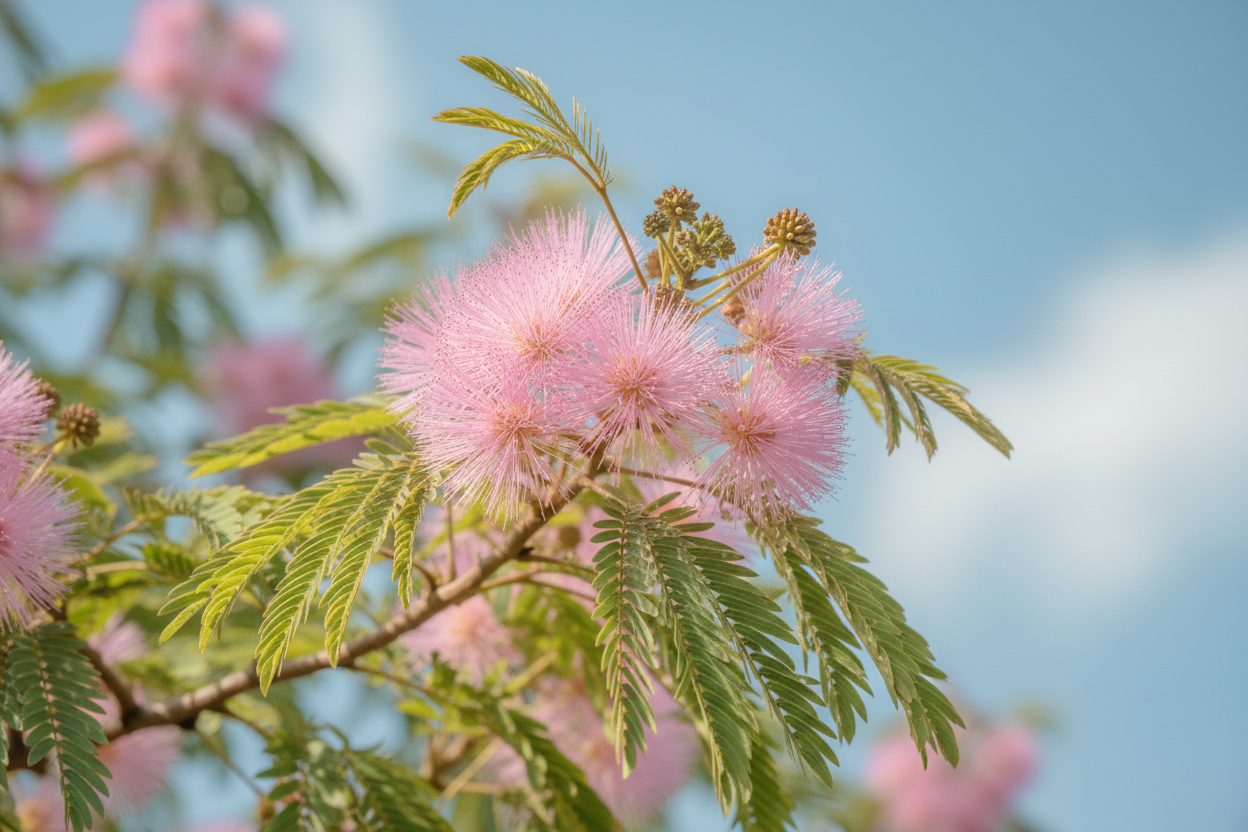
The Mimosa tree is one of those plants that stops people in their tracks during peak bloom. Those soft, silky, powder-puff flowers in shades of pink and coral look almost too delicate to be real.
Also called the Persian Silk Tree, the Mimosa blooms in summer and is beloved for its tropical, feathery appearance. The flowers are rich in nectar and draw hummingbirds and butterflies in droves.
Care Notes:
- Drought-tolerant once established
- Grows quickly — up to 5 feet per year
- Best in USDA zones 6–9
- Note: Considered invasive in some regions; check local regulations before planting
7. Muscari / Grape Hyacinth (Muscari armeniacum)
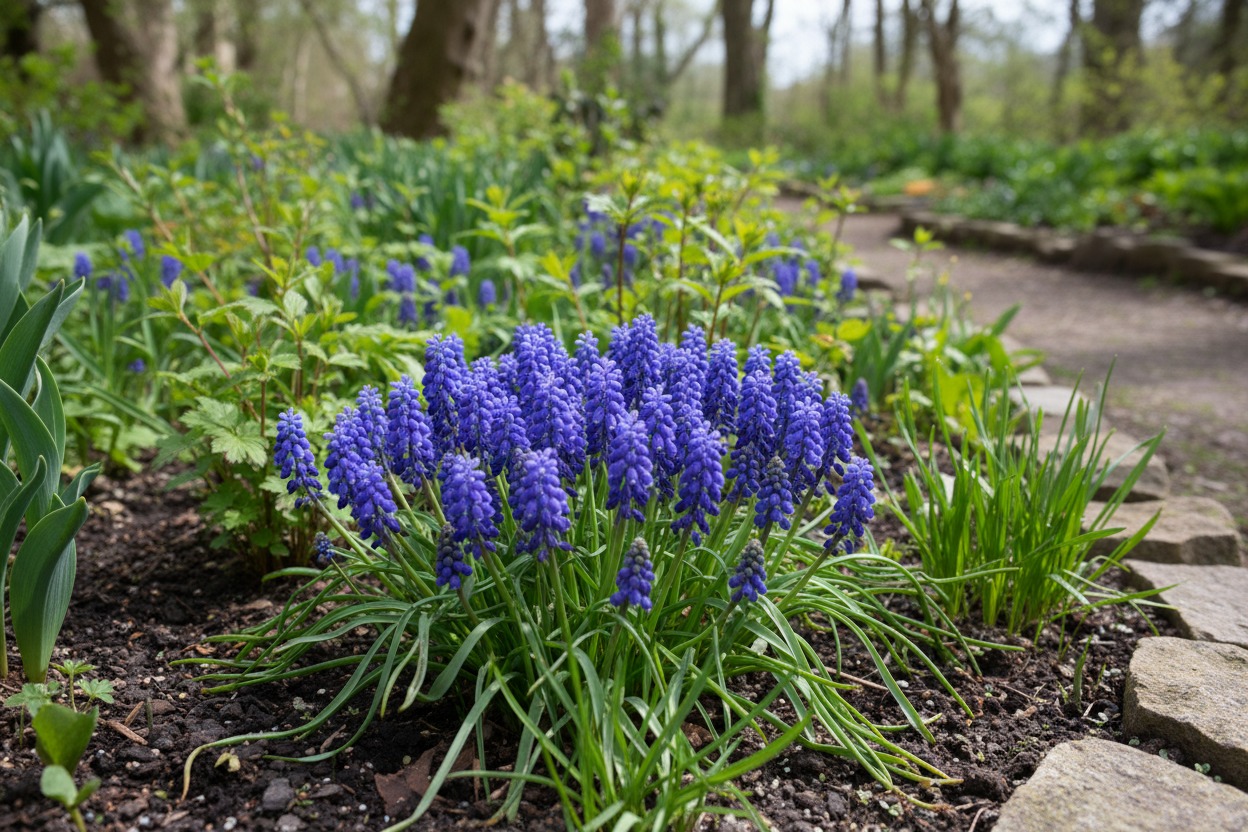
Muscari — commonly called Grape Hyacinth — is one of spring’s most charming small-scale flowers. The dense clusters of tiny, grape-like bells in vivid cobalt blue or purple emerge in early spring and look stunning massed in drifts.
They’re effortlessly easy to grow from bulbs planted in fall and naturalize beautifully, spreading gradually into larger clumps each year.
Why gardeners love them:
- One of the earliest spring bloomers
- Naturalizes and multiplies over time
- Excellent cut flower for small arrangements
- Deer and rodent resistant
Planting Guide:
- Plant bulbs in fall, 3 inches deep
- Full sun to partial shade
- Well-draining soil
- Zones 4–8
8. Michaelmas Daisy (Aster / Symphyotrichum spp.)
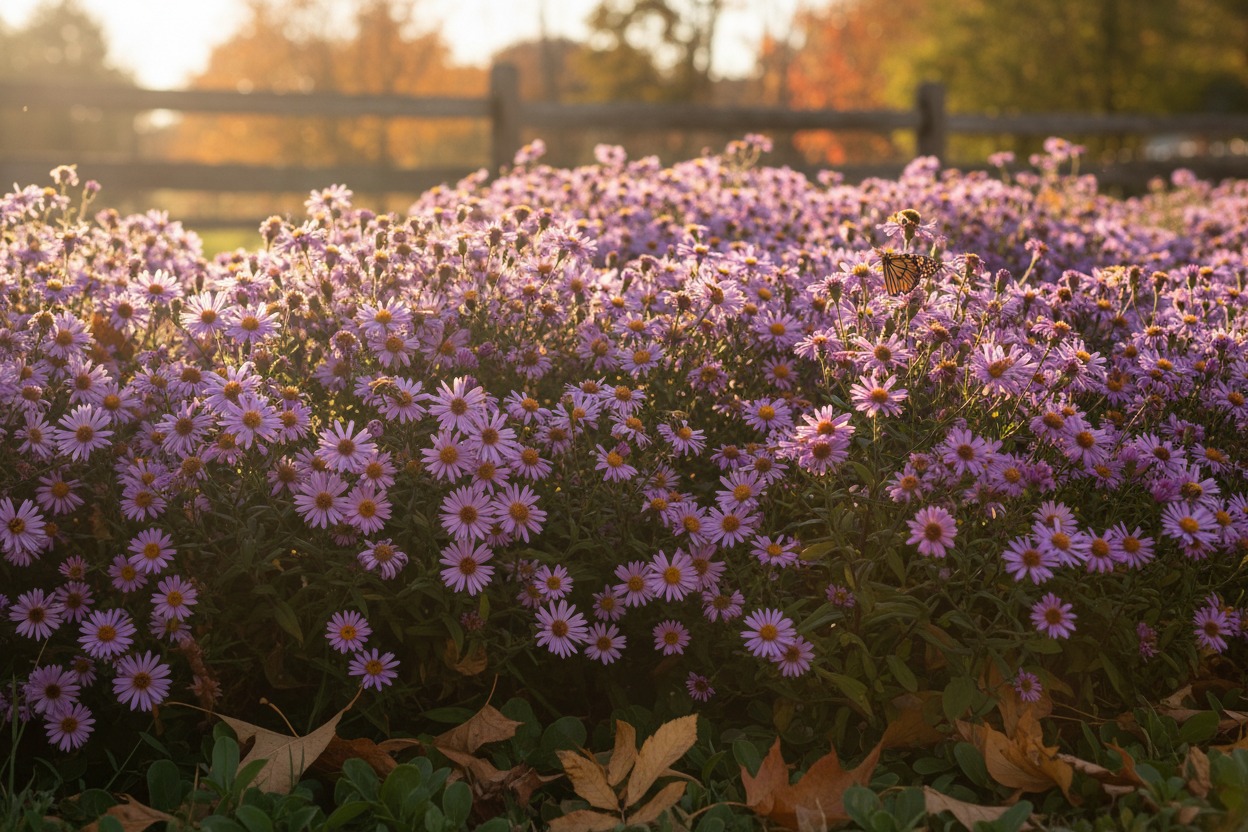
Michaelmas Daisies are the unsung heroes of the fall garden. While most summer flowers are winding down, these cheerful daisy-like blooms burst into color in shades of purple, lavender, pink, and white from late summer into autumn.
They’re named after Michaelmas Day (September 29) in the British calendar — the time when they traditionally peak.
Why they matter:
- Critical late-season food source for pollinators, especially bees and monarch butterflies
- Long-lived perennial that returns each year
- Works beautifully in naturalistic and wildlife gardens
Care:
- Full sun; tolerates light shade
- Cut back hard after flowering for tidier growth
- Divide clumps every few years to keep them vigorous
9. Marguerite Daisy (Argyranthemum frutescens)
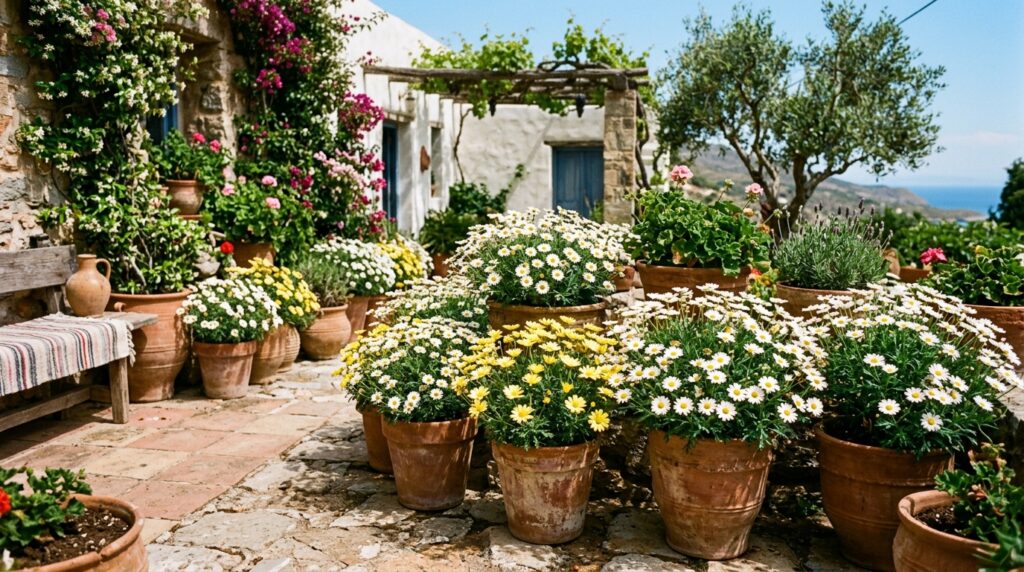
Marguerite Daisies are the quintessential cheerful daisy — white petals, bright yellow centers, endlessly producing blooms from spring through fall.
These tender perennials (grown as annuals in colder climates) are ideal for containers, window boxes, and mixed borders. They’re fast-growing and heavy bloomers, especially if deadheaded regularly.
10. Monarda / Bee Balm (Monarda spp.)
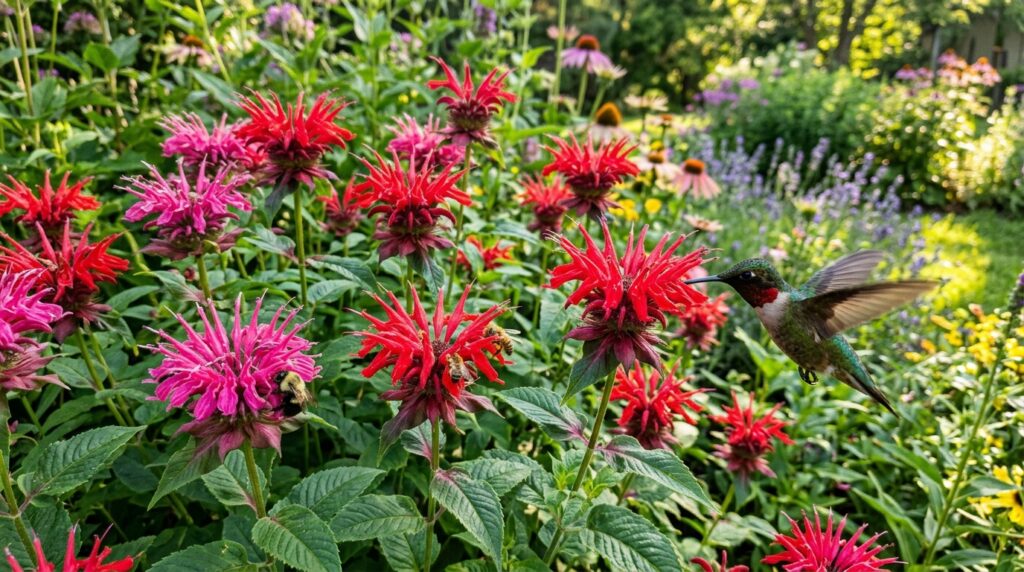
Bee Balm lives up to its name in spectacular fashion. Plant it and watch your garden transform into a hub of wildlife activity — bees, butterflies, and hummingbirds simply can’t resist those tubular scarlet, pink, or purple flowers.
Monarda is also historically significant. Native American tribes used it medicinally, and the leaves make a fragrant, oregano-like tea. In fact, after the Boston Tea Party, colonists reportedly brewed “Oswego Tea” from Monarda as a substitute for British tea.
Growing Notes:
- Full sun to partial shade
- Prefers moist, rich soil
- Spreads via rhizomes — give it room
- Prone to powdery mildew in humid conditions; choose resistant varieties like ‘Jacob Cline’
11. Meadow Rue (Thalictrum spp.)
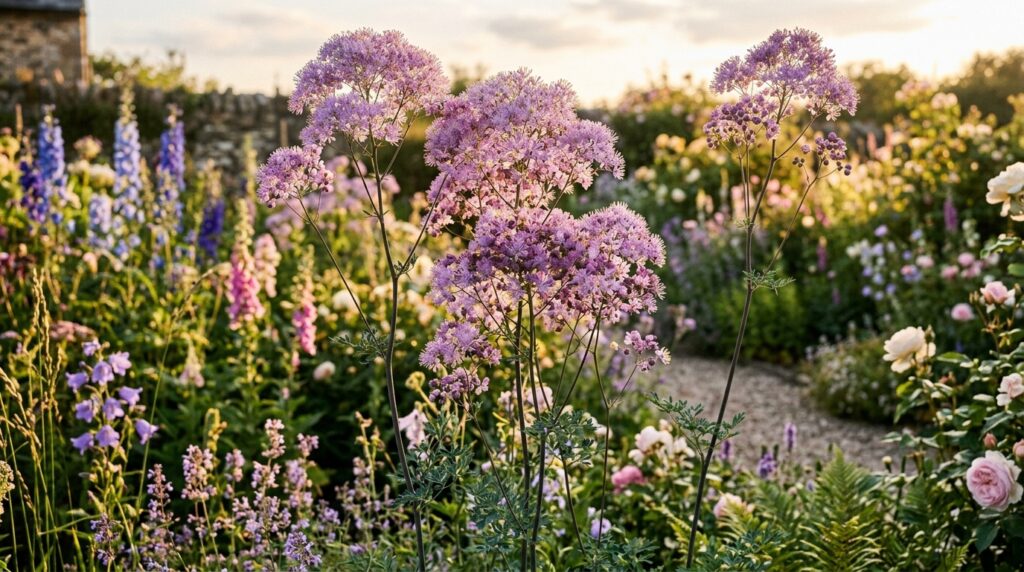
Meadow Rue is the definition of airy elegance. The fluffy, cloud-like clusters of tiny flowers float on tall, slender stems — creating a dreamy, layered effect in the mid to back border.
Available in lavender, purple, yellow, and white, Thalictrum varieties add movement and lightness to any planting.
Best for:
- Woodland gardens and shade borders
- Romantic cottage garden style
- Cutting gardens — the flowers are stunning in arrangements
12. Mexican Sunflower (Tithonia rotundifolia)
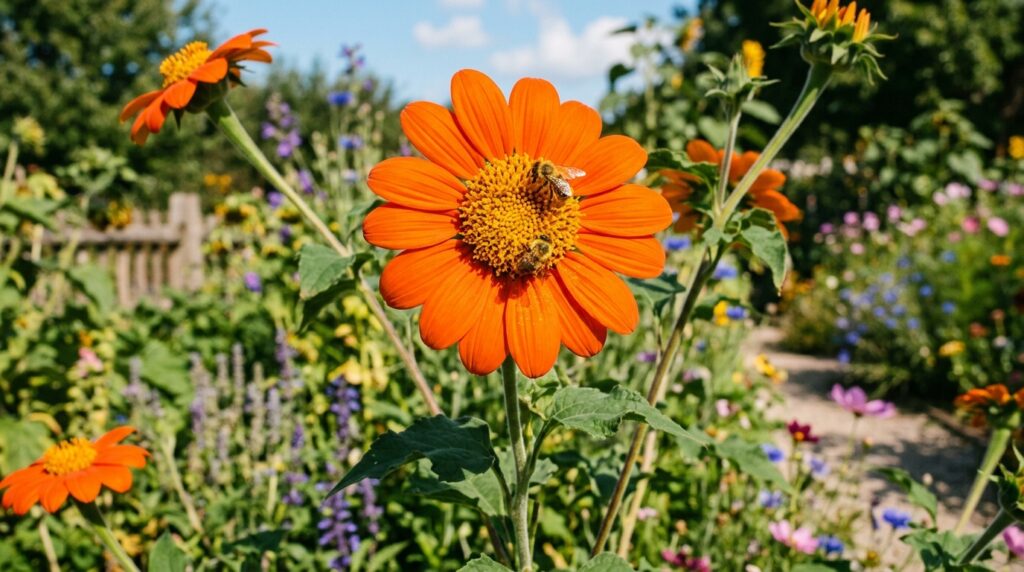
Don’t let the sunflower confusion throw you — the Mexican Sunflower is its own magnificent species. Tithonia produces blazing orange blooms with satiny petals on tall, bushy plants that can reach 4–6 feet.
They’re heat and drought-tolerant, bloom prolifically from midsummer to frost, and attract an impressive range of pollinators.
Best uses:
- Back of the border for height
- Cut flower gardens
- Pollinator and butterfly gardens
- Screening and summer hedges
13. Mock Orange (Philadelphus coronarius)
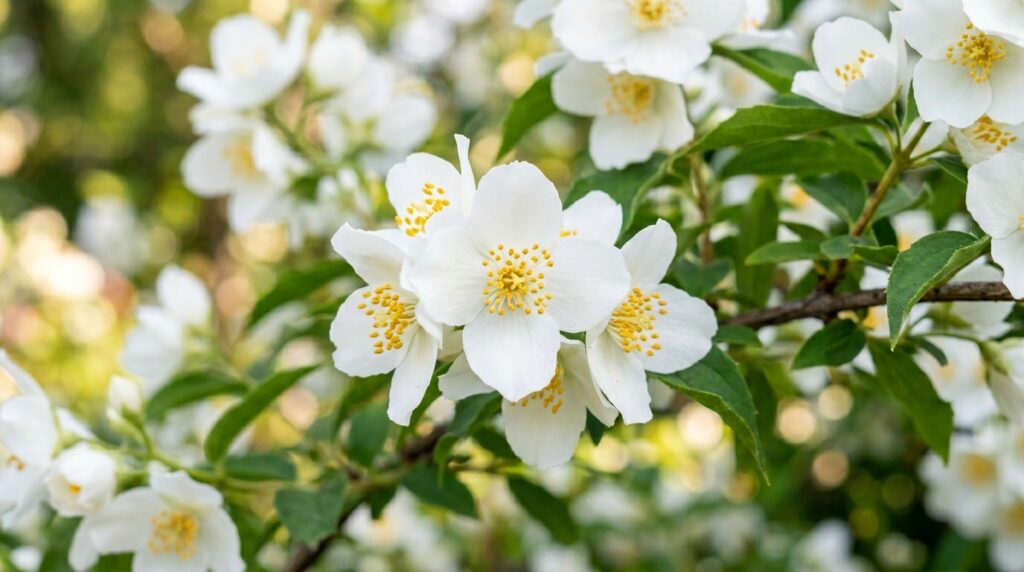
If fragrance is your priority, Mock Orange should be at the top of your list. This flowering shrub produces clusters of pure white, four-petaled blooms in late spring that fill the surrounding air with an intoxicating citrus-like scent — remarkably similar to orange blossom.
Despite the name, Mock Orange has no relation to citrus trees. The name comes purely from the scent.
Growing Tips:
- Full sun to partial shade
- Prune right after flowering — blooms on old wood
- Very hardy — thrives in zones 4–8
- Deer resistant
14. Mullein (Verbascum spp.)
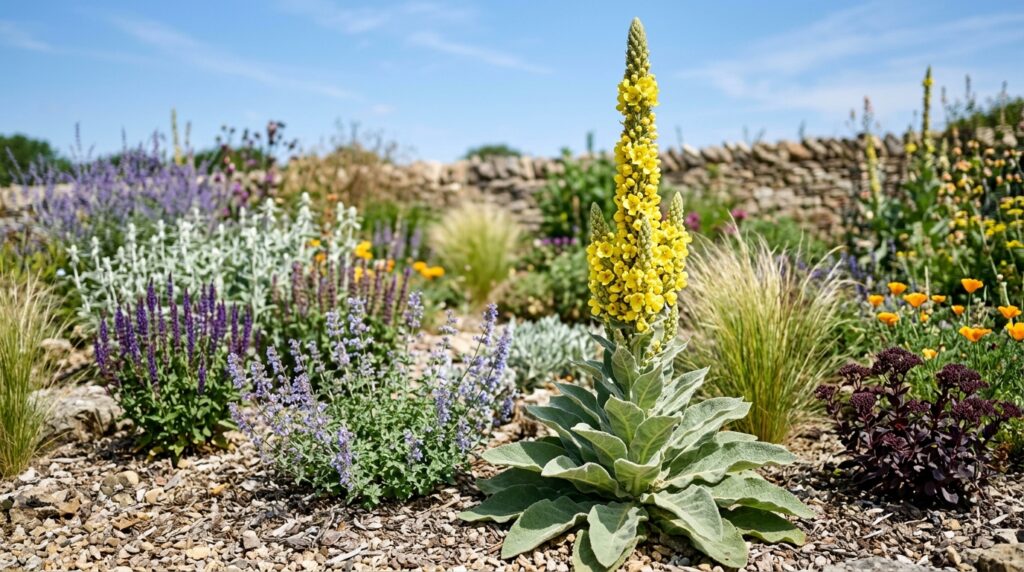
Mullein is the architectural statement piece of the flower world. These tall, dramatic spires of yellow flowers rise 4–6 feet from a basal rosette of large, silver-felted leaves. They’re absolutely striking.
Mullein has a long history in herbal medicine — it’s been used for centuries to soothe respiratory ailments. Today, it’s appreciated equally for its bold garden presence.
Why it’s worth growing:
- Drought-tolerant and thrives in poor soils
- Biennial — forms a rosette the first year, flowers the second
- Self-seeds freely; effectively perennial in the garden
- Attracts bees, particularly bumblebees
15. Mandevilla (Mandevilla spp.)
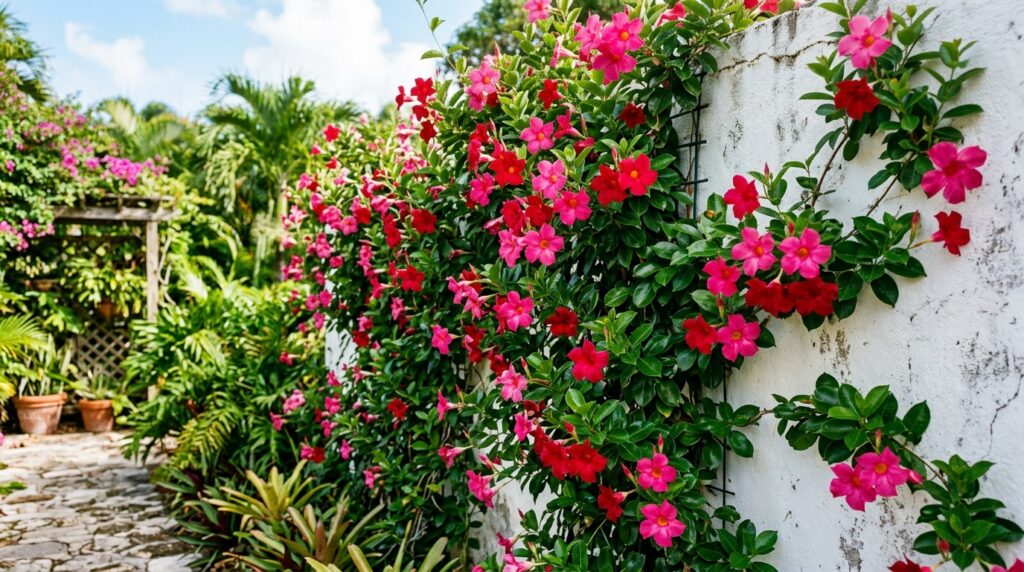
Mandevilla is pure tropical drama. These fast-climbing vines produce large, trumpet-shaped flowers in vivid shades of red, pink, and white throughout the warm season. They’re spectacular trained up trellises, pergolas, and patio structures.
In colder climates, they’re grown as annuals or overwintered indoors as houseplants.
Care Notes:
- Full sun
- Rich, well-draining soil
- Regular fertilizing during the growing season encourages heavy bloom
- Bring indoors before frost if you want to overwinter
16. Meadowsweet (Filipendula ulmaria)
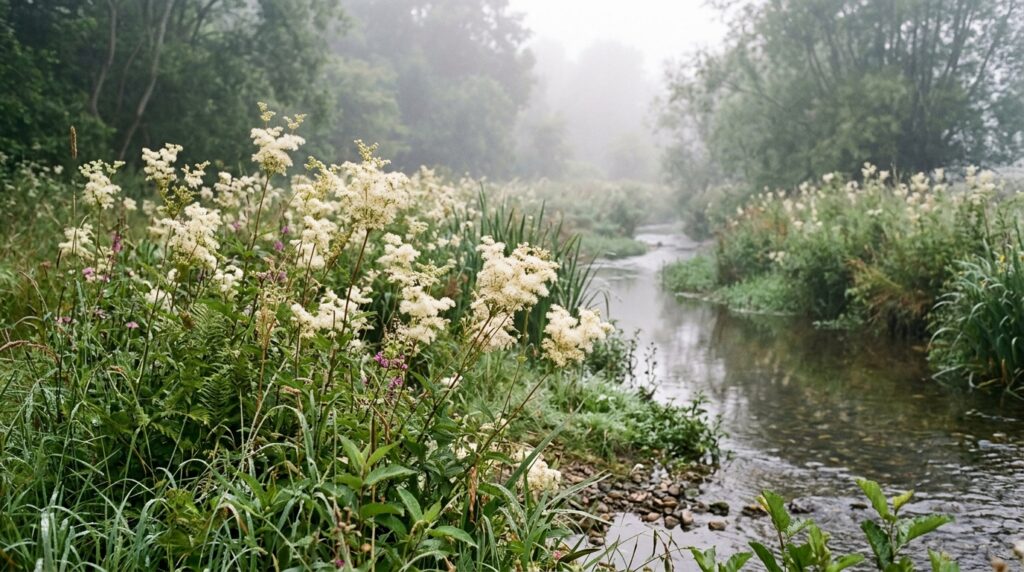
Meadowsweet is a hauntingly beautiful wildflower — frothy clusters of tiny cream-white flowers on tall stems that look like something from a fairytale meadow.
It’s also historically remarkable: Meadowsweet was one of the three sacred herbs of the Druids. And here’s a fact that genuinely surprises people — salicylic acid, the compound from which aspirin was derived, was originally isolated from Meadowsweet in the 1800s. The word “aspirin” itself may trace back to Meadowsweet’s old Latin name, Spiraea ulmaria.
Growing Conditions:
- Moist to wet soils — ideal for rain gardens and pond edges
- Partial shade to full sun
- Native to European wetlands; naturalizes beautifully
17. Maltese Cross (Lychnis chalcedonica)
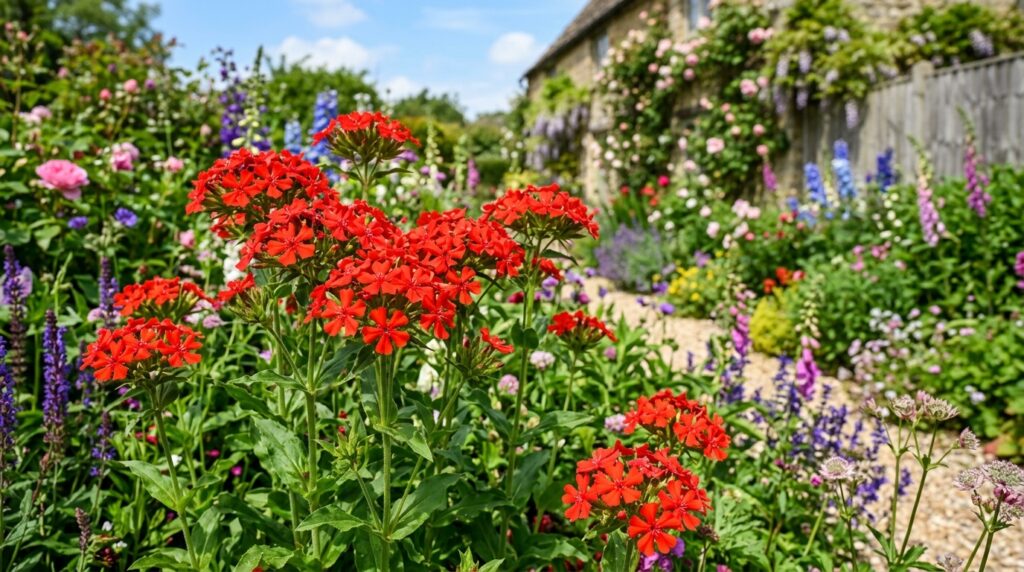
The Maltese Cross gets its name from the distinctive cross-shaped arrangement of its four deeply notched petals. The flowers are an intense, almost neon scarlet — one of the most vivid reds in the garden.
This old-fashioned cottage garden perennial has been grown in gardens since the Middle Ages, when it was brought back by Crusaders from Asia.
Care:
- Full sun
- Average, well-draining soil
- May need staking due to tall stems
- Divide every few years to maintain vigor
18. Mahonia (Mahonia aquifolium)
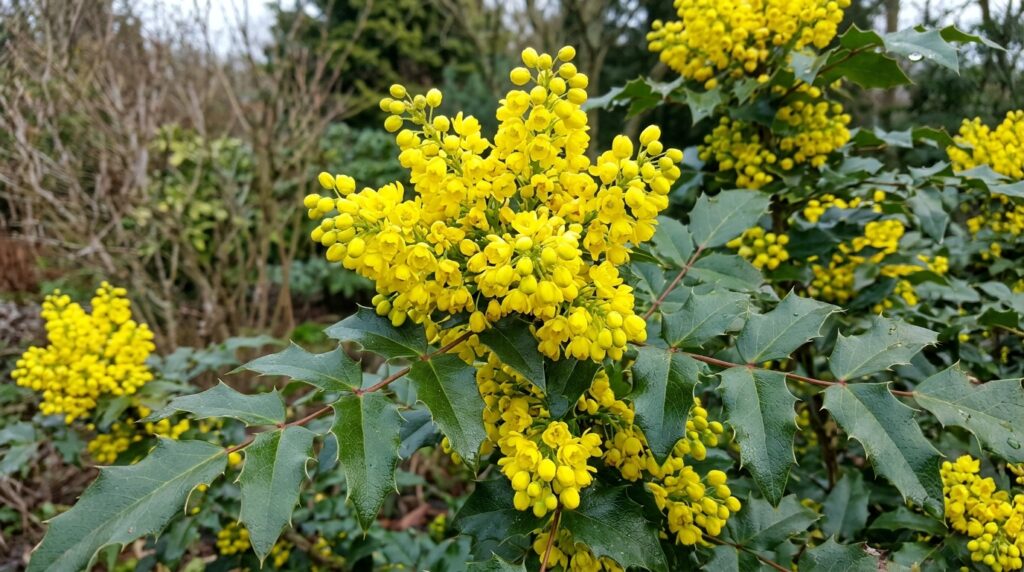
Mahonia is one of those rare plants that blooms when almost nothing else will — late winter to early spring. The clusters of bright yellow flowers are a vital early nectar source for bees emerging from winter dormancy.
It’s also an evergreen shrub with bold, architectural foliage resembling holly, making it year-round attractive.
Best uses:
- Winter interest
- Shade gardens
- Wildlife-friendly planting
- Low-maintenance foundation planting
19. Monkey Flower (Mimulus / Erythranthe spp.)
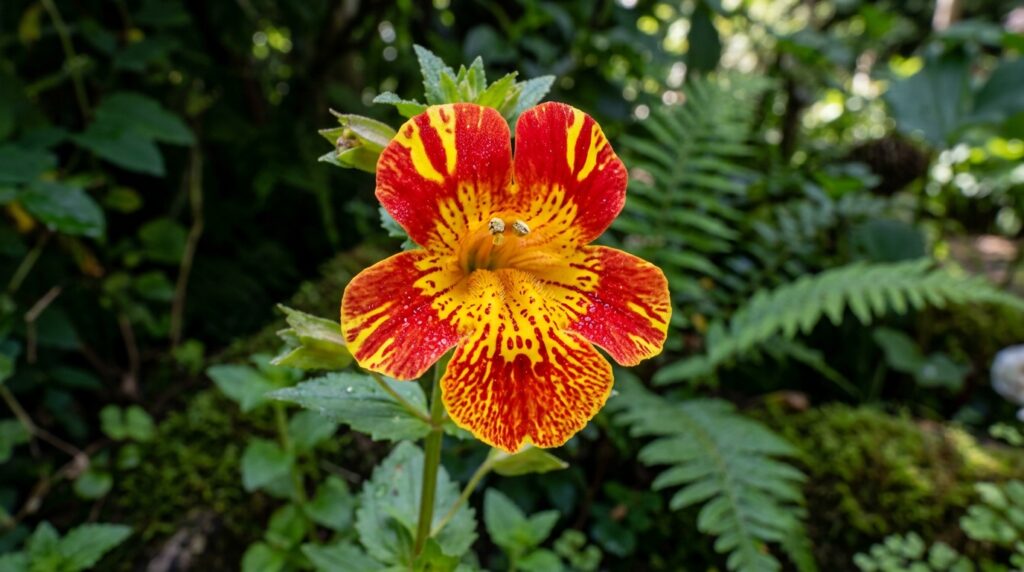
The Monkey Flower earns its charming name from the face-like pattern of spots on its petals — look closely and you’ll see what appears to be a tiny monkey’s face in the markings.
Available in a stunning range of colors including red, yellow, orange, pink, and purple, often with contrasting spots and blotches, these flowers thrive in moist, cool conditions — making them excellent choices for bog gardens, stream edges, and shaded borders.
20. Moonbeam Coreopsis (Coreopsis verticillata ‘Moonbeam’)
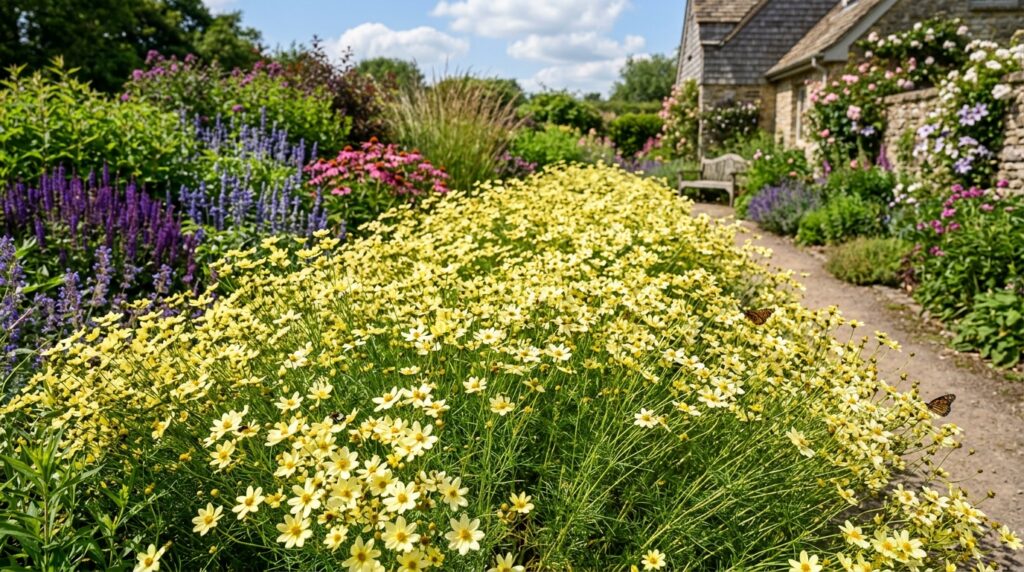
While technically a Coreopsis, the ‘Moonbeam’ cultivar is so iconic it earns its own mention. This award-winning perennial produces a continuous cloud of soft, butter-yellow daisy flowers from early summer through fall.
It was named Perennial Plant of the Year by the Perennial Plant Association — one of the most prestigious honors in the ornamental plant world.
Why it’s loved:
- Incredibly long blooming season
- Drought-tolerant once established
- Perfect for the front of borders
- Works beautifully in naturalistic and prairie-style plantings
21. Mariposa Lily (Calochortus spp.)
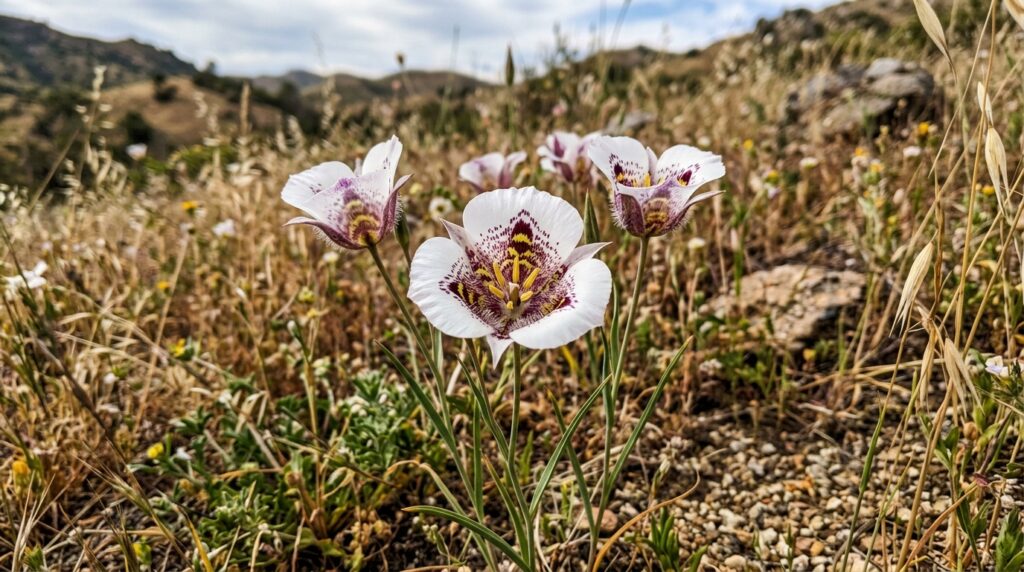
The name Mariposa means “butterfly” in Spanish — and these flowers more than live up to the name. Mariposa Lilies are native to the American West and produce exquisite, cup-shaped flowers with intricate markings on the inner petals.
They’re not easy to cultivate in gardens — they need specific dry, rocky conditions — but in their native habitat, they’re among the most beautiful wildflowers you’ll ever encounter.
22. Matricaria / Chamomile (Matricaria chamomilla)
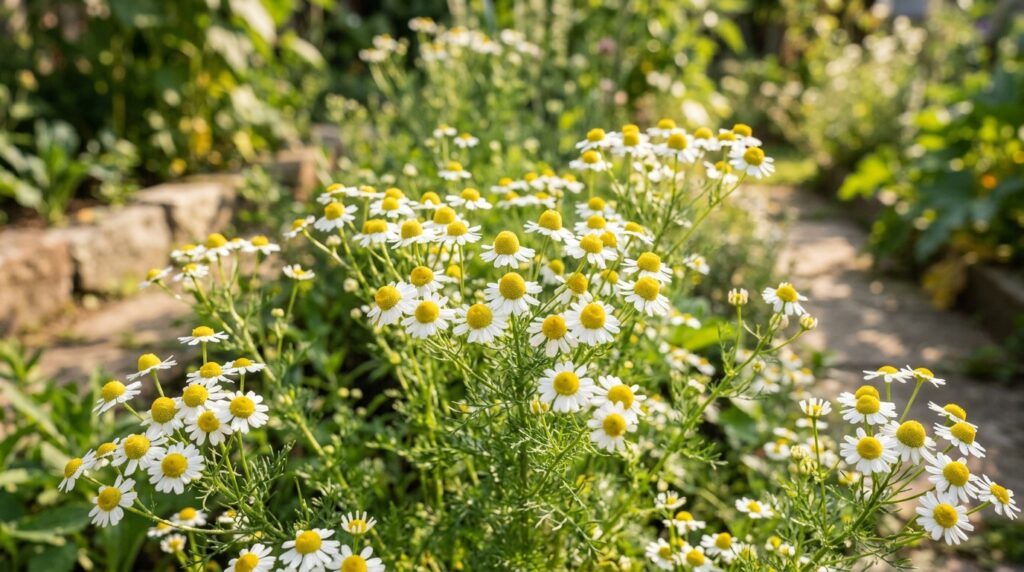
Chamomile — the genus Matricaria — is one of the world’s most familiar and beloved flowering herbs. Those classic white daisy-like flowers with golden centers are the source of the chamomile tea that has soothed people for thousands of years.
According to research published in Molecular Medicine Reports, chamomile contains compounds with anti-inflammatory, antioxidant, and mild sedative properties.
Dual-purpose plant:
- Beautiful low-growing annual in the garden
- Fragrant flowers used for teas, herbal remedies, and cosmetics
- Self-seeds readily — plant once, enjoy for years
23. Marsh Marigold (Caltha palustris)
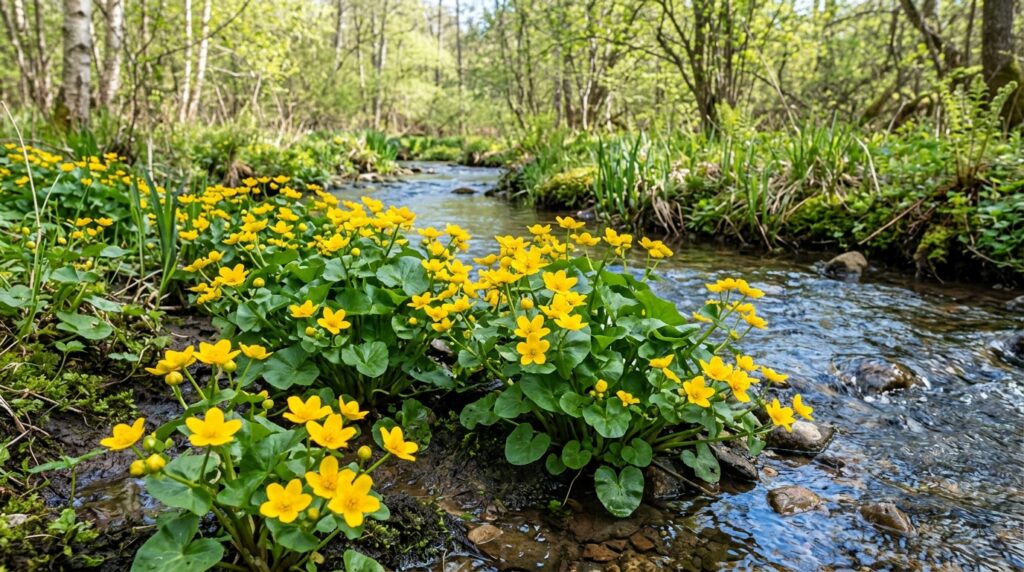
Marsh Marigold is one of spring’s brightest surprises — vivid golden-yellow flowers that bloom in early spring at the edges of streams, ponds, and wet woodlands.
Despite the name, it’s not actually related to the common Marigold (Tagetes). It belongs to the buttercup family (Ranunculaceae) and thrives in conditions that would kill most ornamental plants.
Perfect for:
- Rain gardens and bioswales
- Pond margins and stream banks
- Native plant and wildlife gardens
24. Mountain Laurel (Kalmia latifolia)
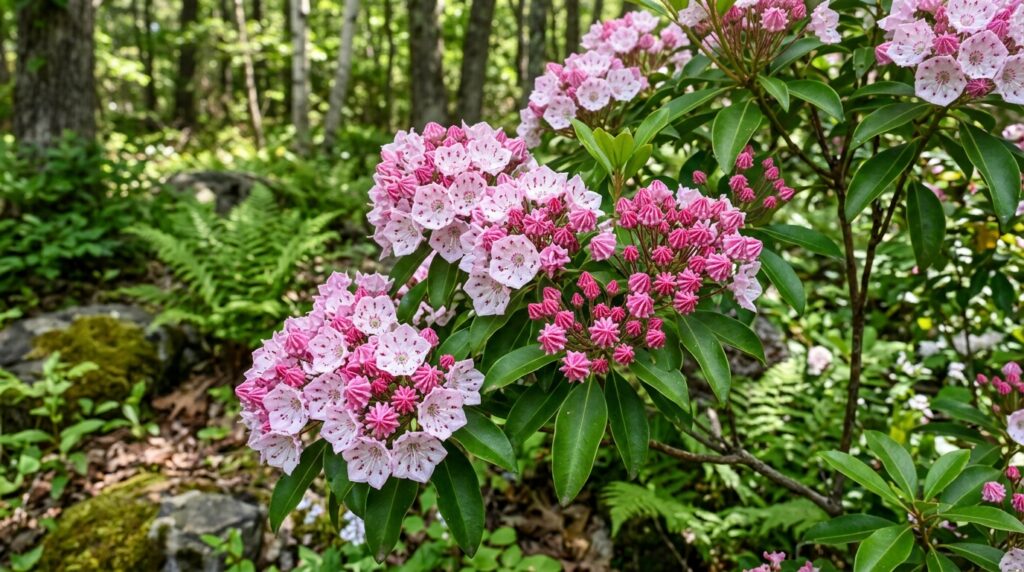
Mountain Laurel is one of the most beautiful native flowering shrubs. The flowers open from intricately patterned, star-shaped buds into clusters of delicate pink, white, or bicolored blooms — making the budding stage almost as beautiful as the open flowers.
It’s the state flower of both Connecticut and Pennsylvania, reflecting how deeply embedded it is in Eastern woodland culture.
Growing Notes:
- Requires acidic, well-draining soil
- Partial to full shade
- Slow-growing but long-lived
- Toxic if ingested — handle with care
25. Moss Rose / Portulaca (Portulaca grandiflora)
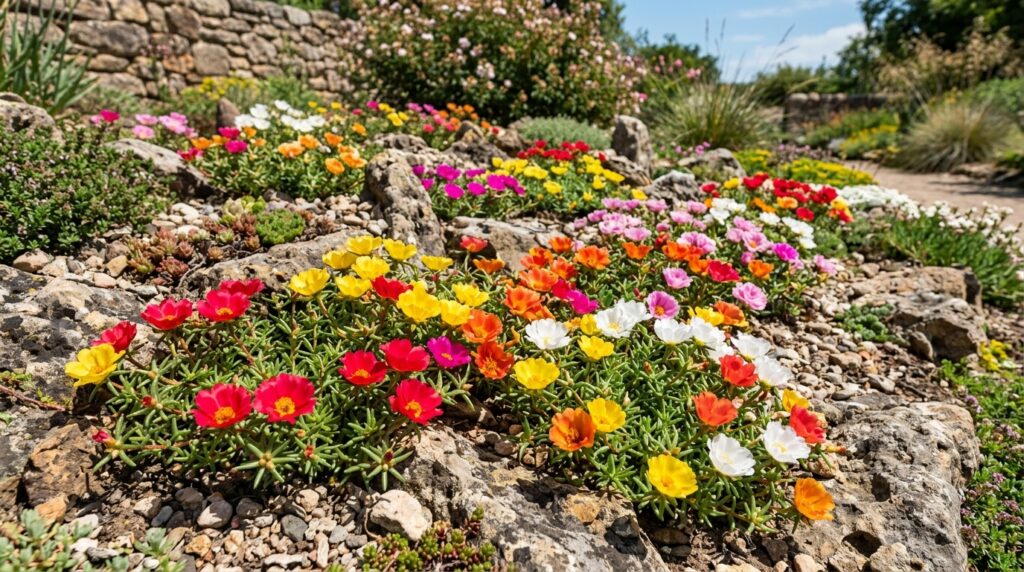
Portulaca — also called Moss Rose — might be the toughest flower on this list. It thrives in blazing heat, poor soils, and neglect. The satiny, ruffled flowers come in an extraordinary range of colors and resemble tiny roses.
They’re ideal for:
- Sunny rock gardens
- Sandy or gravelly soils
- Hot, dry slopes and hillsides
- Container gardens and hanging baskets
Expert Tips for Growing Flowers That Start With M
Here’s what experienced gardeners know about maximizing success with M flowers:
1. Match plant to place, not just preference. The biggest mistake beginners make is falling in love with a plant and trying to force it into the wrong conditions. Moonflowers need support. Marsh Marigolds need wet soil. Muscari need fall planting. Understand what each flower needs before you buy it.
2. Layer your M flowers for season-long interest. Use Muscari for early spring, Marigolds and Monarda for summer, and Michaelmas Daisies for fall. This approach — called “succession planting” — ensures your garden always has something in bloom.
3. Don’t skip the soil prep. Most flowering plants perform dramatically better in soil amended with compost. The University of Minnesota Extension recommends incorporating 2–4 inches of compost into garden beds before planting for optimal results.
4. Deadhead regularly. Removing spent blooms signals plants to keep flowering instead of going to seed. This is especially true for Marigolds, Marguerite Daisies, and Morning Glories.
5. Think about pollinators. If you’re choosing M flowers for your garden, consider how they’ll support local wildlife. Plants like Monarda, Marigolds, and Meadowsweet are exceptional pollinator plants. The Xerces Society provides excellent resources on creating pollinator-friendly gardens.
Comparison Table: Popular Flowers Beginning With M
| Flower | Type | Bloom Season | Sun | Water | Difficulty |
|---|---|---|---|---|---|
| Marigold | Annual | Summer–Fall | Full Sun | Moderate | Easy |
| Magnolia | Tree/Shrub | Spring | Full Sun–Part Shade | Moderate | Moderate |
| Morning Glory | Annual Vine | Summer–Fall | Full Sun | Moderate | Easy |
| Moonflower | Annual Vine | Summer–Fall | Full Sun | Moderate | Easy |
| Muscari | Bulb | Early Spring | Full Sun–Part Shade | Low–Moderate | Easy |
| Monarda | Perennial | Summer | Full Sun–Part Shade | Moderate–High | Moderate |
| Mock Orange | Shrub | Late Spring | Full Sun–Part Shade | Low–Moderate | Easy |
| Meadowsweet | Perennial | Summer | Full Sun–Part Shade | High | Easy |
| Mullein | Biennial | Summer | Full Sun | Low | Easy |
| Michaelmas Daisy | Perennial | Fall | Full Sun | Moderate | Easy |
How to Use Flowers That Start With M in Your Garden Design
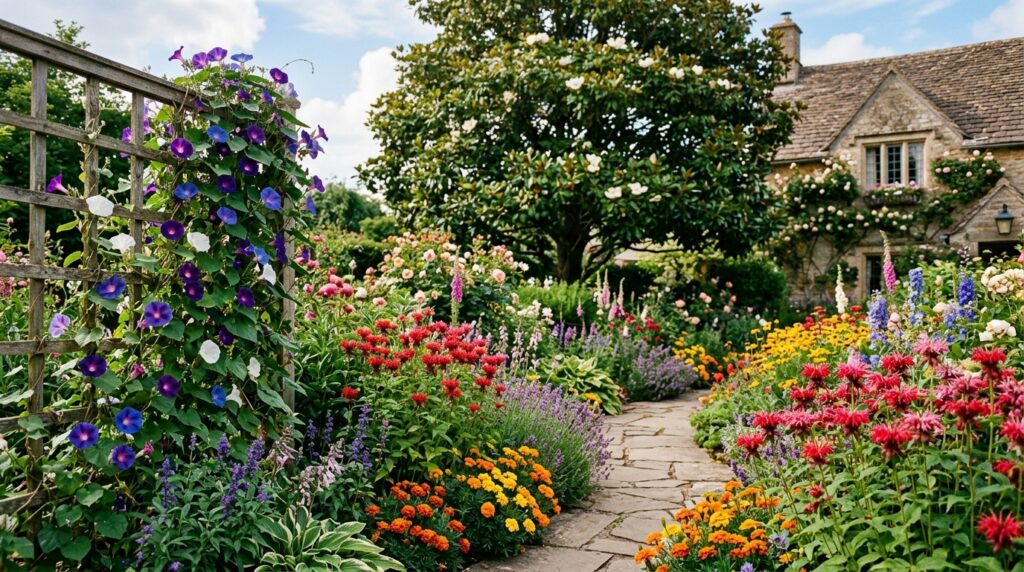
Knowing a plant’s name and knowing how to use it are two different things. Here’s how to put these M flowers to work in real garden designs:
For a Pollinator Garden
Best M flowers: Monarda, Marigolds, Meadowsweet, Michaelmas Daisy, Mahonia Plant these together and you’ll have something blooming — and feeding pollinators — from late winter (Mahonia) through late fall (Michaelmas Daisy). Include a water source and you’ve created a genuine wildlife habitat.
For a Cottage Garden
Best M flowers: Mock Orange, Malva, Maltese Cross, Meadow Rue, Marguerite Daisy Cottage gardens embrace an organized chaos aesthetic — tall plants behind shorter ones, fragrant flowers mixed with textural foliage. Mock Orange at the back, Malva in the middle, and Marguerite Daisies up front creates a classic cottage scene.
For a Low-Maintenance Garden
Best M flowers: Marigolds, Mullein, Moss Rose (Portulaca), Muscari These are all genuinely tough, low-demand plants. Once established, they largely take care of themselves. Perfect for gardeners with limited time.
For a Night Garden / Moon Garden
Best M flowers: Moonflower, white-flowered Magnolias, white Mock Orange The classic moon garden concept uses white flowers that glow in the evening light. Moonflower is the crown jewel — it opens at dusk and fills the night with fragrance.
For a Cut Flower Garden
Best M flowers: Marigolds, Monarda, Meadow Rue, Muscari, Matricaria (Chamomile) All of these translate beautifully into bouquets. Marigolds and Monarda add bold color; Meadow Rue and Chamomile add delicate texture and filler material.
Flowers Beginning With M: Frequently Asked Questions
Q1: What is the most popular flower that starts with M?
Without question, Marigolds are the most widely grown flower beginning with M. They’re sold in virtually every garden center worldwide, used extensively in landscaping, companion planting, cultural celebrations (like Día de los Muertos in Mexico), and even in food and cosmetics. Their combination of low price, ease of growing, and visual impact makes them universally beloved.
Magnolia would be a close second in terms of cultural recognition and popularity as a flowering tree.
Q2: What flower starts with M and blooms in spring?
Several flowers beginning with M bloom specifically in spring:
- Muscari (Grape Hyacinth) — one of the earliest bloomers, often appearing in March–April
- Magnolia — many species bloom in early to mid-spring, often before leaves appear
- Marsh Marigold — an early spring native for wet areas
- Mountain Laurel — late spring bloomer
- Mahonia — technically late winter to early spring
Q3: What is a flower that starts with M and smells good?
For fragrance, these M flowers are standouts:
- Mock Orange — citrusy, intoxicating scent similar to orange blossom
- Moonflower — sweet, heady nocturnal fragrance
- Magnolia — Southern Magnolia has a lemony, rich floral scent
- Monarda (Bee Balm) — leaves and flowers are strongly fragrant with an oregano/citrus character
- Meadowsweet — sweet almond-honey fragrance
Q4: Are there any rare or unusual flowers that start with M?
Yes — several M flowers are less commonly known but worth exploring:
- Mariposa Lily — exquisite Western native wildflower with butterfly-wing markings
- Maltese Cross — vivid scarlet historical cottage garden perennial
- Meadow Rue — ethereally beautiful, airy and architectural
- Monkey Flower — fascinating patterned blooms that thrive in wet shaded conditions
- Mimosa (Persian Silk Tree) — the powder-puff pink flowers are genuinely extraordinary
Q5: What flowers beginning with M are easiest to grow from seed?
The easiest M flowers to start from seed include:
- Marigold — fast-germinating, reliable, almost foolproof
- Morning Glory — vigorous grower; soak seeds for best results
- Moonflower — similar to Morning Glory; nick or soak seeds first
- Matricaria (Chamomile) — simply scatter seeds and lightly rake in
- Mexican Sunflower — direct sow after frost; grows rapidly
All five of these can be direct-sown outdoors after the last frost date in your area, without any special equipment. The Old Farmer’s Almanac frost date finder is a handy tool for timing your seed sowing.
Pros and Cons of Growing Flowers That Start With M
Pros
- Extraordinary diversity — M flowers span every color, size, season, and growing condition
- Many are beginner-friendly — Marigolds, Morning Glories, and Muscari are among the easiest garden plants
- Wildlife value — Monarda, Marigolds, Meadowsweet, and Michaelmas Daisies are exceptional pollinator plants
- Year-round interest possible — from Mahonia in late winter to Michaelmas Daisies in fall, M flowers can cover every season
- Fragrance options — Mock Orange, Moonflower, and Magnolia offer some of the most beautiful garden fragrances
Cons
- Some require specific conditions — Marsh Marigold needs wet soil; Mariposa Lily needs dry conditions; conditions that may be hard to replicate
- Some are invasive — Morning Glory and Mimosa can spread aggressively in warm climates; always check local invasive species lists
- Size variability — from tiny Muscari to massive Magnolia trees; some M plants need significant space
- Toxicity concerns — Mountain Laurel, Morning Glory seeds, and Moonflower seeds are toxic; important to be aware with children and pets
Final Thoughts
The letter M is one of the richest veins you can mine in the garden world.
Whether you’re after the bold tropical drama of a Mandevilla vine, the whispery elegance of Meadow Rue, the cheerful reliability of a Marigold, or the night-blooming magic of a Moonflower — there’s a flower beginning with M perfectly suited to your garden, your climate, and your style.
The best advice? Start with one or two of the easier options (Marigolds and Muscari are always safe bets), then gradually work in the more specialized varieties as your confidence grows. The Magnolia tree you plant this year might be the one your grandchildren appreciate decades from now.
Gardening is a long game — and M flowers give you a beautiful hand to play.
Ready to start your M flower garden?
Pick up a packet of Marigold or Morning Glory seeds at your local nursery — or browse the selection at American Meadows, a trusted source for wildflower seeds and bulbs. And if you’re looking to identify flowers you’ve already spotted, the iNaturalist app is an excellent free resource for flower identification.
Sources & Further Reading
- Royal Horticultural Society Plant Database
- American Magnolia Society
- University of Florida IFAS Extension — Marigolds
- Perennial Plant Association
- Xerces Society for Pollinator Conservation
- University of Minnesota Extension — Soil Amendments
- Old Farmer’s Almanac Frost Date Finder
- PubMed — Chamomile Research
- American Meadows — Wildflower Seeds
- iNaturalist — Plant Identification
Also Read: Morning Glories: The Complete Growing Guide (Care, Planting & More)
Flowers That Look Like Flames: 12 Real Fire Flowers That Will Ignite Your Garden
How to Dose Fertilizer for Plants (Without Killing Them)

